MiaoMiao City
Transportation
How do cats in MiaoMiao City get where they want to go?

Everyday life within fifteen minutes
In the morning, a cat leaves home and follows a quiet path through the neighborhood.
Shops, schools, healthcare, gardens, and shared spaces are usually within a fifteen-minute walk. Much of daily life is close enough that no ride is needed at all.
Cats can walk or travel by ordinary bicycle. Only when a destination lies beyond the neighborhood do they head to the nearest local rail station.
Local rail within each region
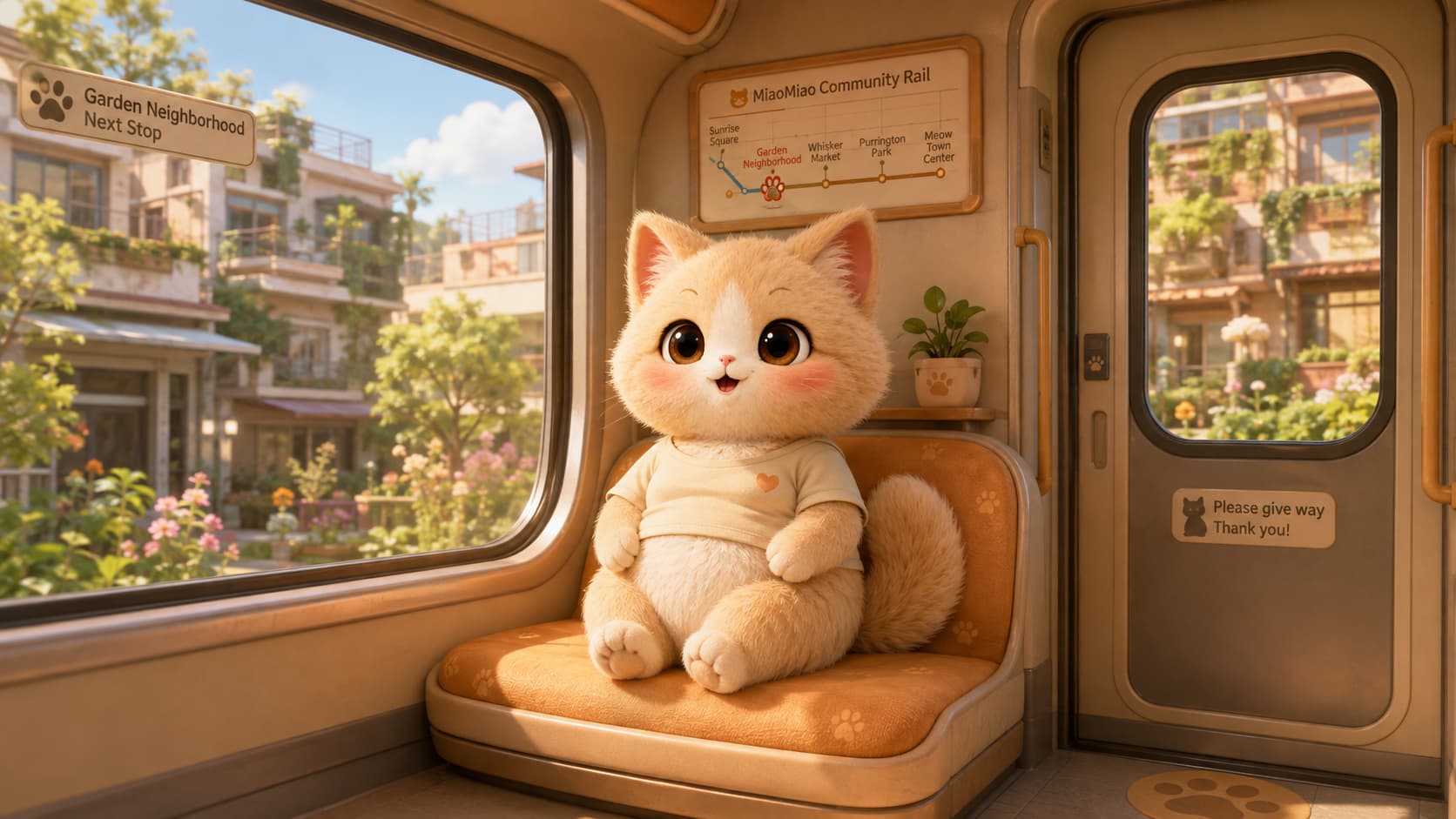
MiaoMiao City refers to the Central Residential District. It is made up of many fifteen-minute neighborhoods, linked together by local rail.
The other regions of Greater MiaoMiao City have their own local rail systems as well, connecting residential communities, public facilities, and regional hubs.
Nearby places are reached on foot or by bicycle. For longer journeys within the same region, local rail takes over.
Hubs that bring the regions together
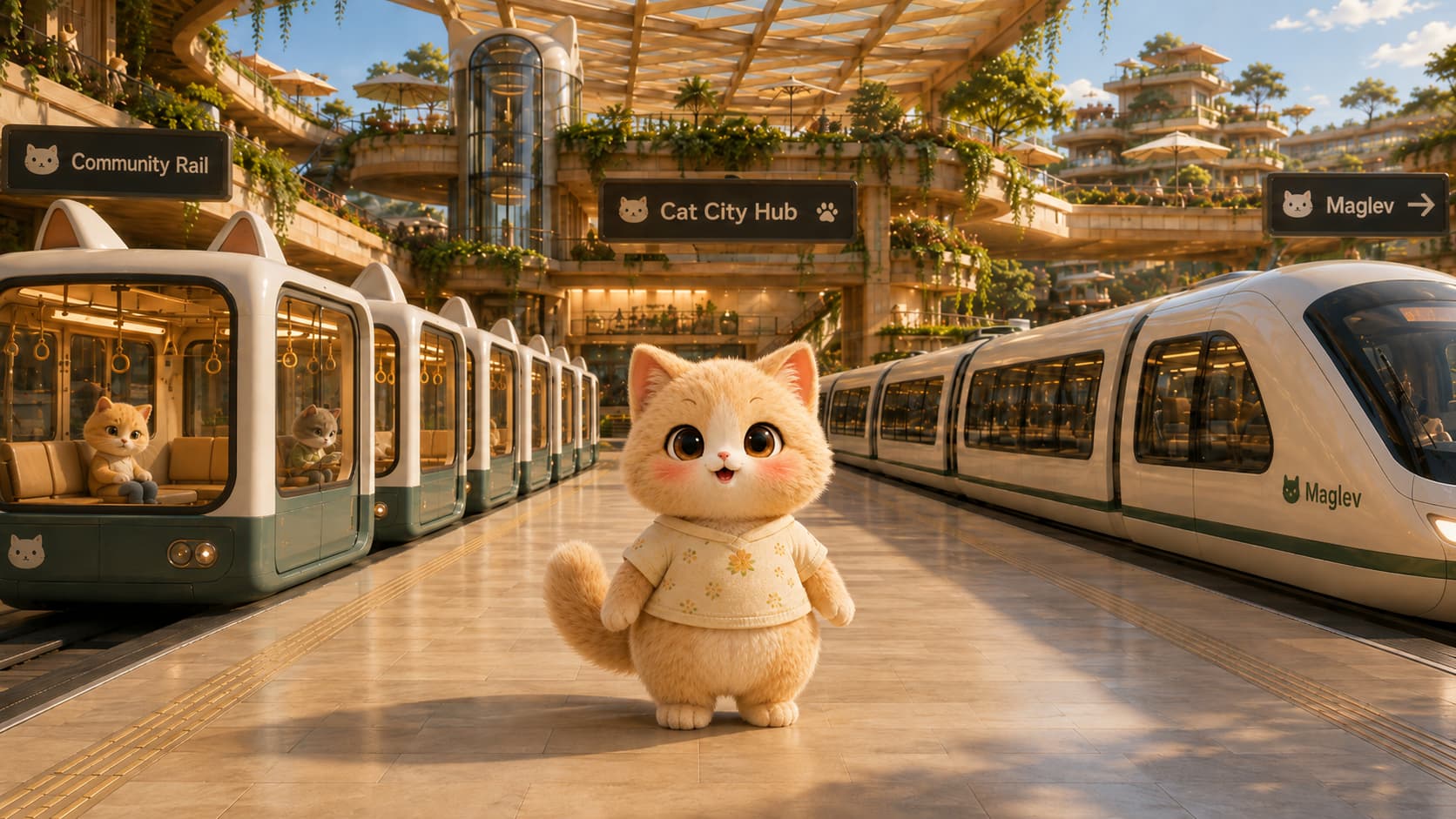
Every region in Greater MiaoMiao City has a transport hub.
This is where local rail meets the maglev network. A cat can travel from a neighborhood to the regional hub, then transfer to a maglev bound for another part of the city.
There is no work-driven rush hour in MiaoMiao City. Cross-regional journeys are more often made for visits, learning, healthcare, exploration, research, or personal interests.
One car for cats, five for cargo
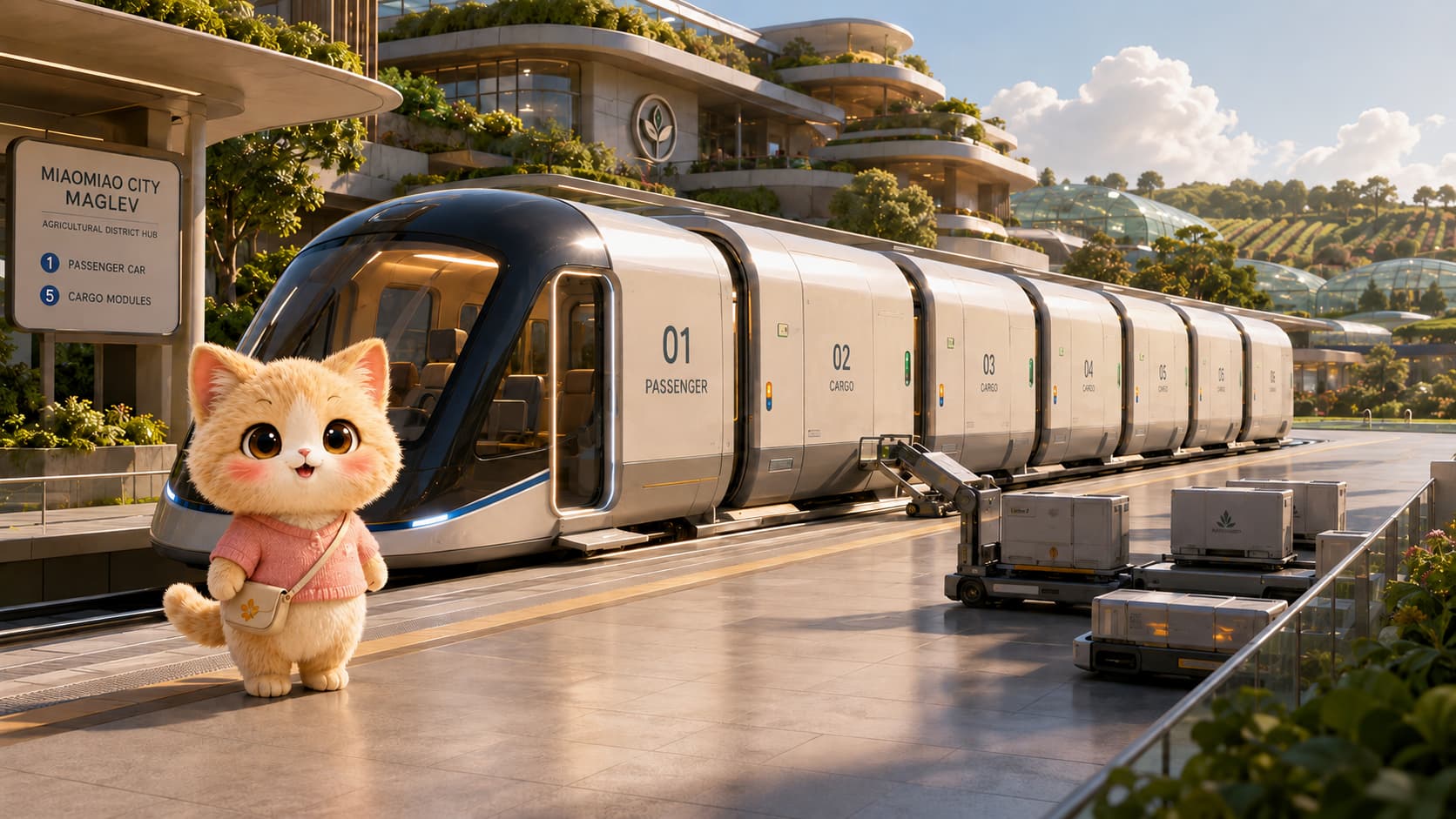
The Central Residential District, manufacturing areas, agricultural regions, and energy centers together form Greater MiaoMiao City.
Maglev trains run in six-car mixed formations: one passenger car for cats, followed by five cargo modules.
Cats do not need to cross the city every day, but food, equipment, and public supplies are always moving. The maglev keeps distant regions within reach while sustaining the material links that hold the wider city together.
The last part of the journey, out of sight
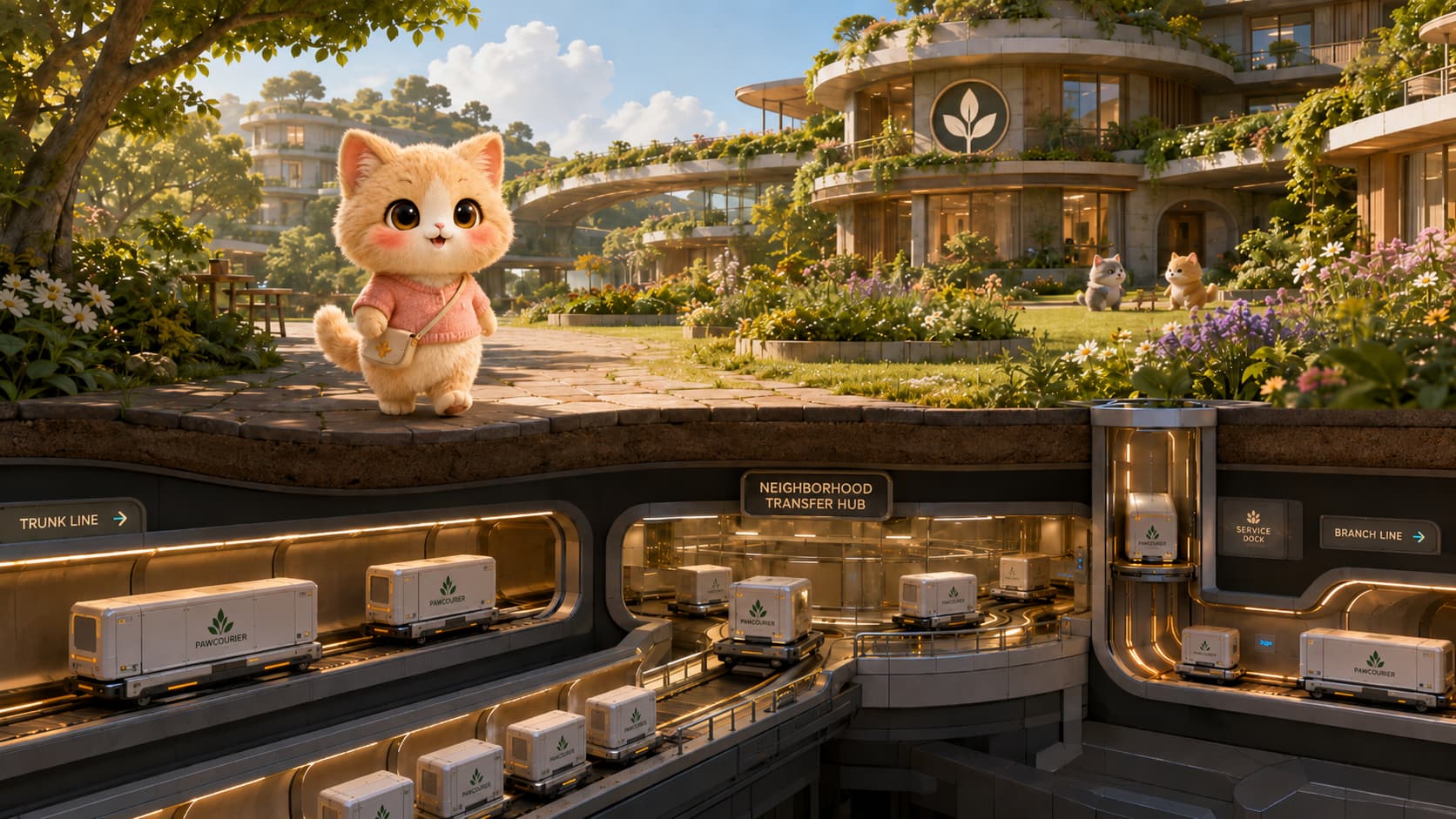
When freight reaches a regional hub, it transfers into the local logistics system.
Goods bound for the Central Residential District continue through the underground logistics network. At the neighborhood endpoint, they move into smaller community and building delivery systems for the final stage of the journey.
That is why residential streets are rarely occupied by delivery trucks, loading bays, or a constant stream of service vehicles.
Leaving room for life
Fifteen-minute neighborhoods support everyday life. Local rail connects communities with their hubs. Maglev lines link the regions of Greater MiaoMiao City, while underground logistics carries goods into the places where cats live.
Transportation is not designed to keep every cat constantly in motion. It keeps daily life close, distant places accessible, and freight movement away from the public spaces of everyday life.