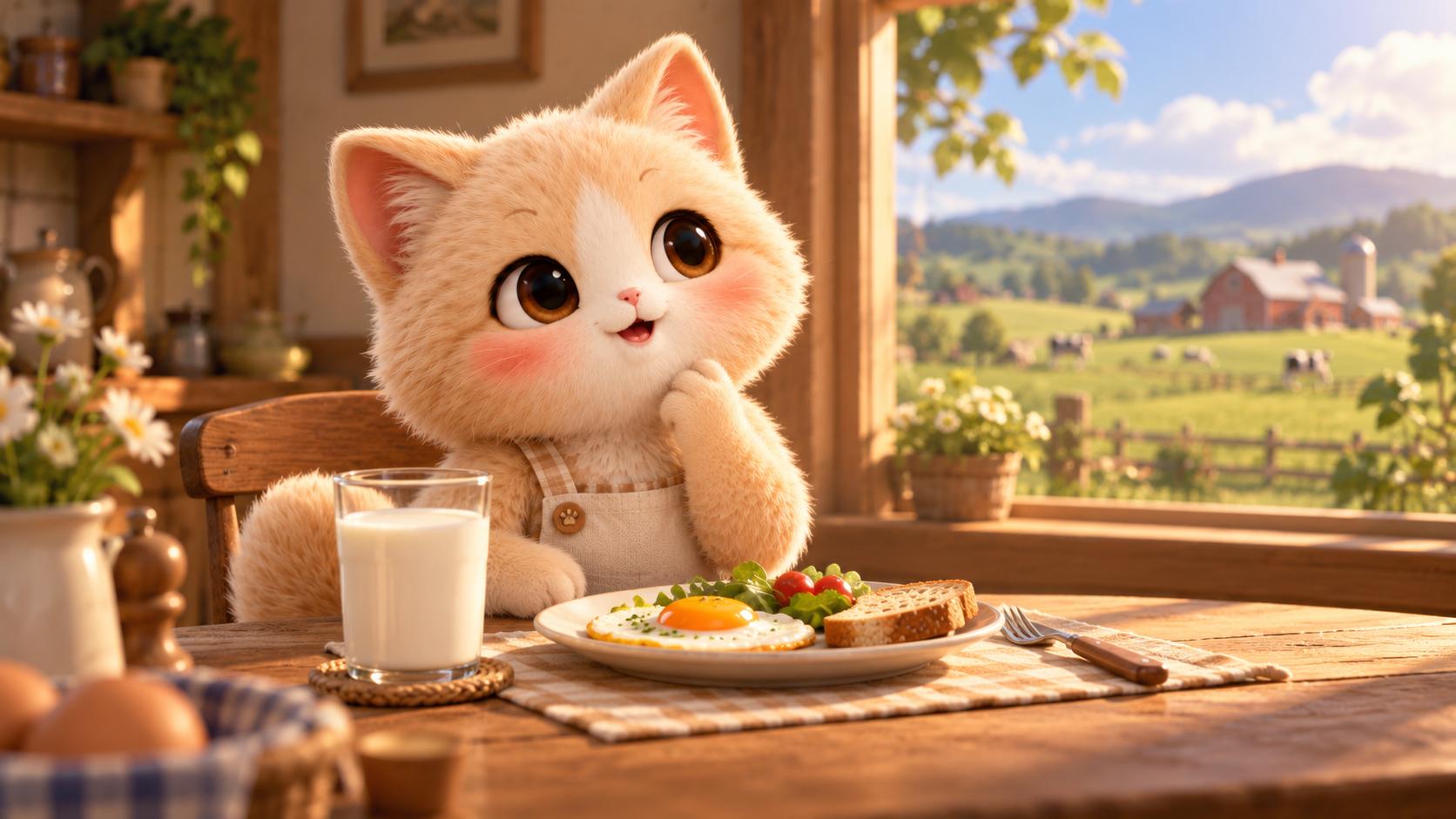
The Grassland Behind Breakfast
In the morning, a cat sits down at the table. There is milk in the glass, and perhaps an egg on the plate.
Follow these foods back to where they come from, and the journey leaves the residential district and reaches the Grassland Agricultural District of Greater MiaoMiao City.
Here, open pastures, chicken living areas, forage, water facilities, and automated farm systems form a landscape where milk and eggs begin their journey to the city. But the animals who live here do not exist because of those foods.
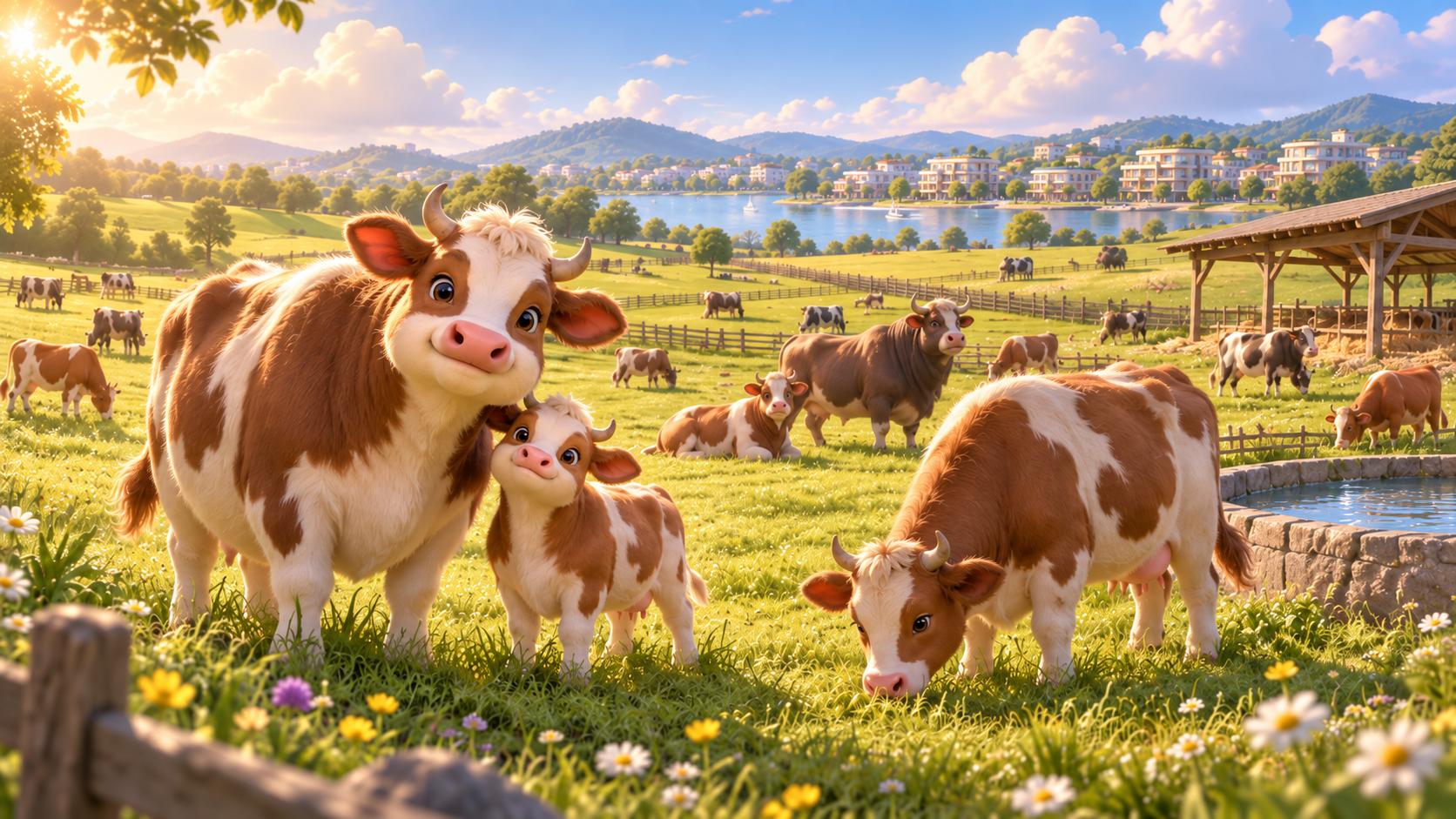
Cows Do Not Exist for Milk
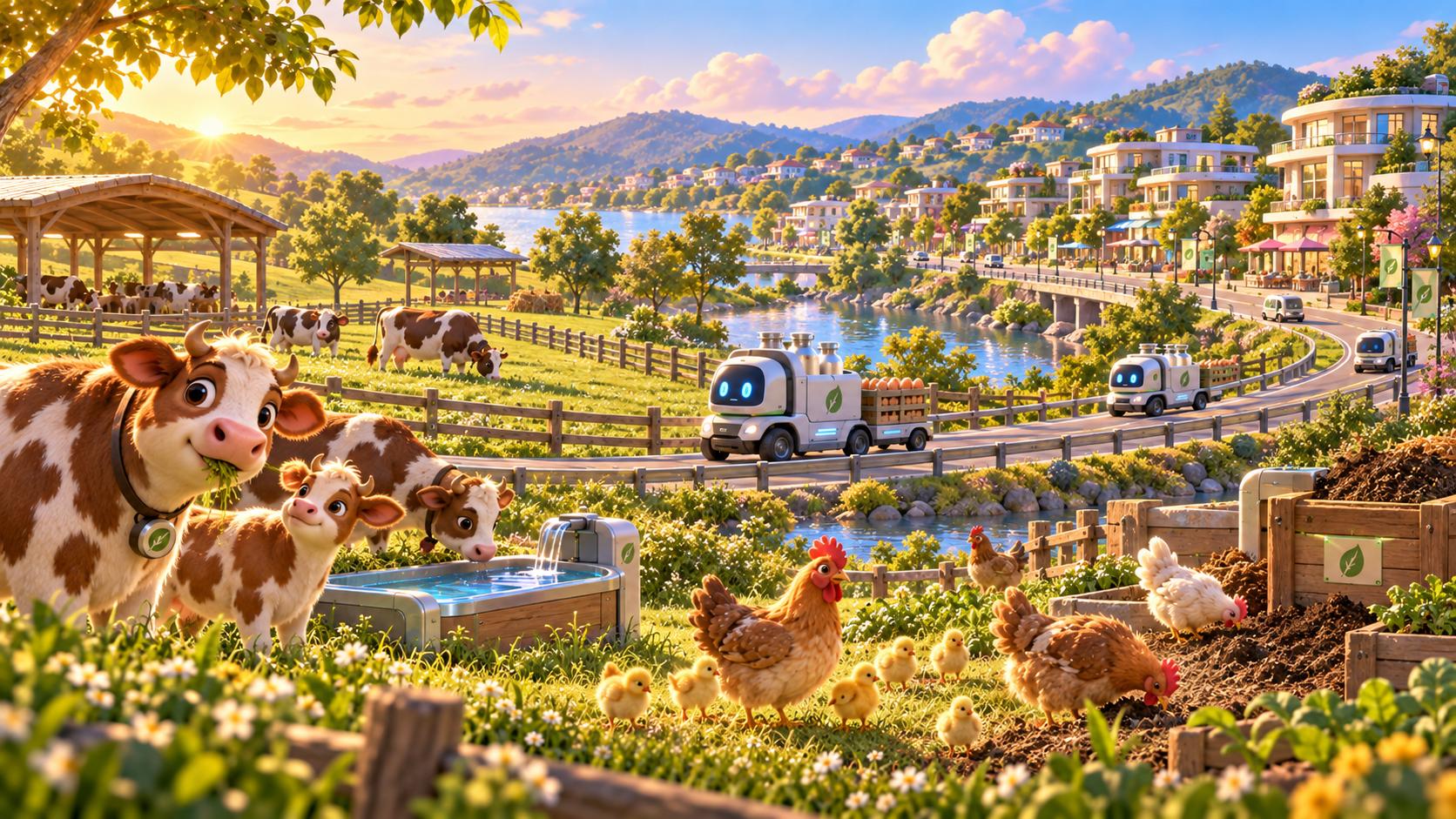
Cattle live across spacious open pastures divided into broad rotational zones. They can walk, graze, rest, and move through areas that are opened in turn according to vegetation recovery, seasons, and the needs of the animals.
MiaoMiao City does not force cows through repeated pregnancies according to a production schedule in order to maintain milk output. Reproduction follows animal health, welfare, and the natural renewal of the herd. When a calf is born, its needs for milk come first; only the remainder enters the food system.
Whether male or female, whether involved in reproduction or milk production or not, cattle are not kept alive according to their output. As they grow old, they remain part of the herd and continue to receive food, water, living space, medical care, and support for the rest of their natural lives.
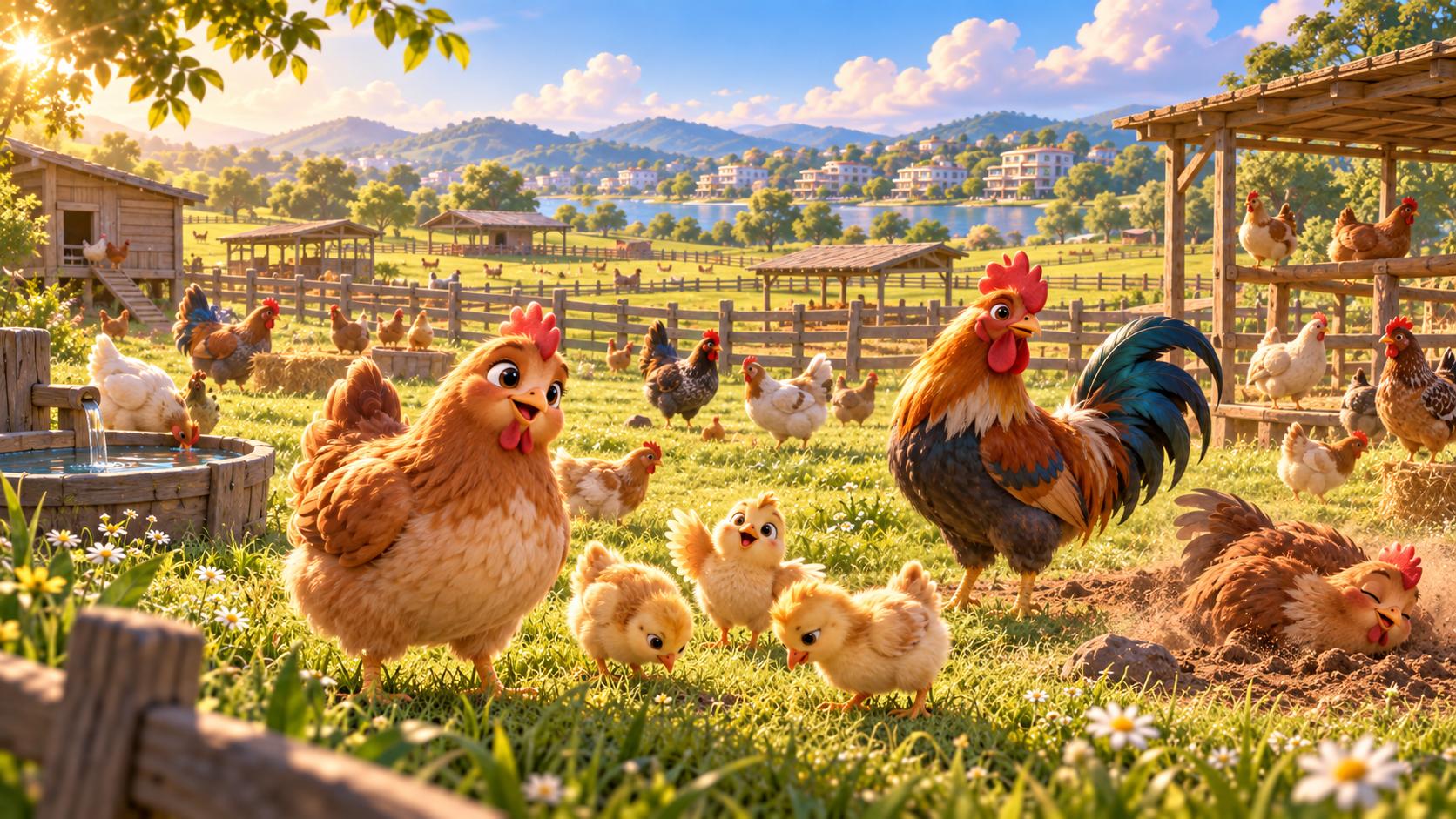
A Life Beyond Eggs
Chickens also live in large open-range areas divided into rotational zones. Different areas open in turn so the birds can move, forage, rest, and live in normal social groups while the land and vegetation recover.
Most eggs intended as food never enter the incubation process. Only a portion of fertilized eggs needed for the natural renewal of the flock are incubated. MiaoMiao City can identify sex non-invasively during early embryonic development, so incubation can match the numbers of roosters and hens actually needed for a healthy flock instead of hatching large numbers of male chicks only to remove them because they cannot lay eggs.
Once a chicken is born, production demand no longer determines the length of its life. Roosters and hens alike pass through youth, adulthood, and old age. A hen is not removed when she stops laying eggs, and a rooster does not lose his place because he cannot produce them.
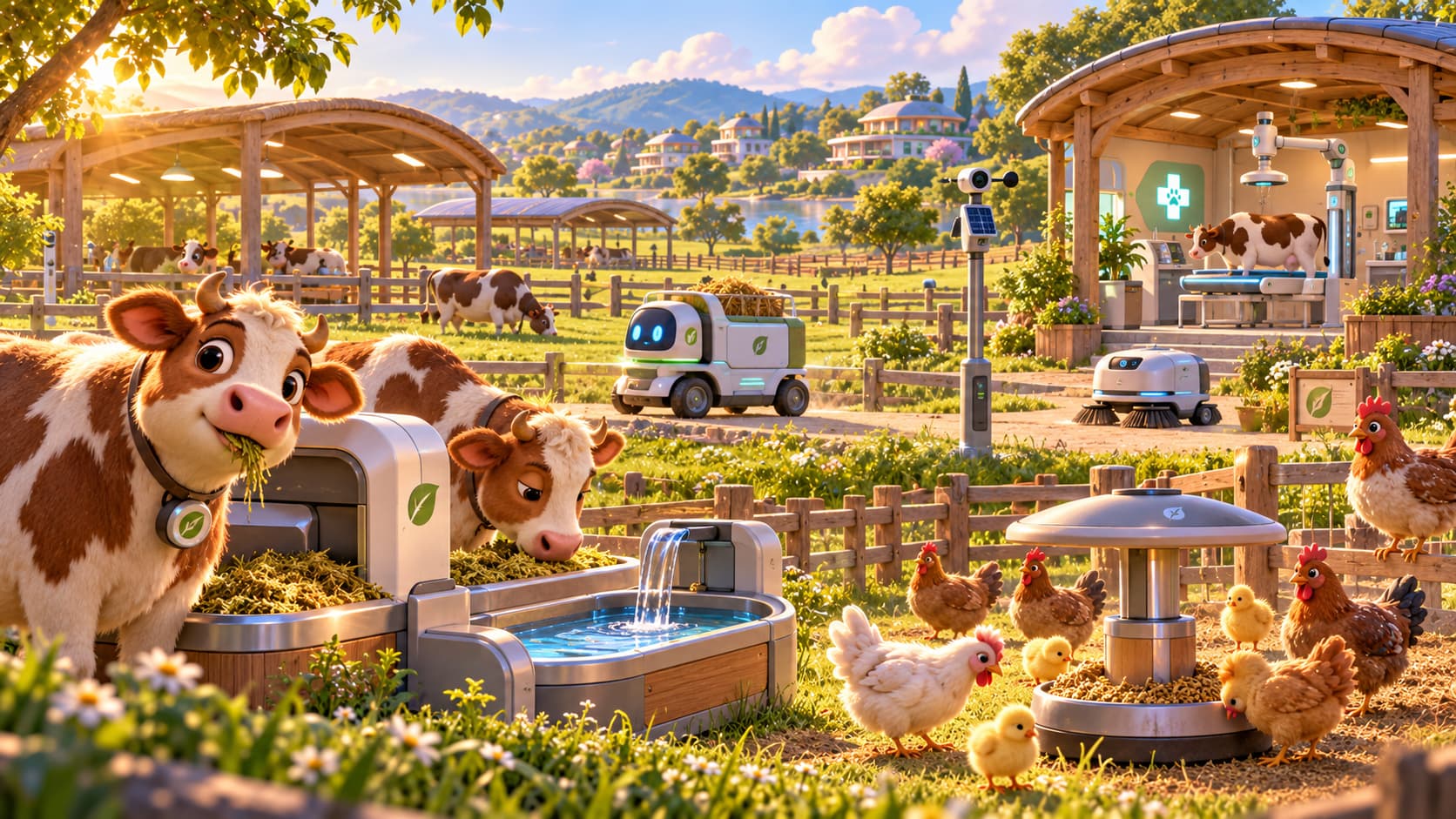
Let the System Adapt to Life
There are no cat farm workers in MiaoMiao City. Feeding, feed mixing, milking, cleaning, environmental monitoring, cooling, and other routine work are carried out by automated equipment and robotic cats.
Shelter, water points, resting spaces, and medical areas are distributed throughout the living zones. Animals that are ill, injured, or need special care may temporarily enter separate care areas, but healthy animals are not confined to small spaces simply because it would be easier to manage them.
Automation is not used to push animals toward ever higher production. Its purpose is to make it possible for the farm to care for every living animal through youth, adulthood, and old age.
What Stays With the Land
Forage, water, and manure nutrient cycles remain within the Grassland Agricultural District wherever possible. Processed manure returns nutrients to the land and reduces the need for outside inputs. Only feed ingredients, equipment, veterinary supplies, milk, eggs, and other materials that genuinely need to cross regions enter the wider logistics network.
MiaoMiao City needs milk, and it needs eggs, but the value of an animal is not determined by what it can produce.
Reproduction, milk, and eggs are only parts of a life. The farm system must adapt to the animals’ full lives, rather than making their lives adapt to a production line.