Civilization Museum · 02
Universe, Matter & Natural Laws
From planets in the sky to structures inside matter and the slowly changing Earth, this wall follows how cats gradually came to understand the world they inhabit.
Looking Up
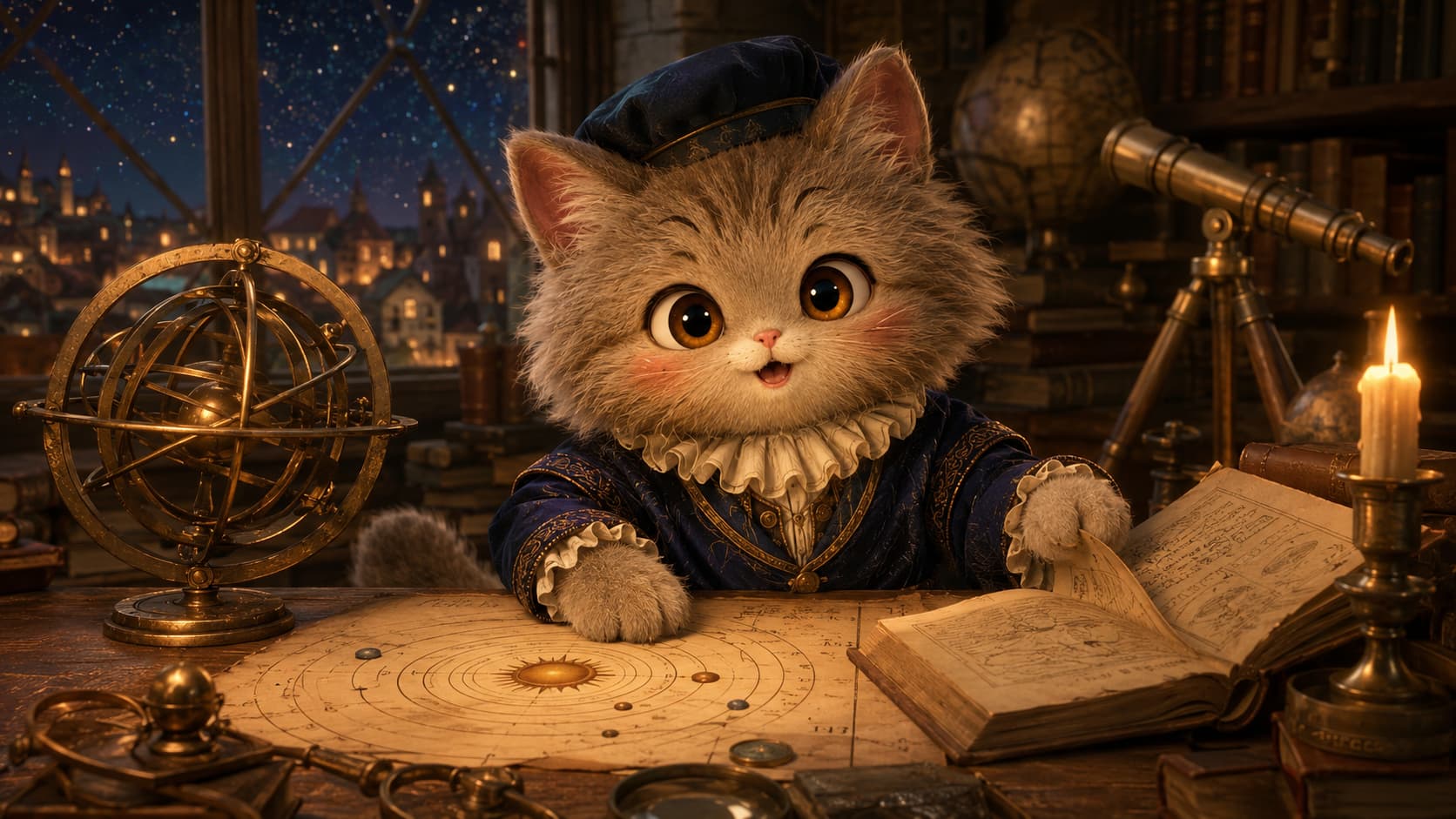
Copernicus Cat
Copernicus Cat rearranged the sky as cats understood it: Earth is not at the center of the universe, and it moves as well.
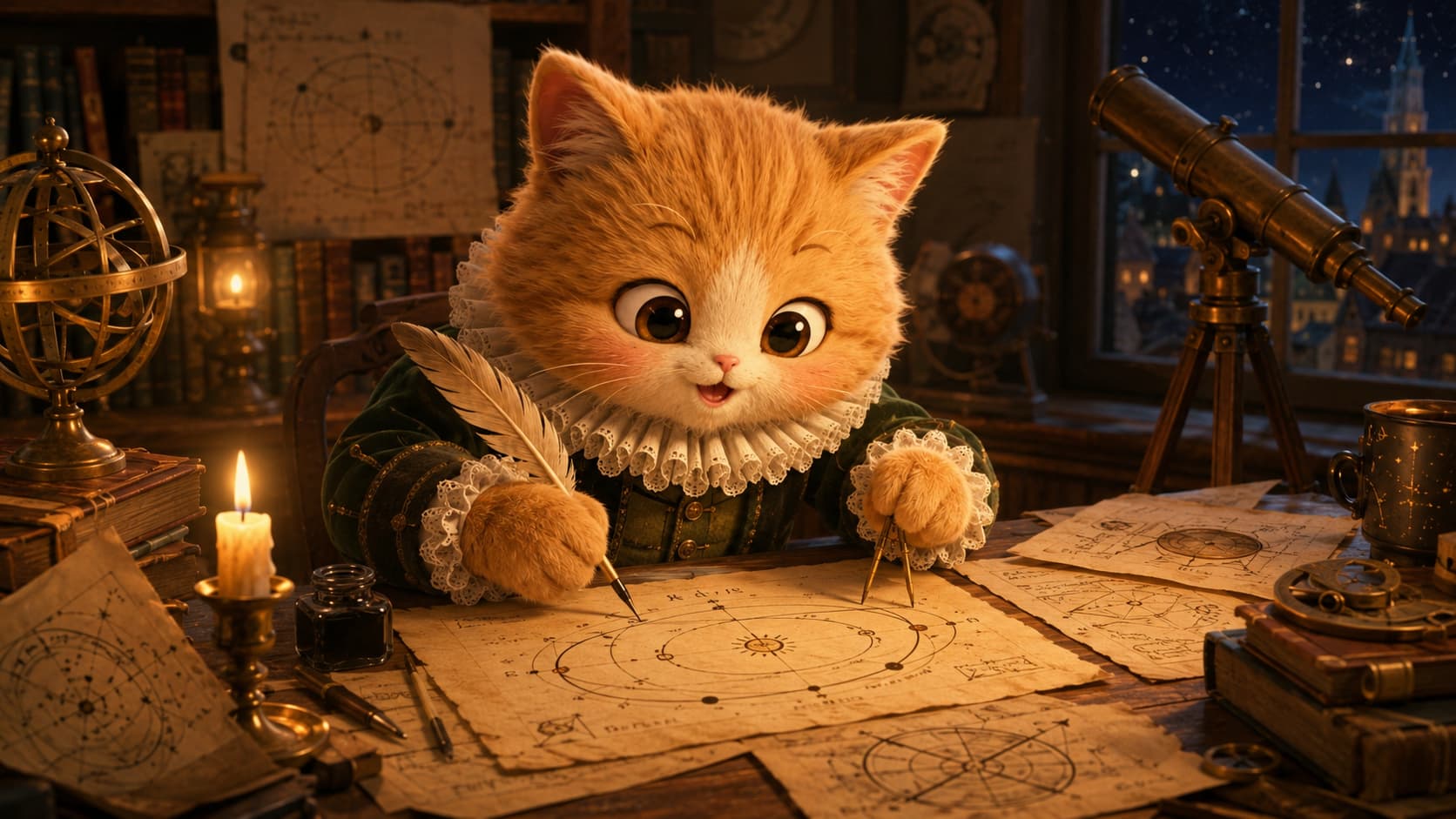
Kepler Cat
Kepler Cat let observations correct the idea of perfect circular orbits. Planets travel in ellipses, and their speed changes along the way.
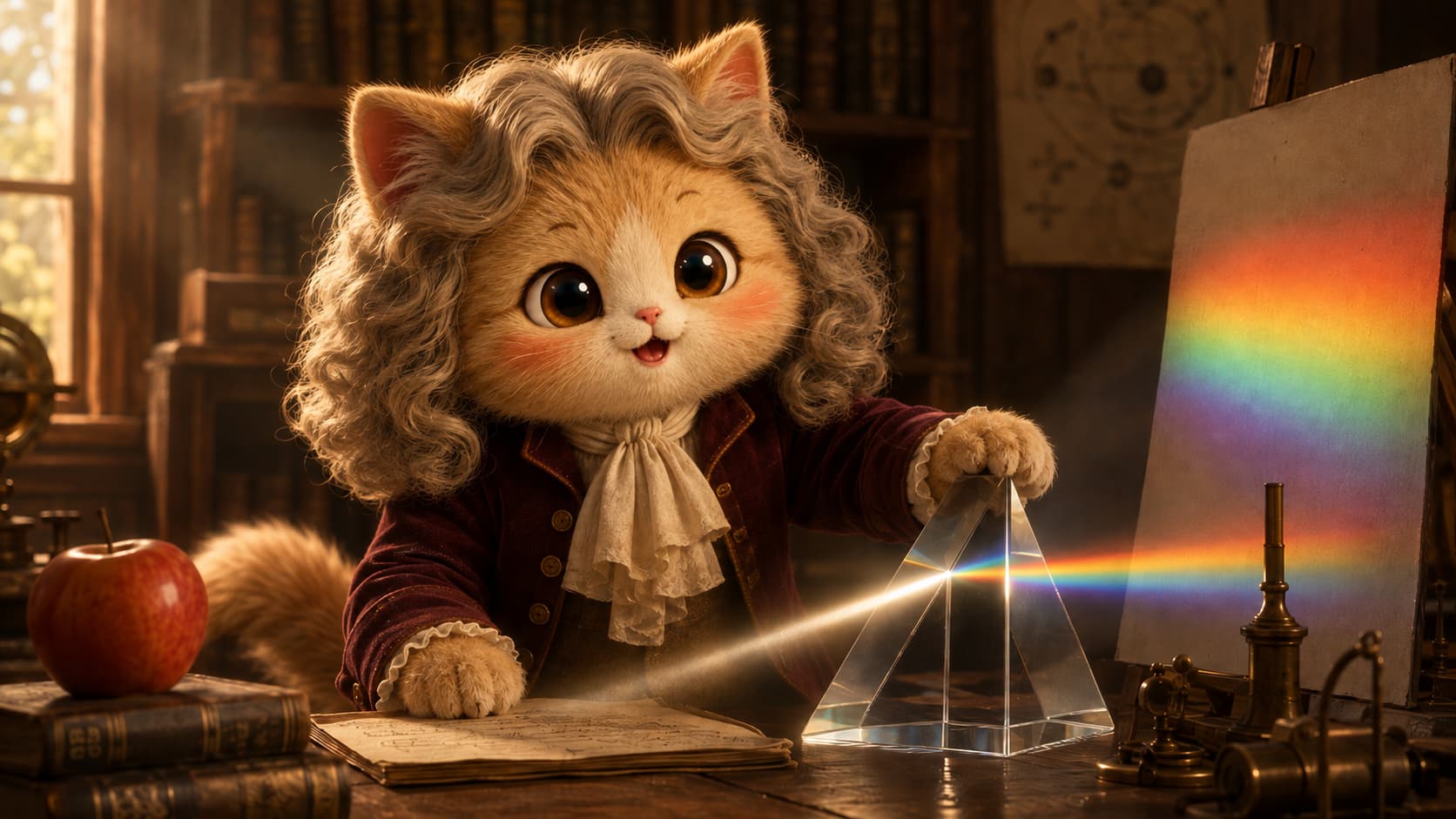
Newton Cat
Newton Cat connected motion on Earth with motion in the sky. Gravity makes objects fall and helps keep moons and planets in orbit.
Inside Matter
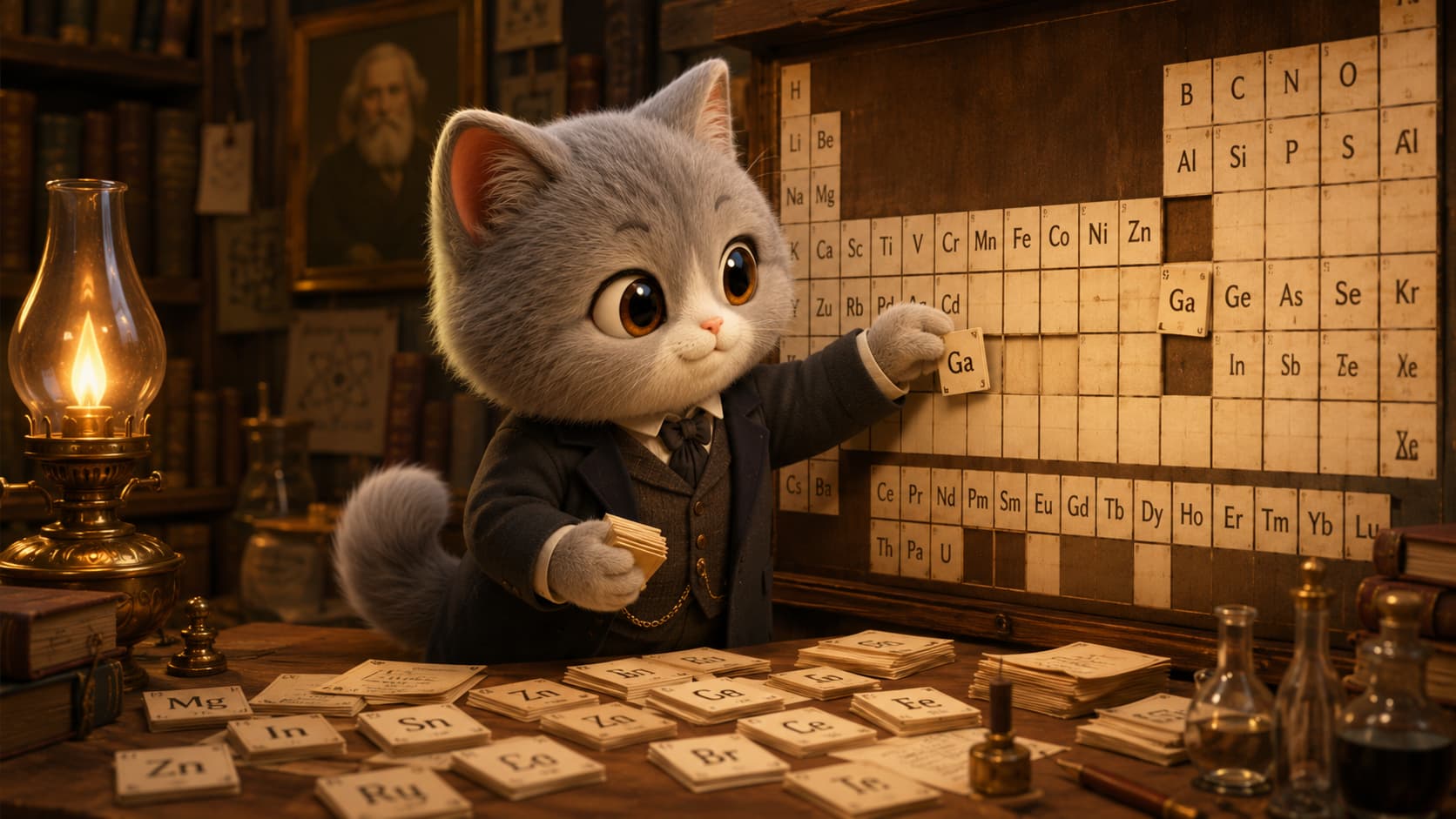
Mendeleev Cat
Mendeleev Cat found a repeating order among many different elements. Empty spaces in the table could even point toward members not yet discovered.
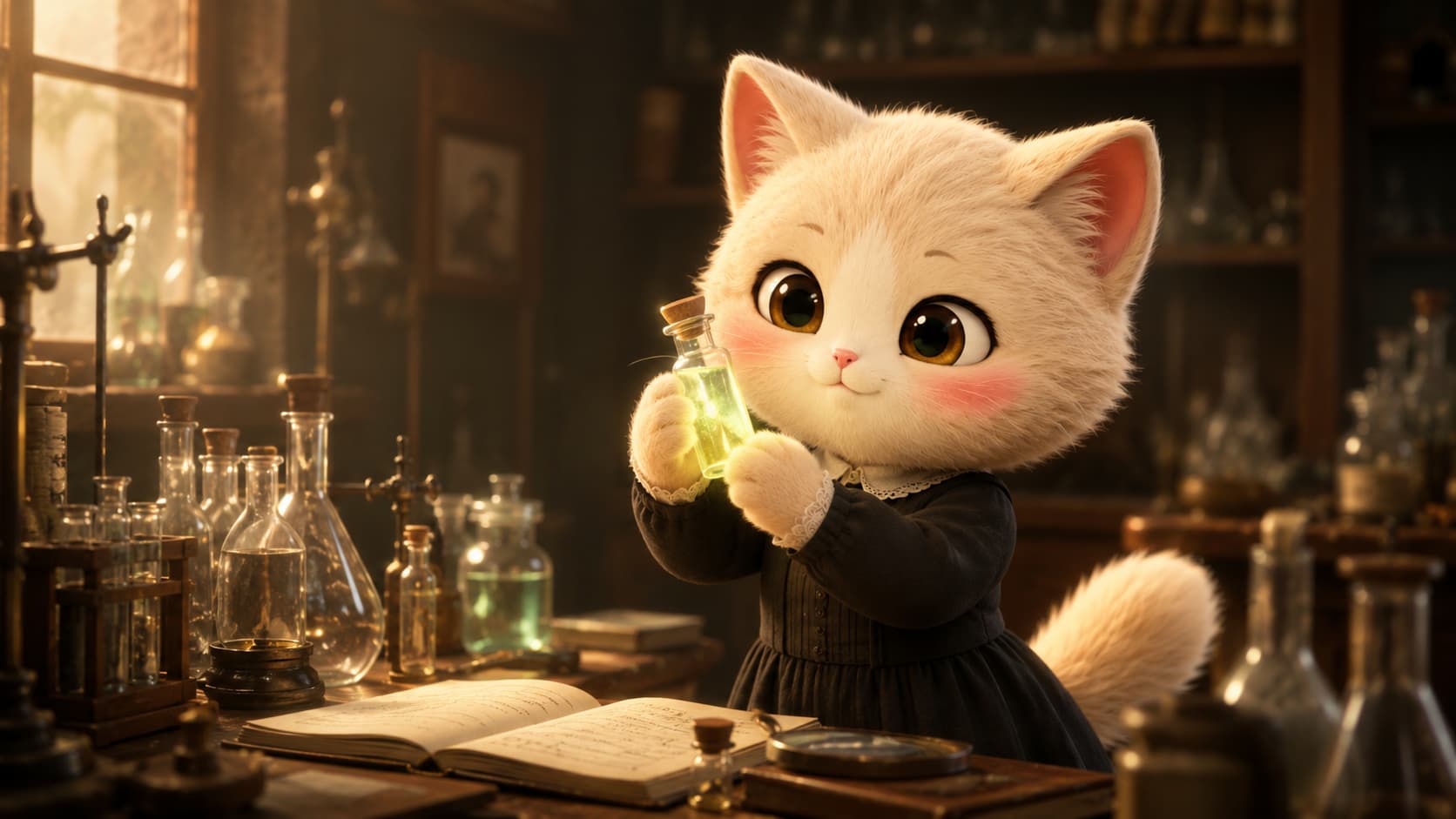
Curie Cat
Curie Cat studied radioactivity through patient, sustained measurement. Matter is not always quiet and unchanged; it can release radiation and energy.
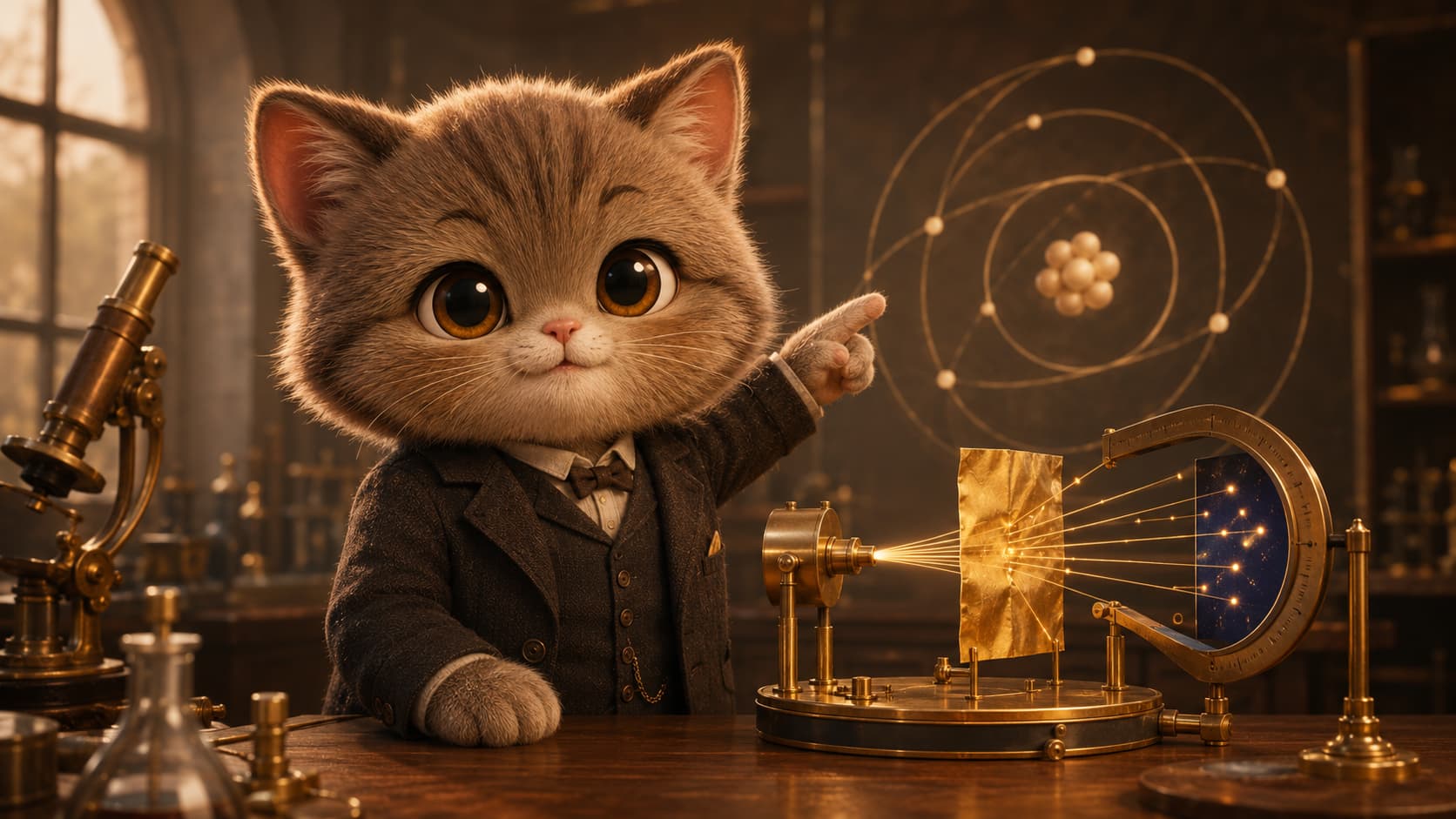
Rutherford Cat
Rutherford Cat learned from deflected particles that atoms are not solid balls. Most of an atom is empty space, with a tiny nucleus at its center.
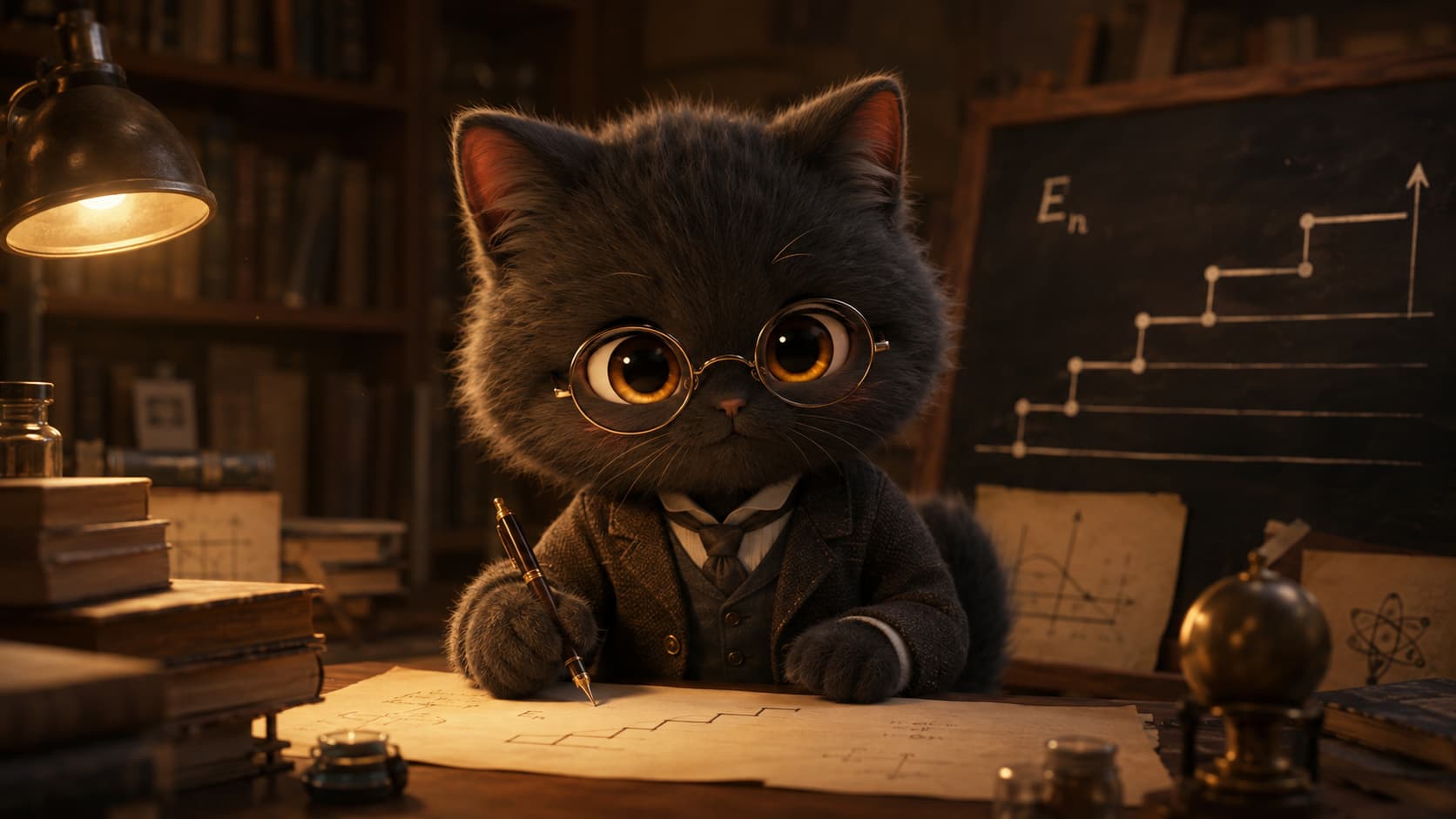
Planck Cat
Planck Cat found that energy is not always exchanged continuously at microscopic scales. Nature sometimes changes in distinct portions.
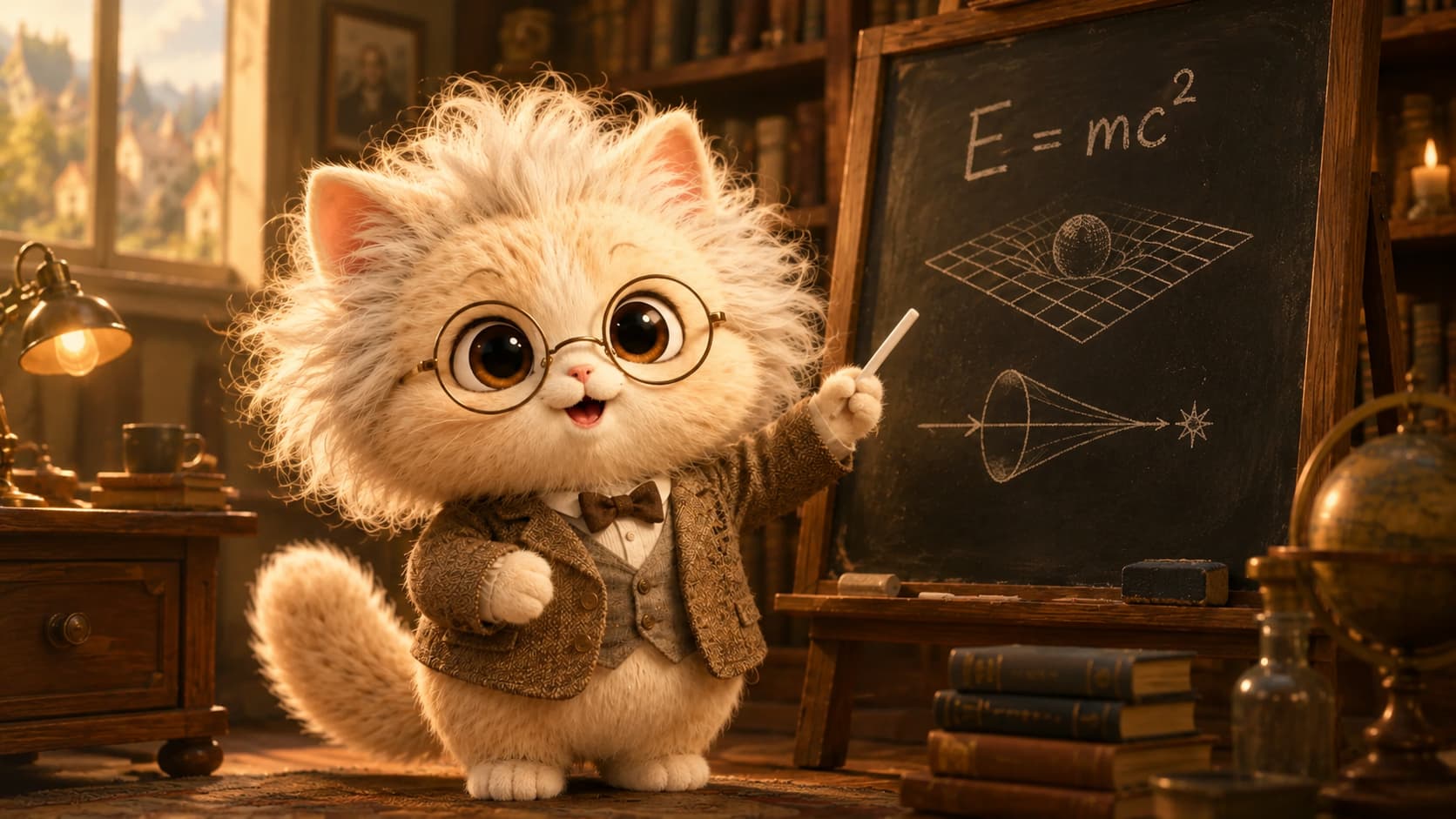
Einstein Cat
Einstein Cat discovered that time and space are not exactly the same for every observing cat, and that gravity can be understood as a curvature of spacetime. Light, motion, and gravity therefore had to be understood through one new set of rules.
Reading Earth

Hutton Cat
Hutton Cat saw in rock layers, erosion, and uplift that Earth had undergone change over an immense span of time. Processes that look slow today can shape valleys and strata when they continue for long enough.

Wegener Cat
Wegener Cat noticed matching continental outlines, rock layers, and fossils. He proposed that continents were once joined and drift over immense spans of time.