Civilization Museum · 03
Life, Evolution & Ecology
From cells under the microscope to heredity, evolution, and ecosystems, this wall follows how cats gradually came to see life’s continuity, change, and interdependence.
Inside Cells

Hooke Cat
With an early microscope, Hooke Cat saw tiny chambers in cork and gave them the name “cells.” Beyond unaided sight, life held another layer of structure.
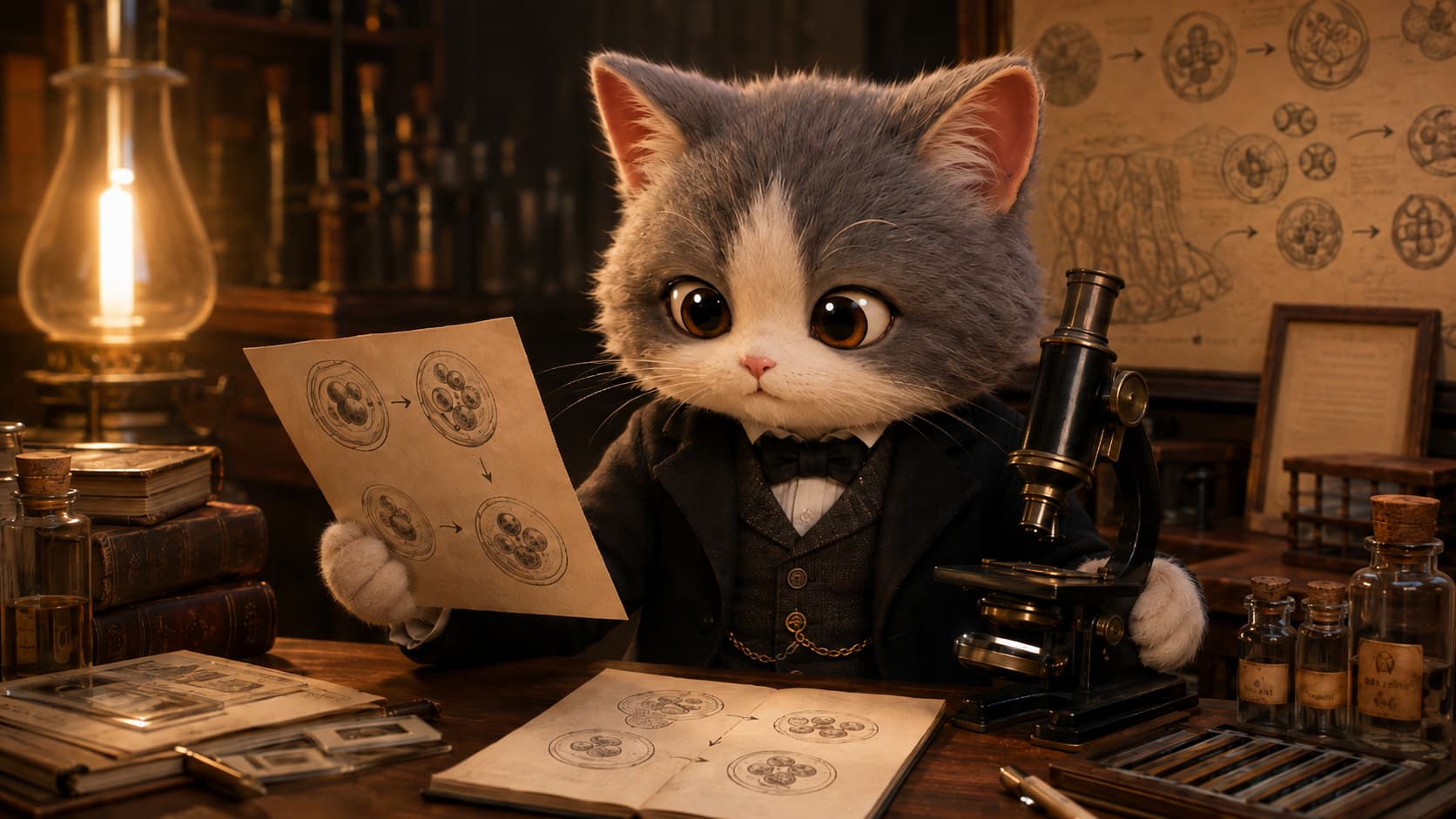
Virchow Cat
Schleiden Cat and Schwann Cat established that plants and animals are made of cells; Virchow Cat further emphasized that new cells come from existing cells. Life continues through cellular continuity.
Evolution & Inheritance

Darwin Cat
Darwin Cat observed that members of the same population already differ in their traits. When some traits suit the environment better, the lives carrying them are more likely to leave descendants.
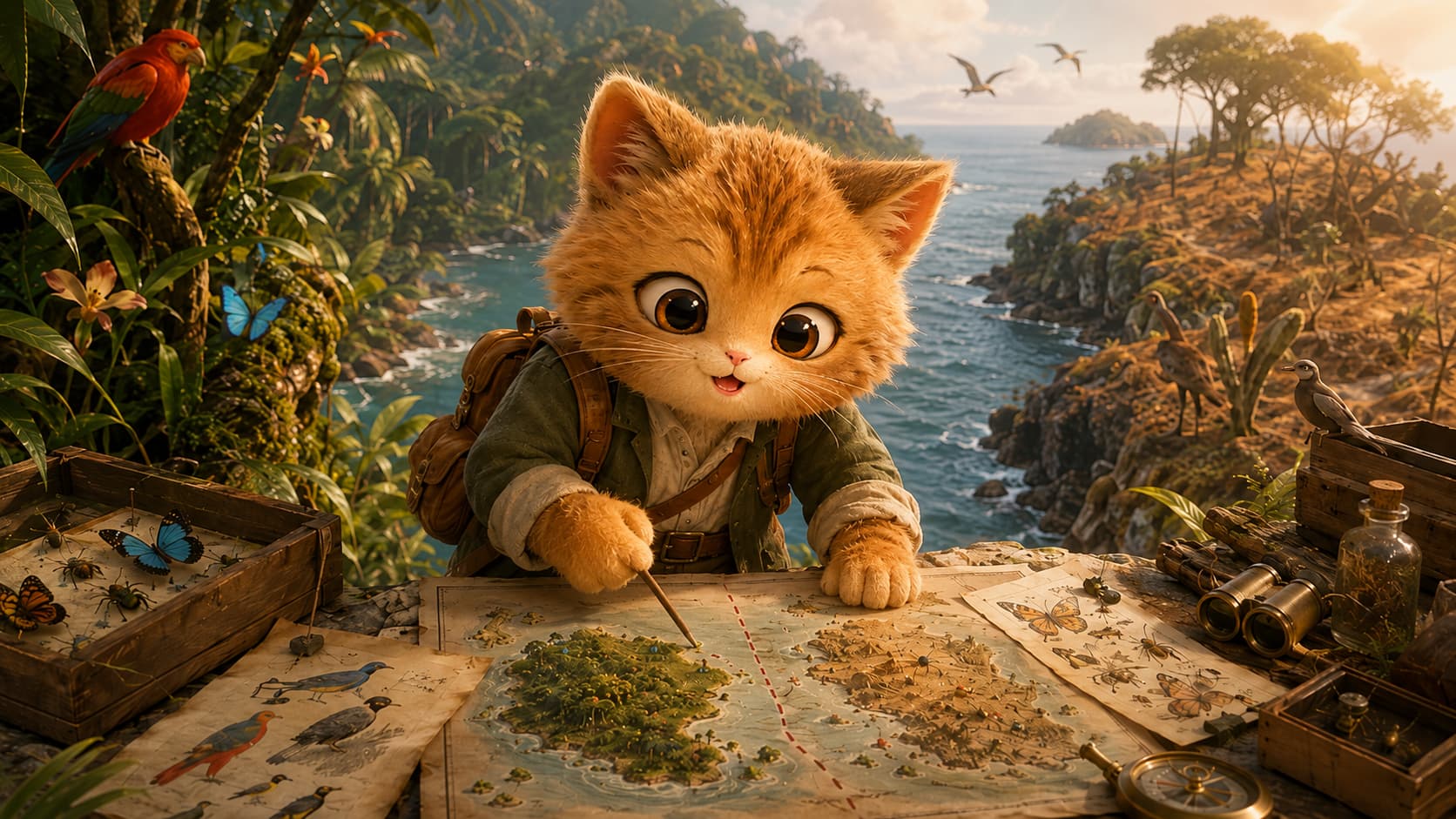
Wallace Cat
Wallace Cat independently developed the idea of natural selection and recognized biogeographic boundaries through species differences across islands and straits. Nearby lands can hold very different living worlds.
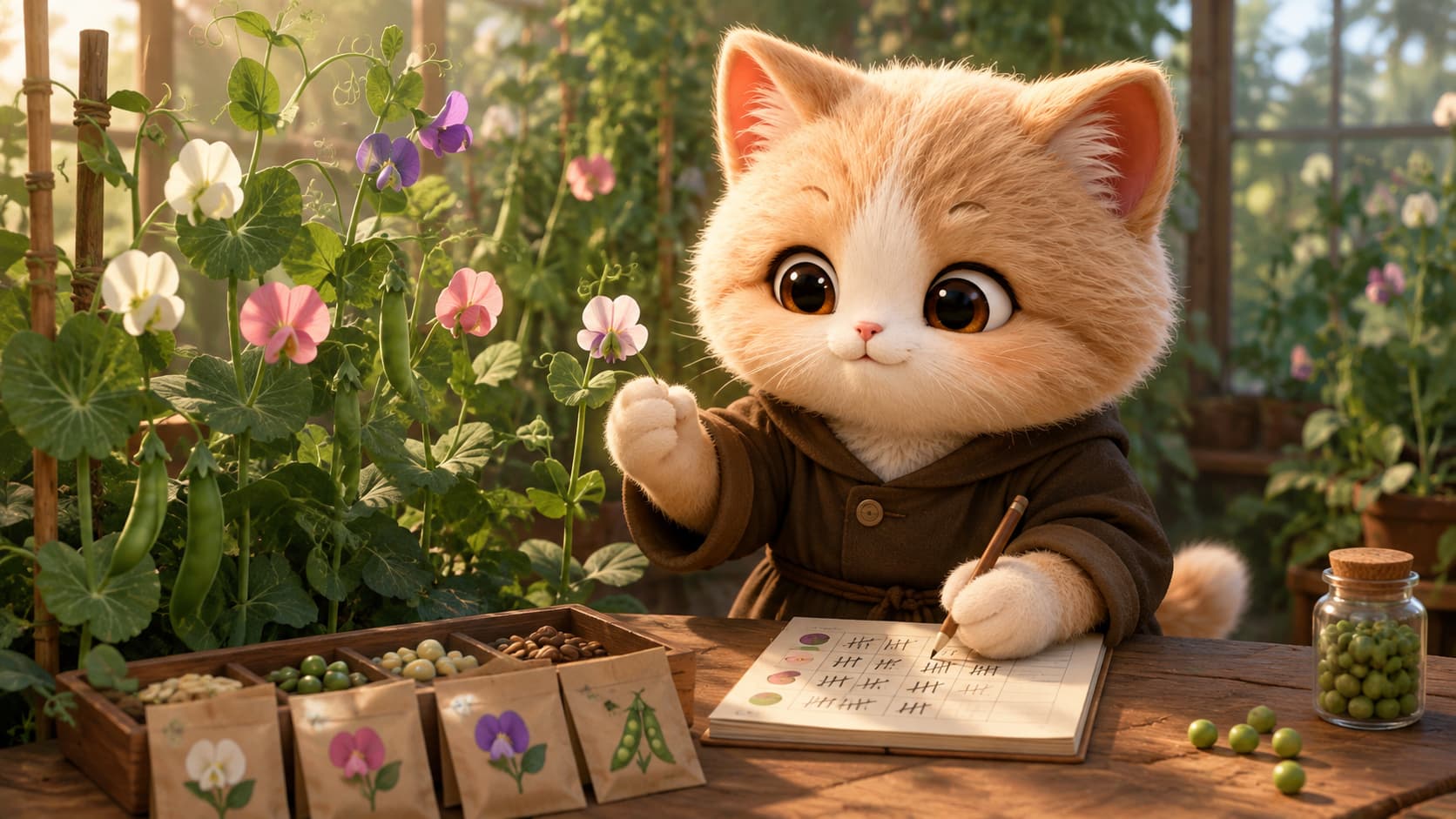
Mendel Cat
Across generations of pea plants, Mendel Cat found observable patterns in how some traits are passed on. Inheritance is not random, though living systems are more complex than simple categories.

Rosalind Franklin Cat
Franklin Cat directed X-rays at DNA samples and produced diffraction images that revealed how the material was arranged. Her rigorous experiments gave later cats crucial evidence for understanding DNA's structure.
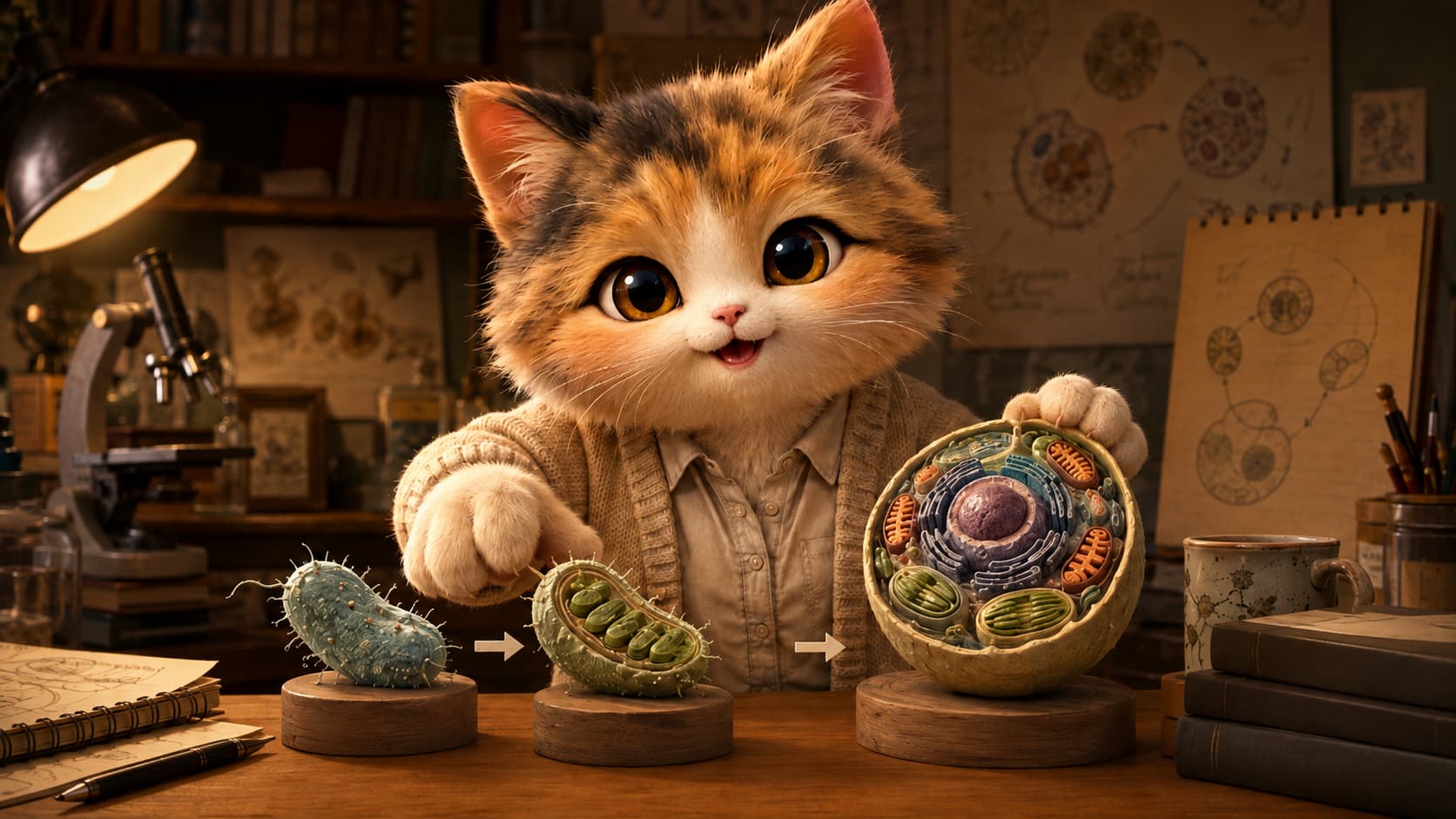
Lynn Margulis Cat
Margulis Cat advanced endosymbiotic theory, showing that parts of complex cells may descend from long partnerships among ancient organisms. Evolution includes cooperation as well as competition.
Ecological Systems
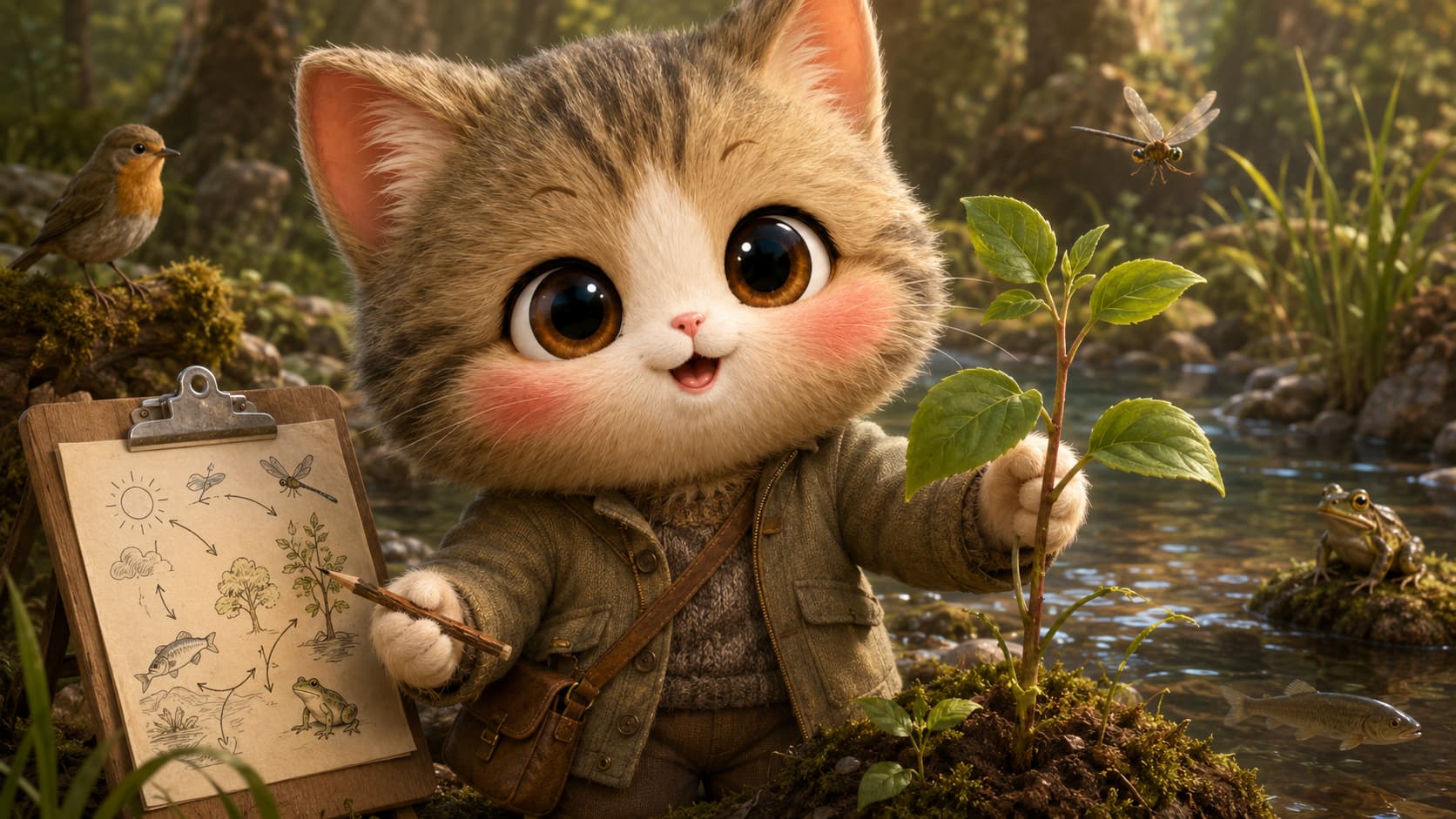
Tansley Cat
Tansley Cat introduced the ecosystem concept, bringing organisms, water, soil, air, and energy into one whole. Life never exists apart from its environment.
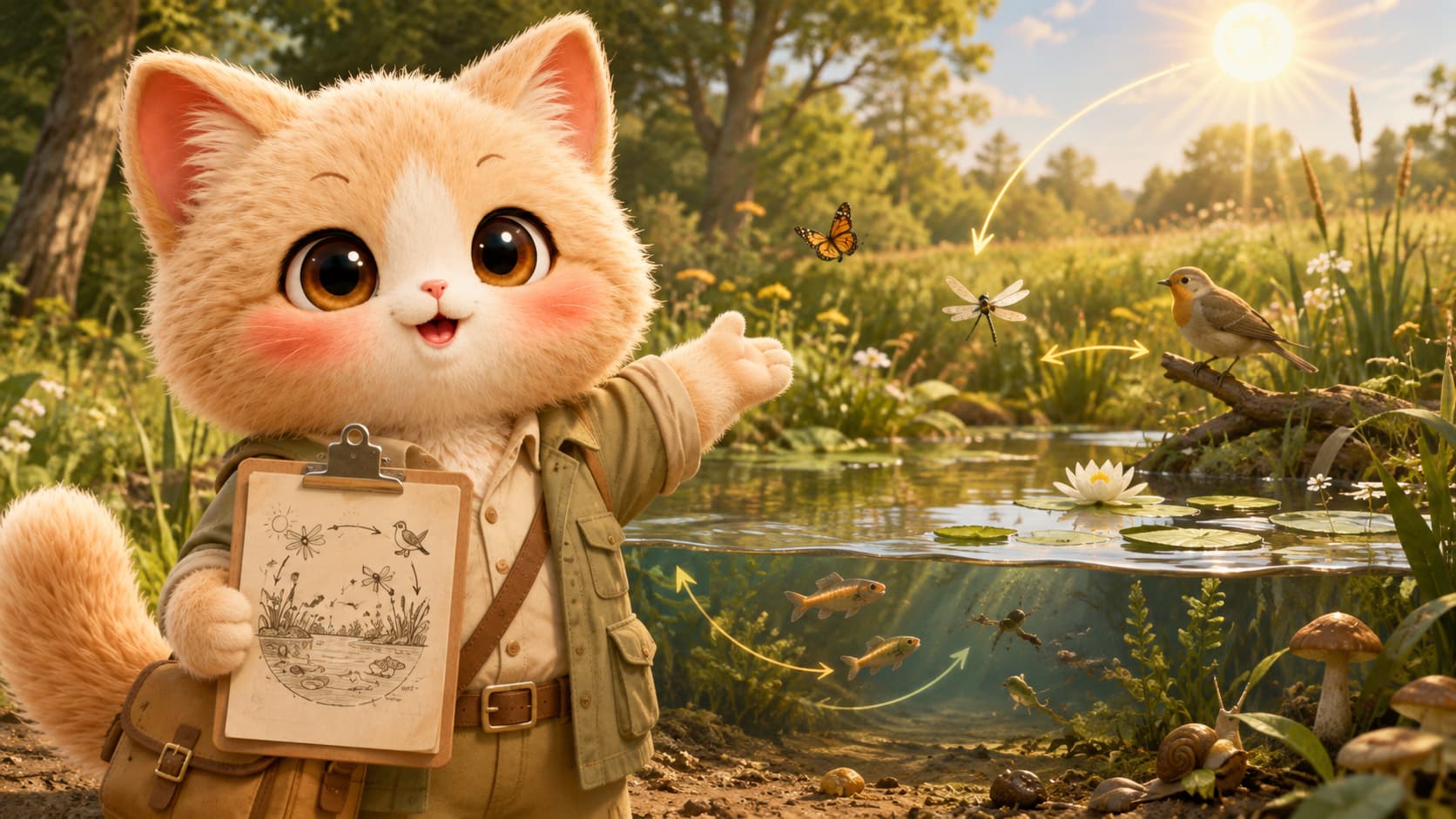
Eugene Odum Cat
Odum Cat studied energy flow, feeding relationships, and material cycles across ponds, grasslands, and forests together. To understand how a place sustains life, cats must see how organisms and their environment affect one another.
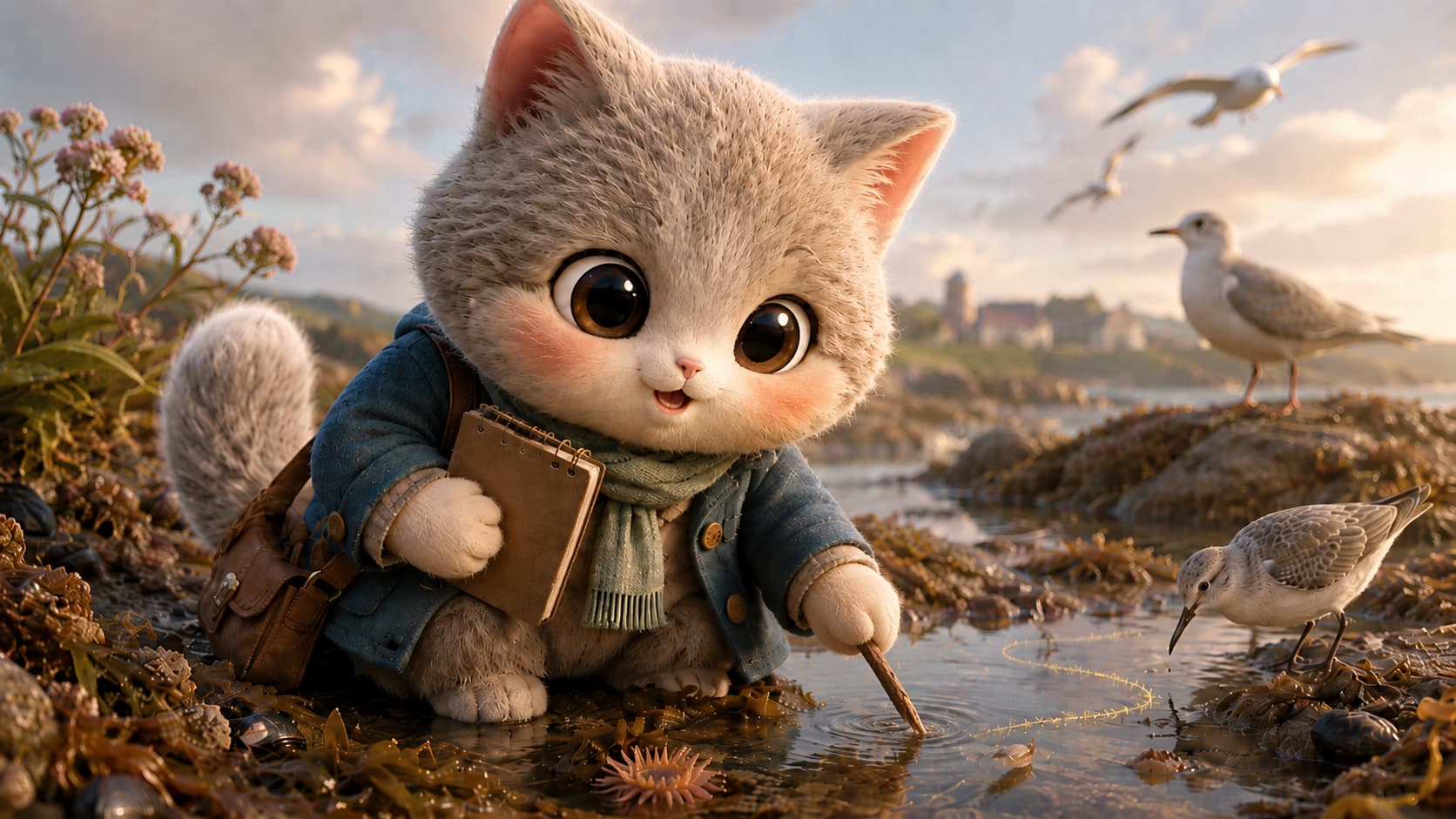
Rachel Carson Cat
Carson Cat showed that chemical effects do not remain where they are used; they can spread through water, food chains, and reproduction. Long-term consequences that are hard to see still deserve close attention.