Civilization Museum · 08
Institutions, Governance & Public Responsibility
From dividing public power and building review and professional administration to resident associations, shared deliberation, common-resource governance, and the test of real capabilities, this wall follows how MiaoMiao City keeps public affairs running, open to oversight, and able to correct itself.
Power Must Not Gather in One Center

Montesquieu Cat
Montesquieu Cat assigned rule-making, rule enforcement, and dispute resolution to different public institutions. If any one part grows too powerful, the others should be able to inspect and restrain it.

James Madison Cat
Madison Cat refused to build institutions on the assumption that cats in power would always be good. He arranged institutions and resident forces to check one another so important decisions could not be controlled by one place alone.
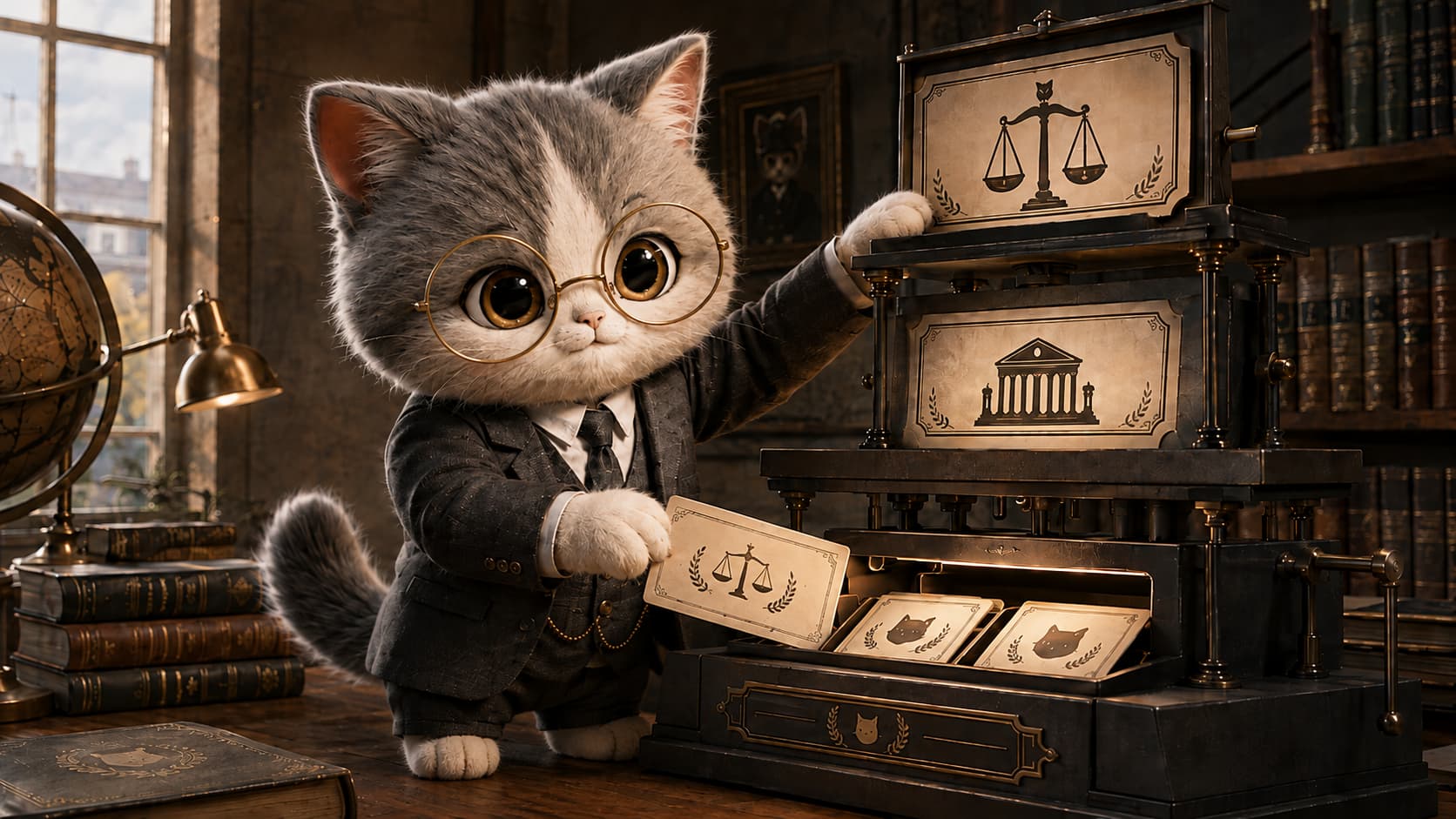
Hans Kelsen Cat
Kelsen Cat promoted a dedicated institution for reviewing rules. Even when most cats support a rule, reviewers must still check whether it violates the basic rules MiaoMiao City has confirmed together.
Public Institutions Need Capacity and Purpose

Max Weber Cat
Weber Cat studied how fixed duties, records, and working procedures let a complex city keep running. He also warned that a system must leave routes for explanation, appeal, and review instead of treating residents as numbers.
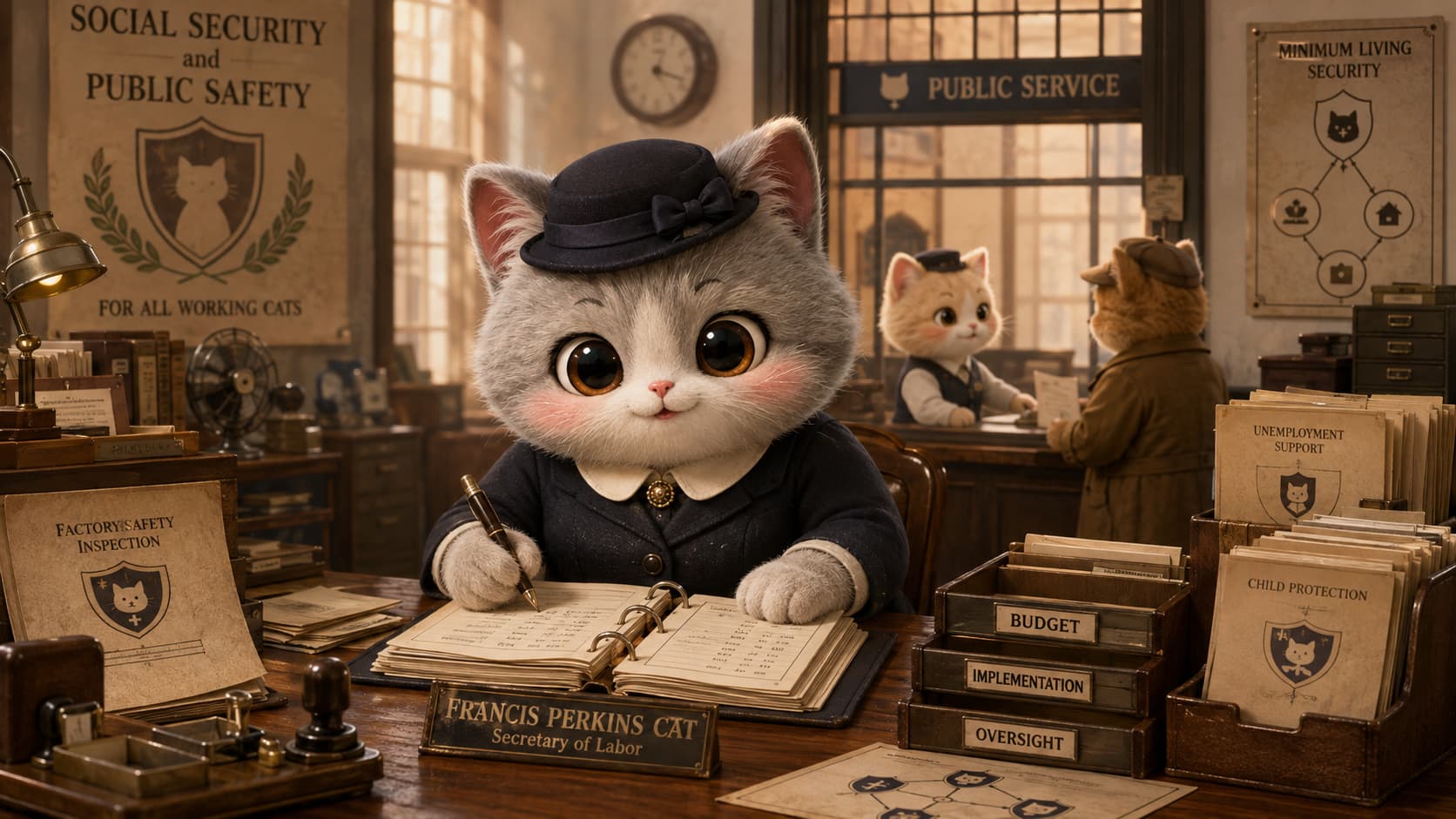
Frances Perkins Cat
Perkins Cat put the wish to protect residents into budgets, inspections, insurance, and lasting public offices. Public protection could then continue when residents needed it instead of depending on a passing burst of enthusiasm.

Dag Hammarskjöld Cat
Hammarskjöld Cat required cats in cross-city public service to judge by shared rules instead of serving a powerful cat city or faction. Shared institutions earn trust only when their service remains independent, professional, and honest.
Residents Cannot Remain Outside Governance
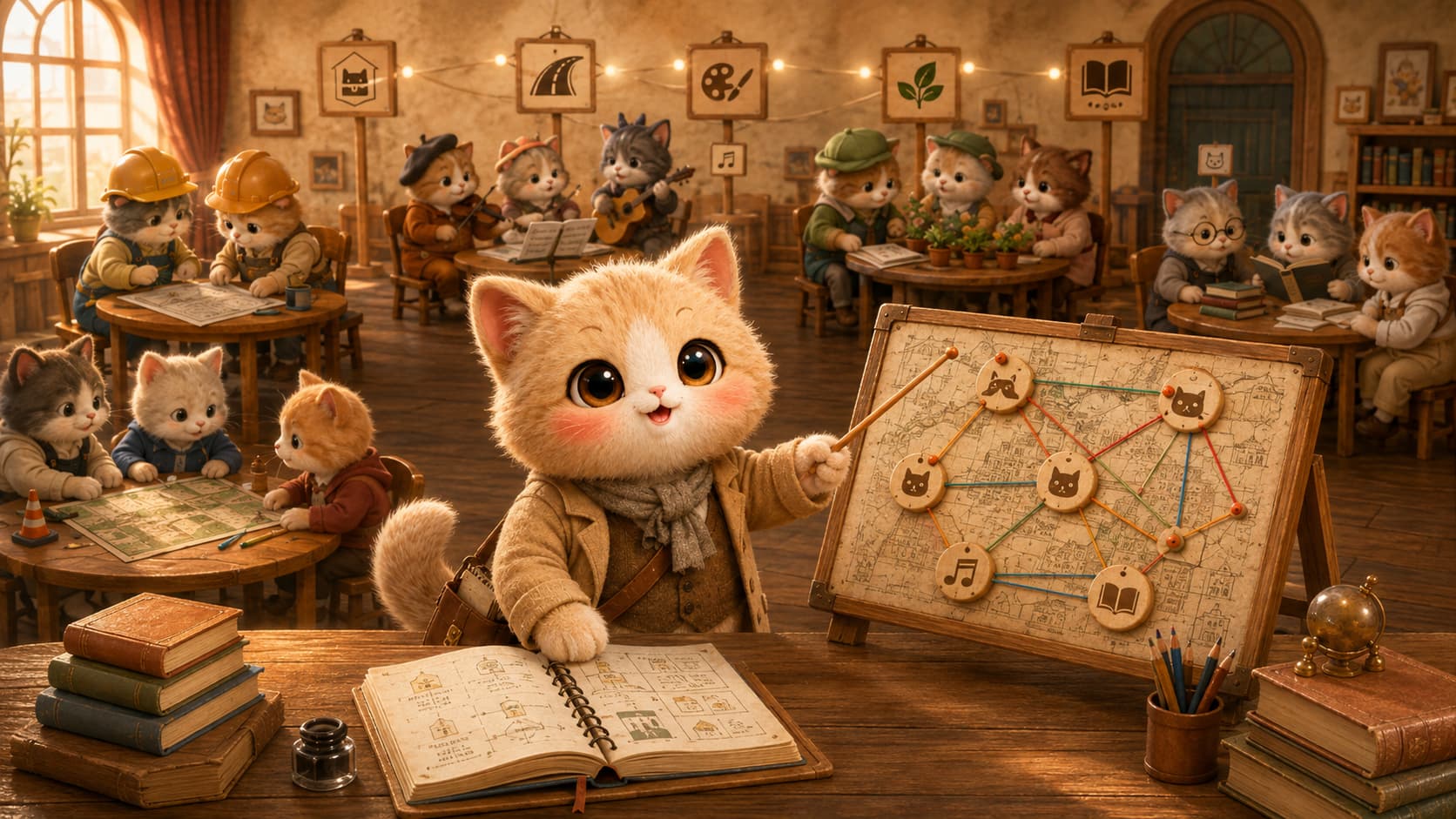
Alexis de Tocqueville Cat
Tocqueville Cat recorded how residents formed small groups to work on schools, roads, culture, and the environment. By doing things together, cats learned to cooperate and kept every public matter from being concentrated in one center.
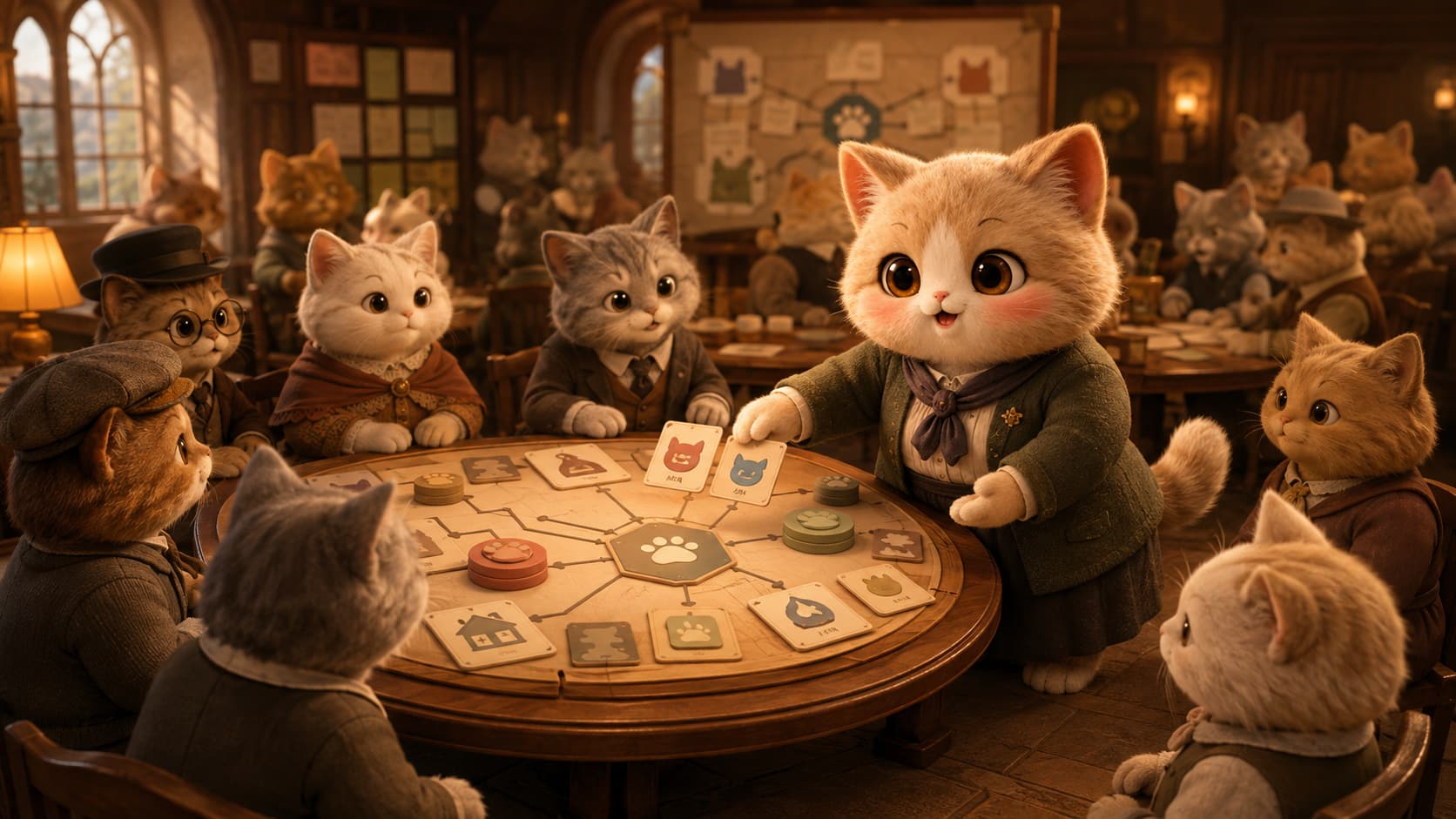
Mary Parker Follett Cat
Follett Cat brought cats in conflict to the same table instead of letting one side win by command. When everyone studies the real problem together, they may find a new solution that no side had proposed before.
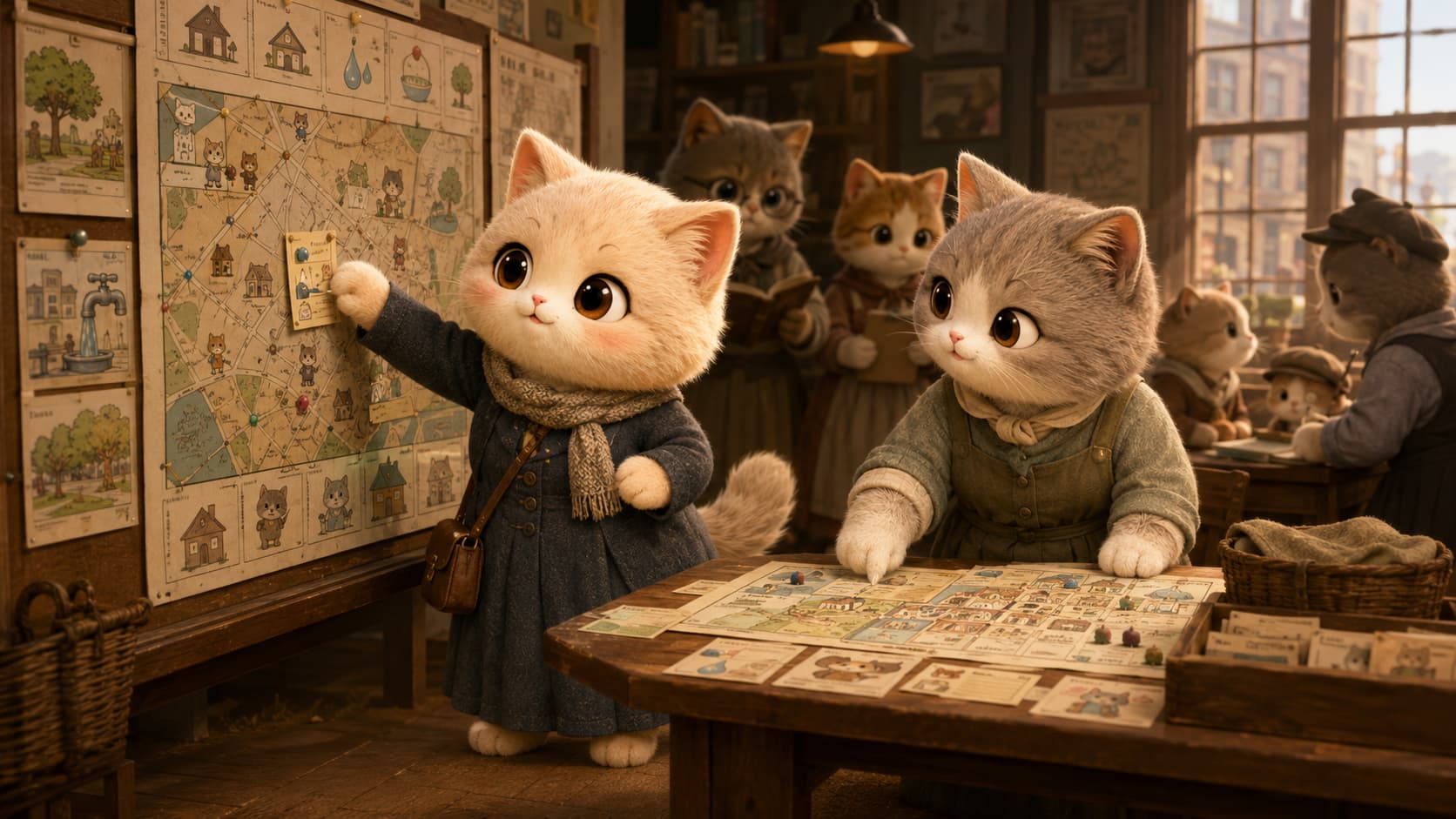
Jane Addams Cat
Addams Cat and community residents investigated real problems in housing, sanitation, care, and public space. City policy should not be decided only in offices; it must also grow from the difficulties residents meet every day.
Collective Choice Has No Universal Formula

Kenneth Arrow Cat
Arrow Cat compared voting methods and found that no method can satisfy every ideal requirement in every situation. Voting still matters, but cats must know what each rule gives up.
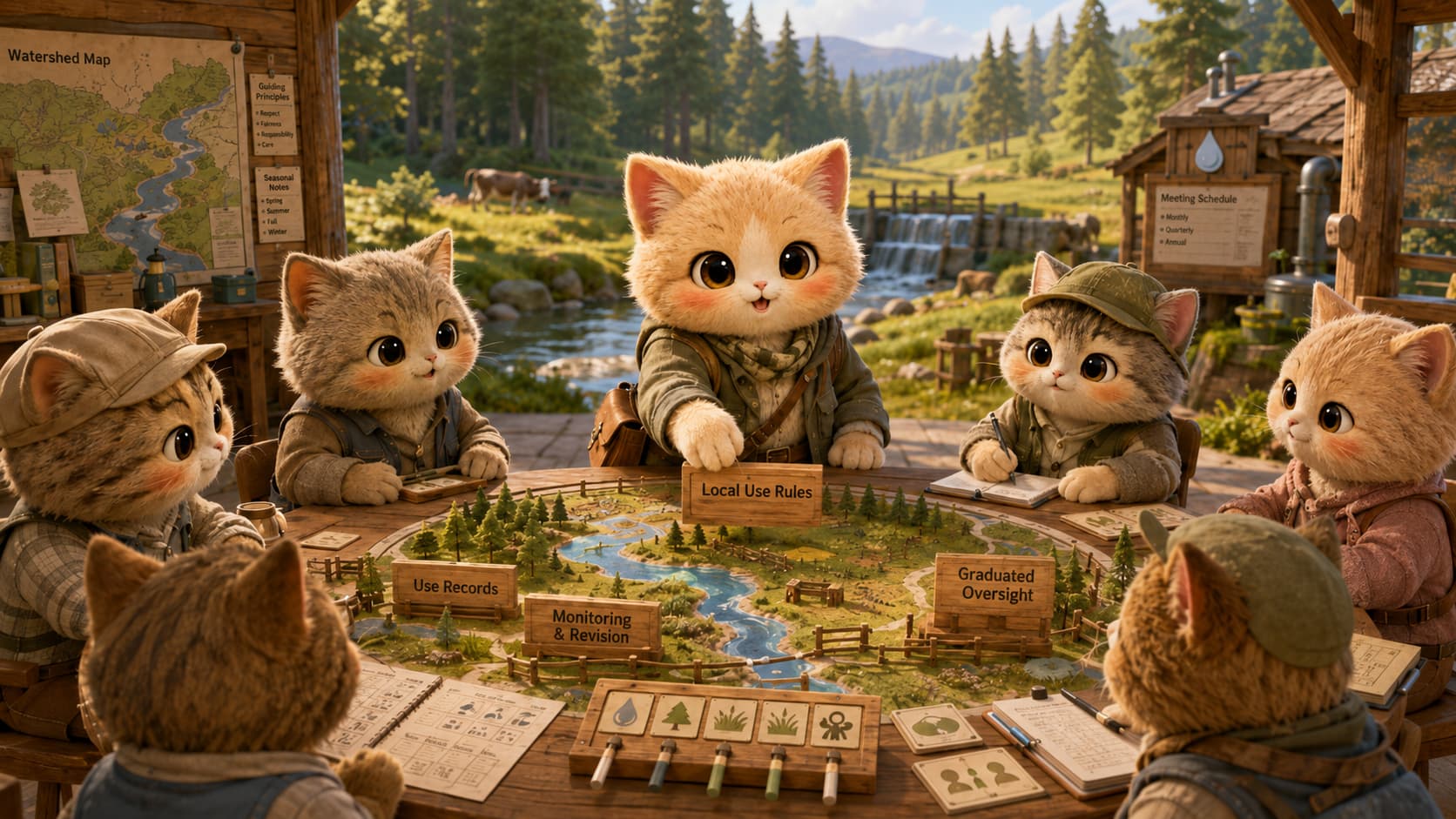
Elinor Ostrom Cat
Ostrom Cat observed that cats sharing water, forests, and public facilities can discuss their own rules and monitor whether any cat breaks them. When problems appear, they can revise those rules instead of waiting for every decision to come from a central office.

Amartya Sen Cat
Sen Cat looked beyond how impressive an institution's documents appeared and checked whether residents could actually receive care, learn, travel, speak, and join public life. A rule's final result must be judged by how cats are truly able to live.