The Package That Came Back
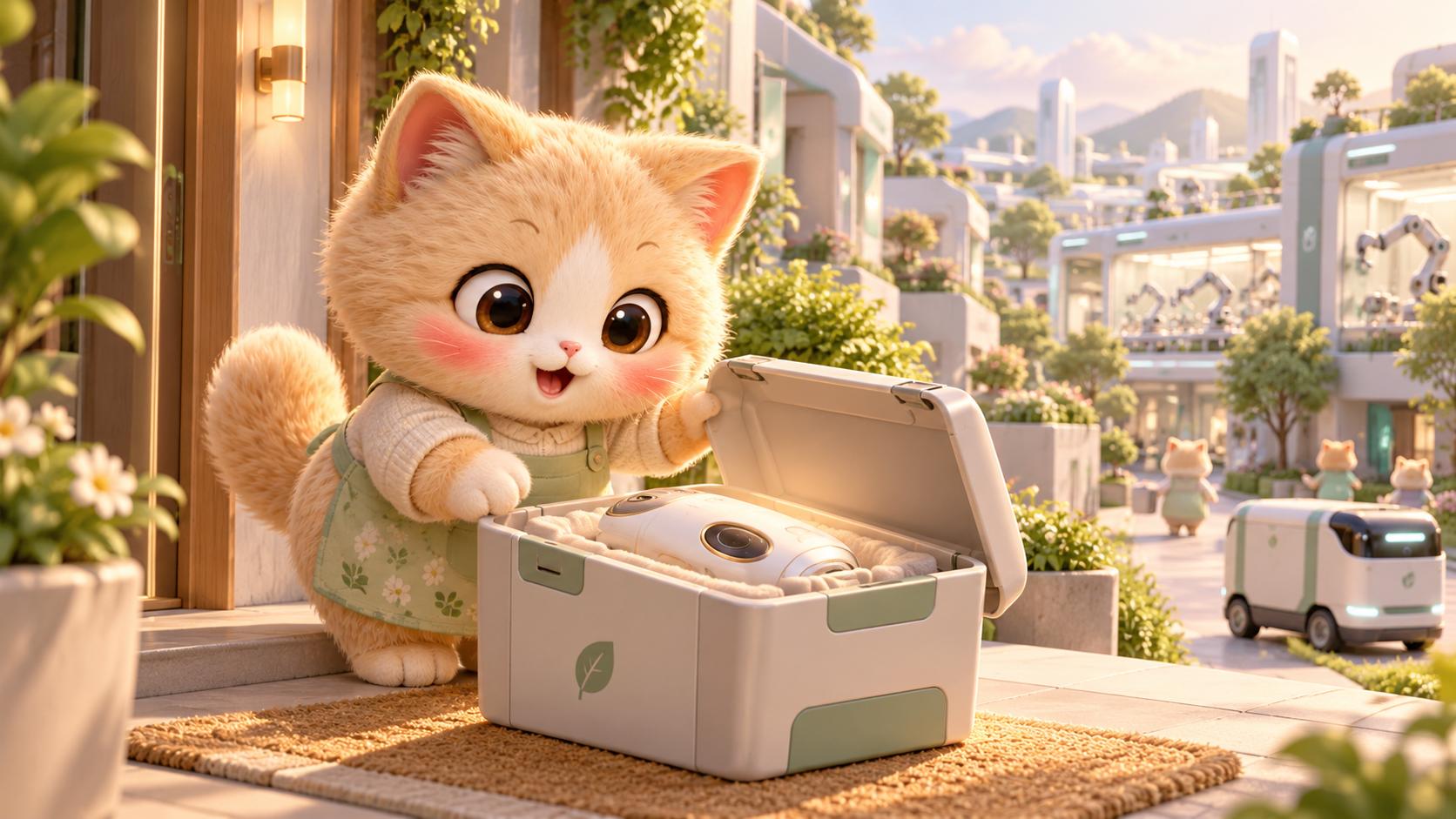
A familiar little device arrives in a reusable delivery box. It was broken last week; now it works again. Between those two moments, it traveled through a network of transport, inspection, repair, and packing.
That journey leads to Riverlands Manufacturing District. Production here includes more than making new objects: it also keeps existing ones in service.
A District with Neighbors
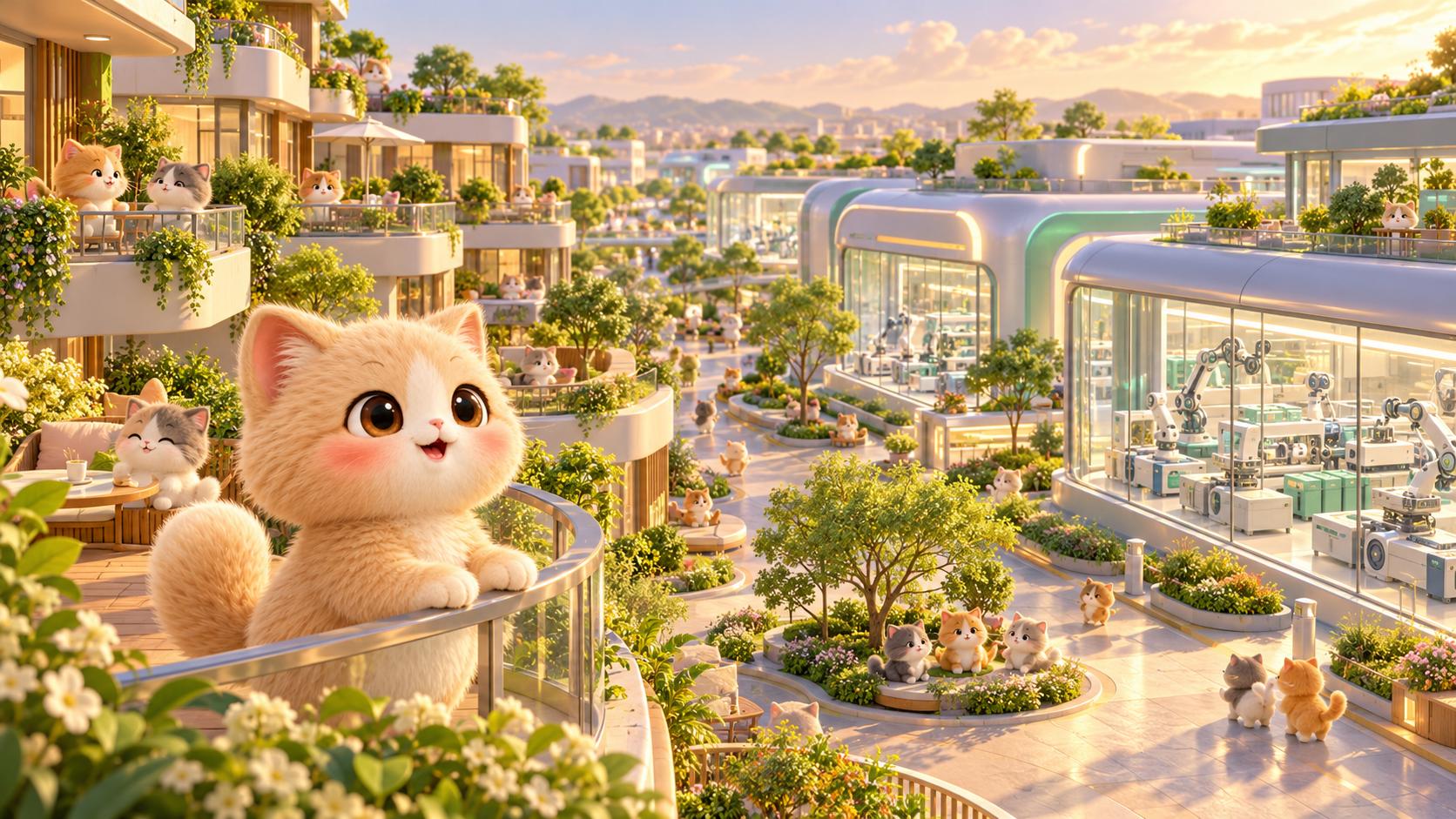
Riverlands has 25,000 cats in the original resident registry, about 1.05% of Greater MiaoMiao City's baseline residents. The figure describes the district's initial allocation, not a live headcount.
Manufacturing does not fill every street. Cats have homes, communal spaces, and lives of their own, while automated facilities handle most routine production work.
The Value of a Second Use
Agricultural ingredients and materials arriving from other regions can be processed here. Parts are assembled, equipment is serviced, and goods are prepared for use across the city.
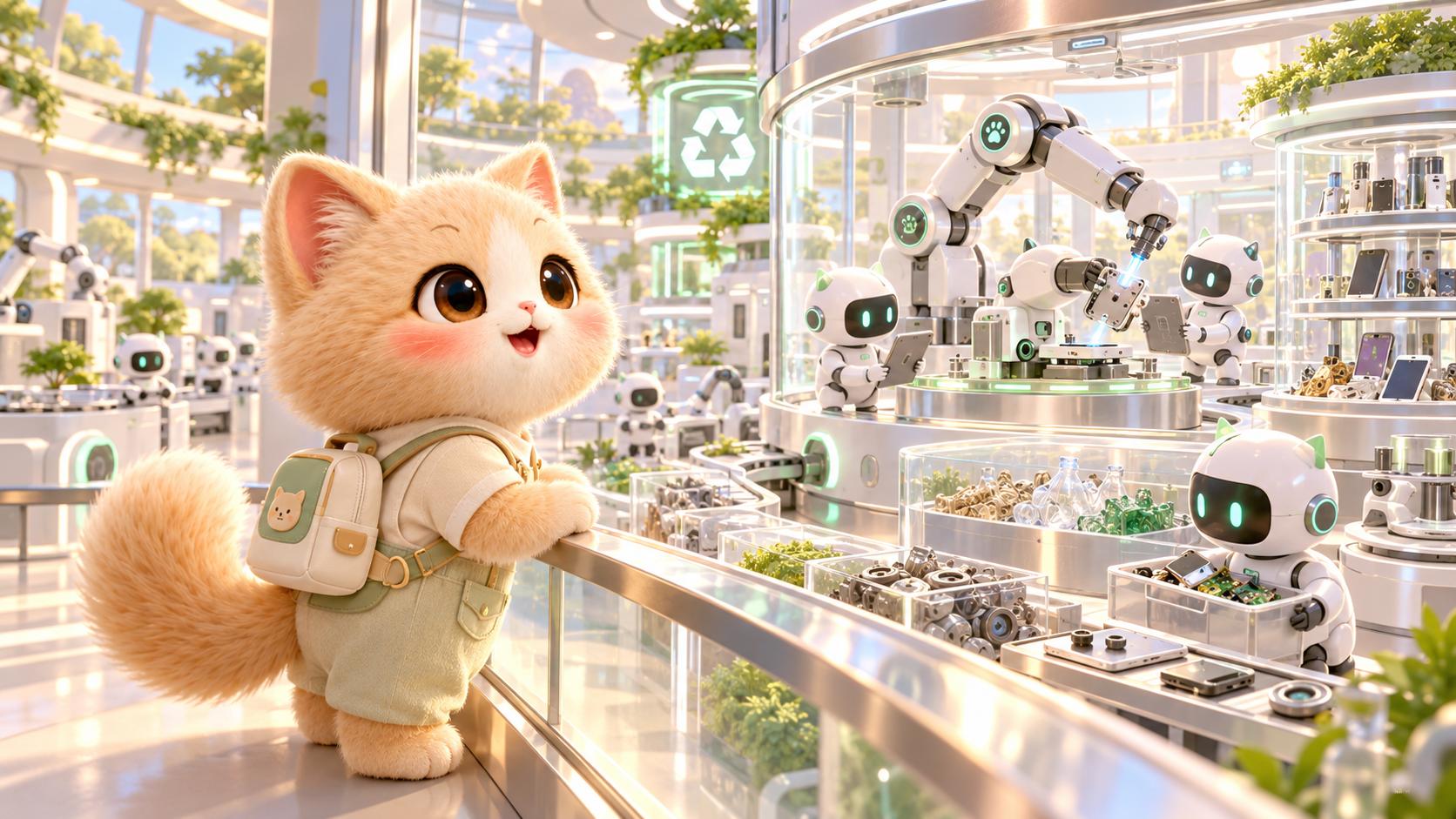
A worn component may be replaced rather than discarded. Recoverable materials enter new production cycles. The goal is not simply to produce more things, but to make better use of what already exists.
Connected by Rail
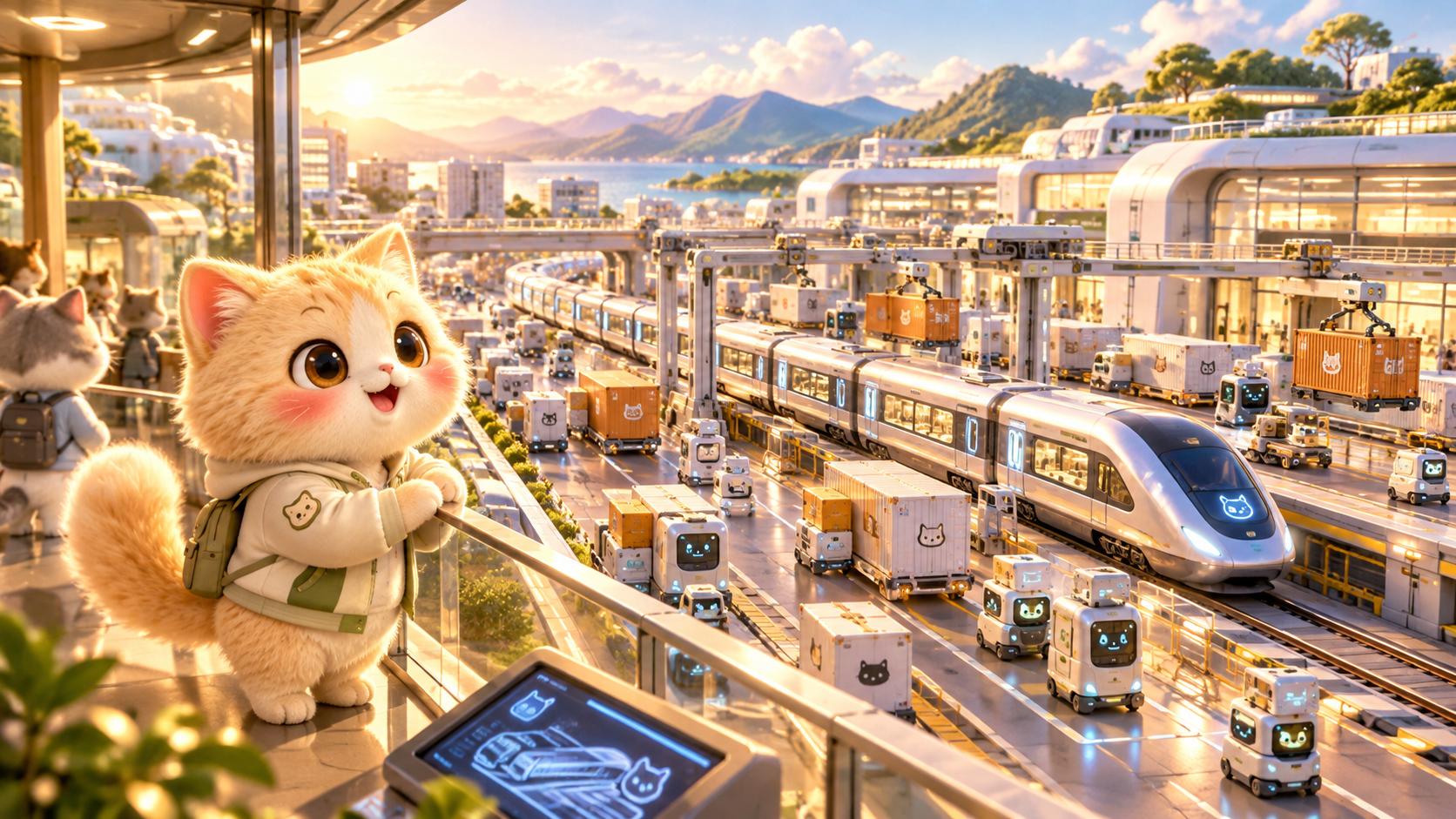
Raw materials travel in; finished goods and repaired equipment travel out. Freight rail, storage systems, and automated transfer facilities link Riverlands with the city's other districts.
Most cats never see these handovers. They notice the results when a needed object arrives, food is delivered, or something broken works again.
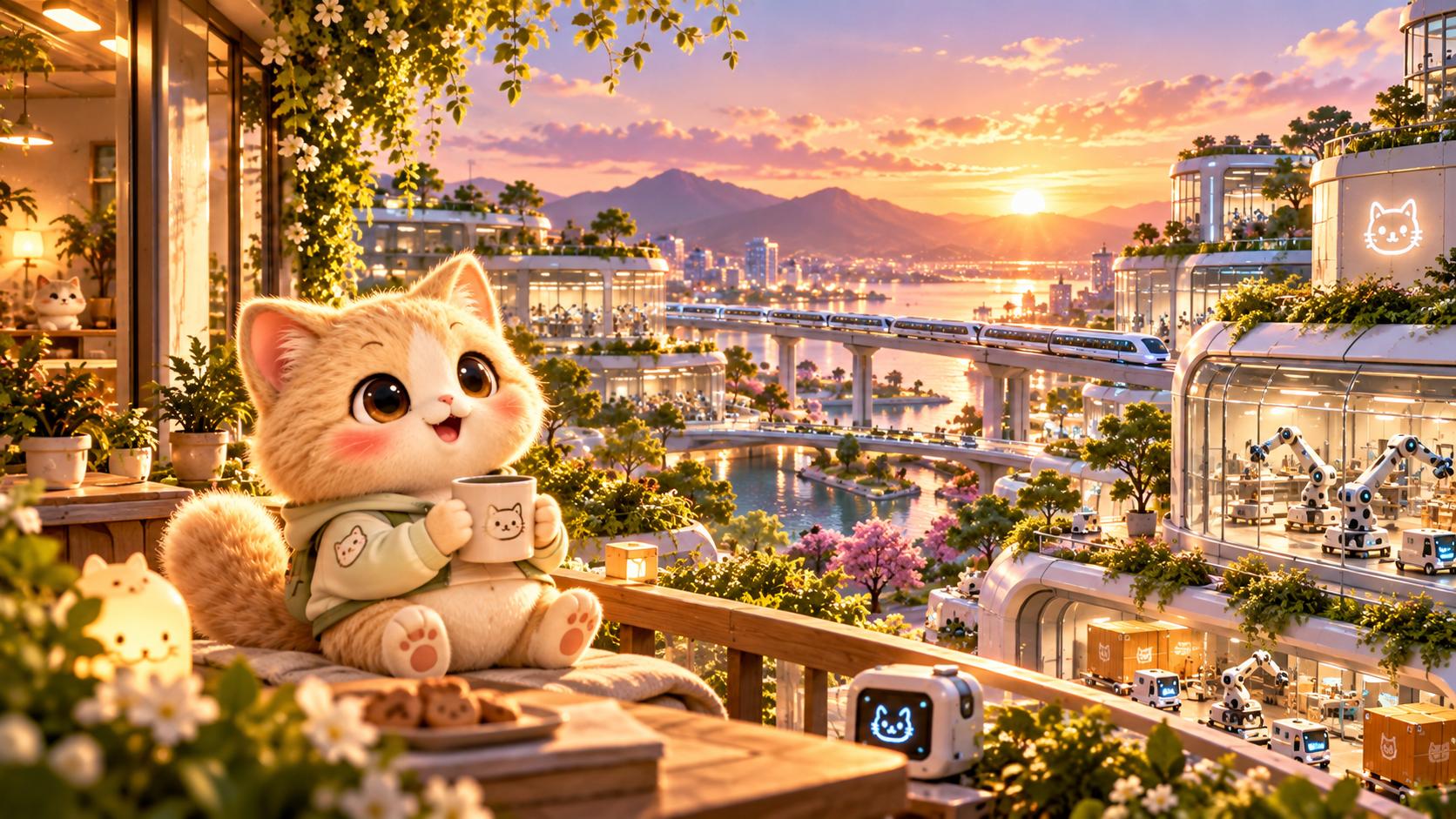
More Than a Factory
At dusk, the manufacturing systems continue their scheduled work. Nearby, a cat can walk through a garden without keeping pace with a production line.
Riverlands is an industrial district, but it is also home. It gives everyday objects a beginning, and sometimes a second chance, without asking its residents to live as extensions of the machinery.