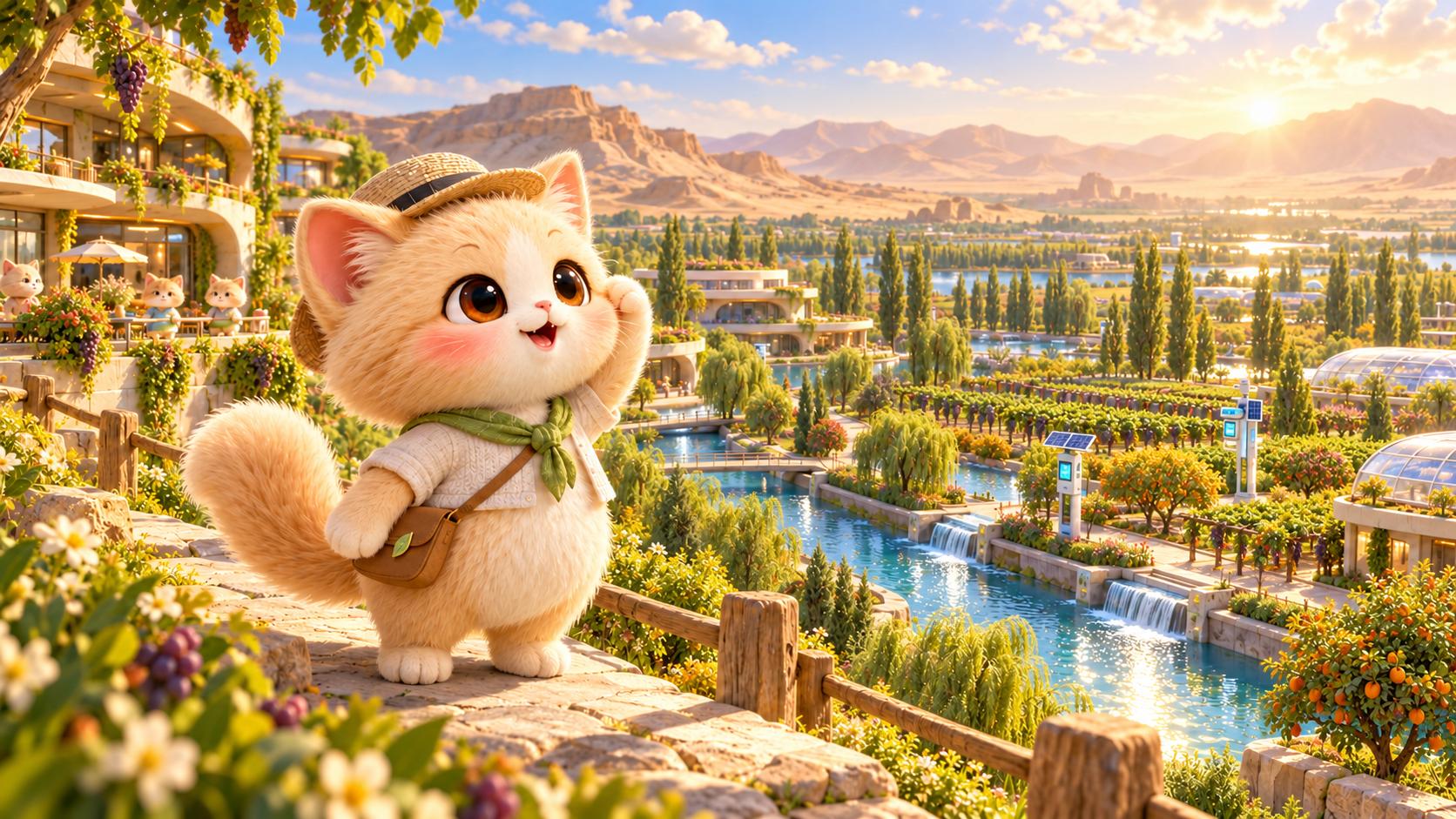
Green in a Drier Landscape
For a while, the view from the train is mostly dry land. Then cultivated plots and patches of green begin to gather around water infrastructure. The contrast makes the landscape of Oasis Agricultural District immediately recognizable.
This is another of the city's agricultural regions, but it does not share every growing condition with Fertile Plains. Water matters here in a particularly visible way.
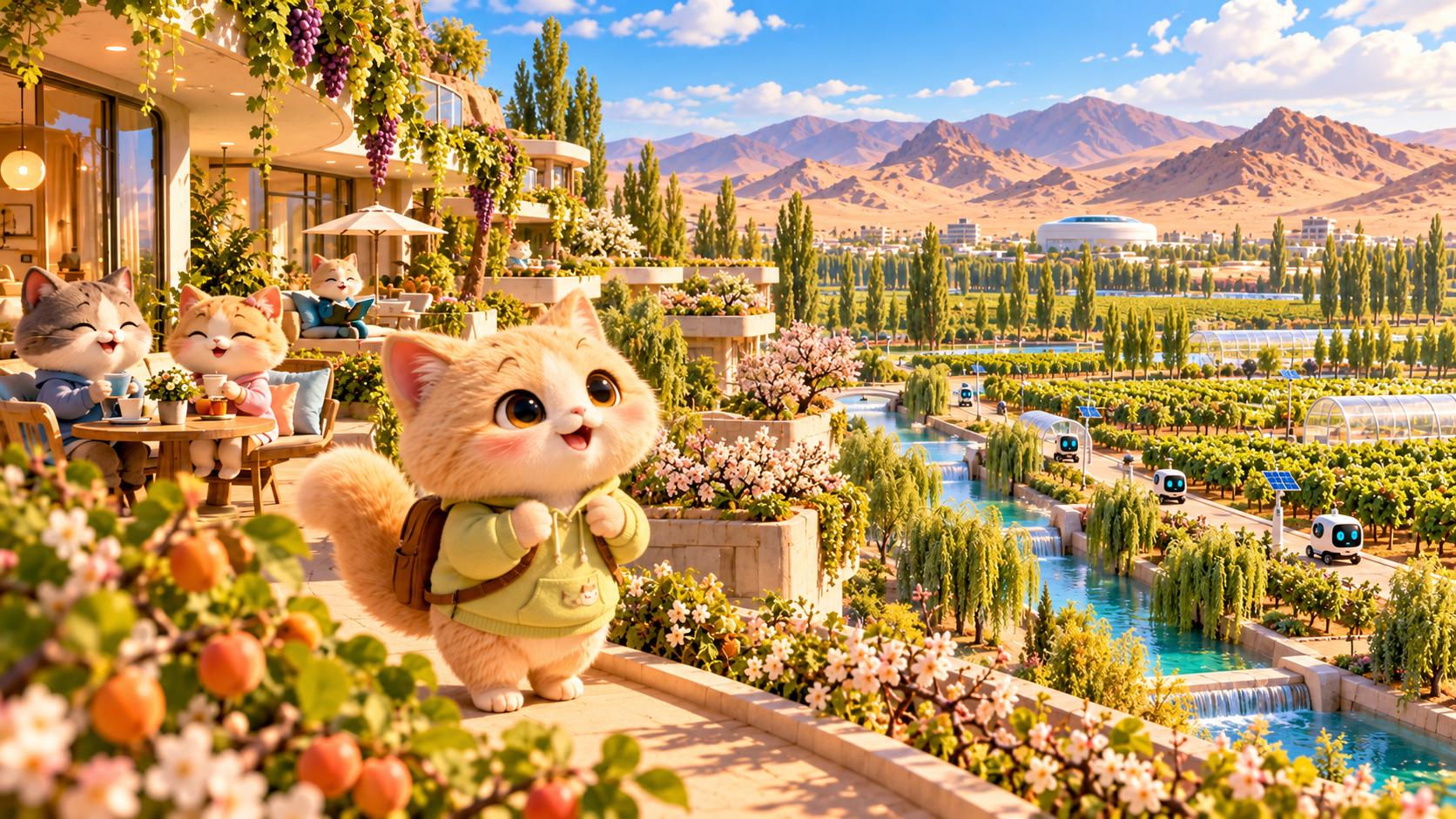
A Community in the Oasis
Oasis begins with 14,000 resident cats in Greater MiaoMiao City's original district registry, around 0.59% of the baseline total. The number is not a live resident count.
There are homes and communal spaces alongside the agricultural landscape. Cats share this environment without being required to operate its farms themselves; automated systems carry out much of the everyday agricultural work.
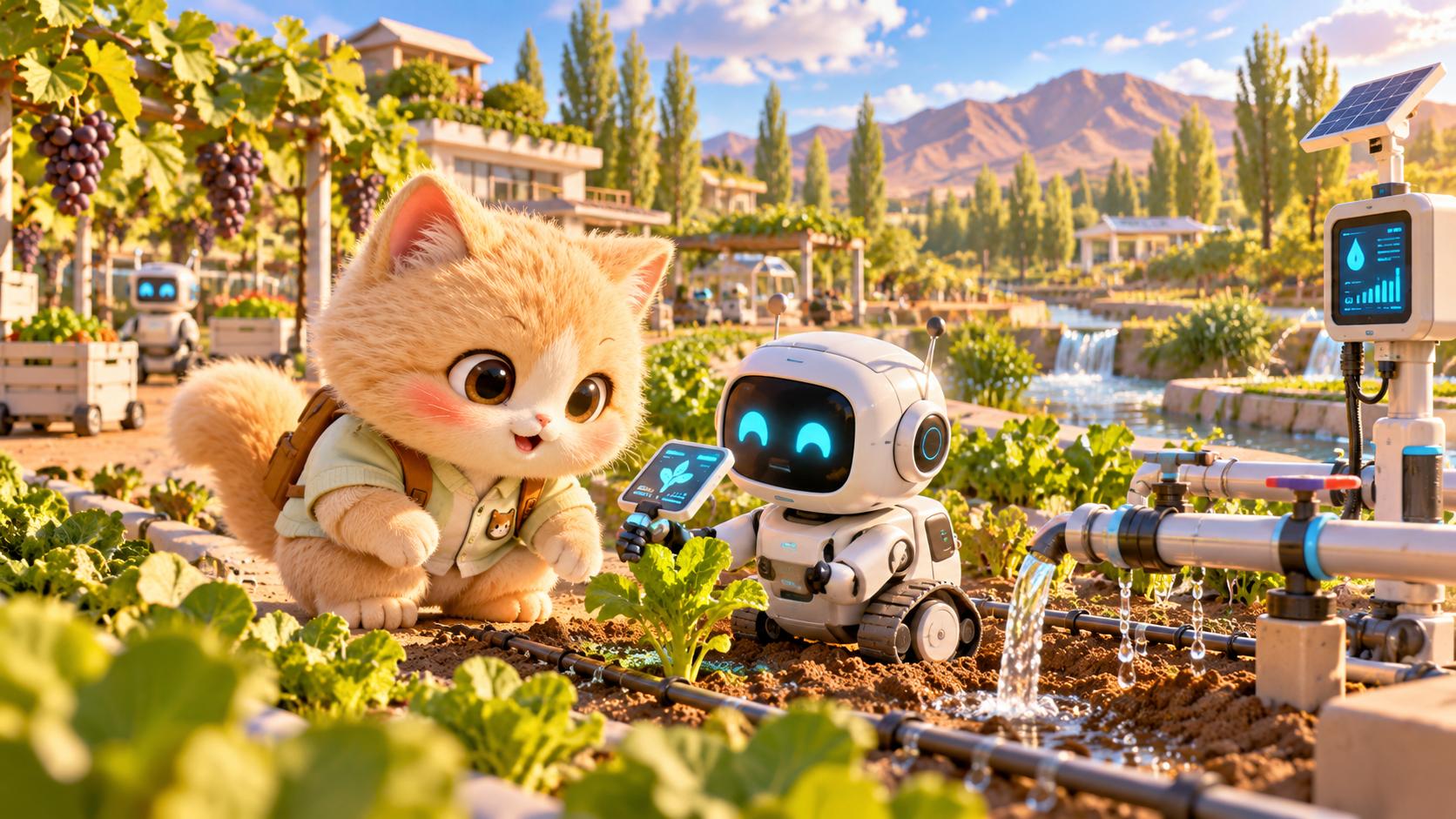
Working with Limited Water
Irrigation needs more than a pipe and a schedule. Water use, recovery, soil conditions, and crop needs must be observed together. Automation helps deliver water carefully rather than treating it as an unlimited input.
The challenge is to sustain food production without losing sight of the surrounding environment. Healthy crops and careful stewardship belong to the same long-term plan.
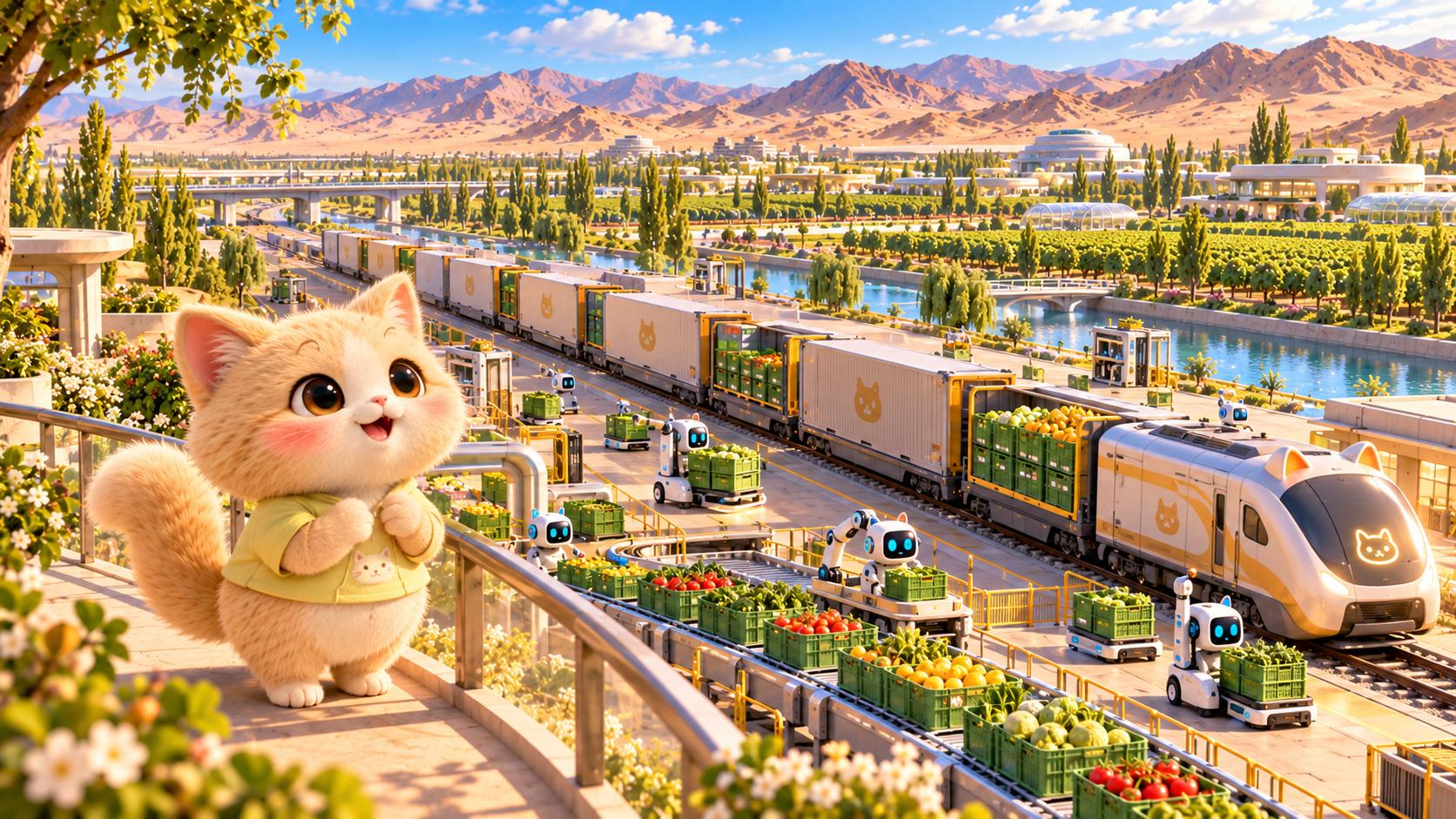
Part of a Larger Whole
Harvests leave by rail; maintenance supplies, equipment, and other necessary materials arrive through the same regional network. Oasis does not have to produce everything the city needs.
Different growing regions make use of different conditions. Their connections allow each place to remain itself rather than becoming a copy of the next agricultural district.
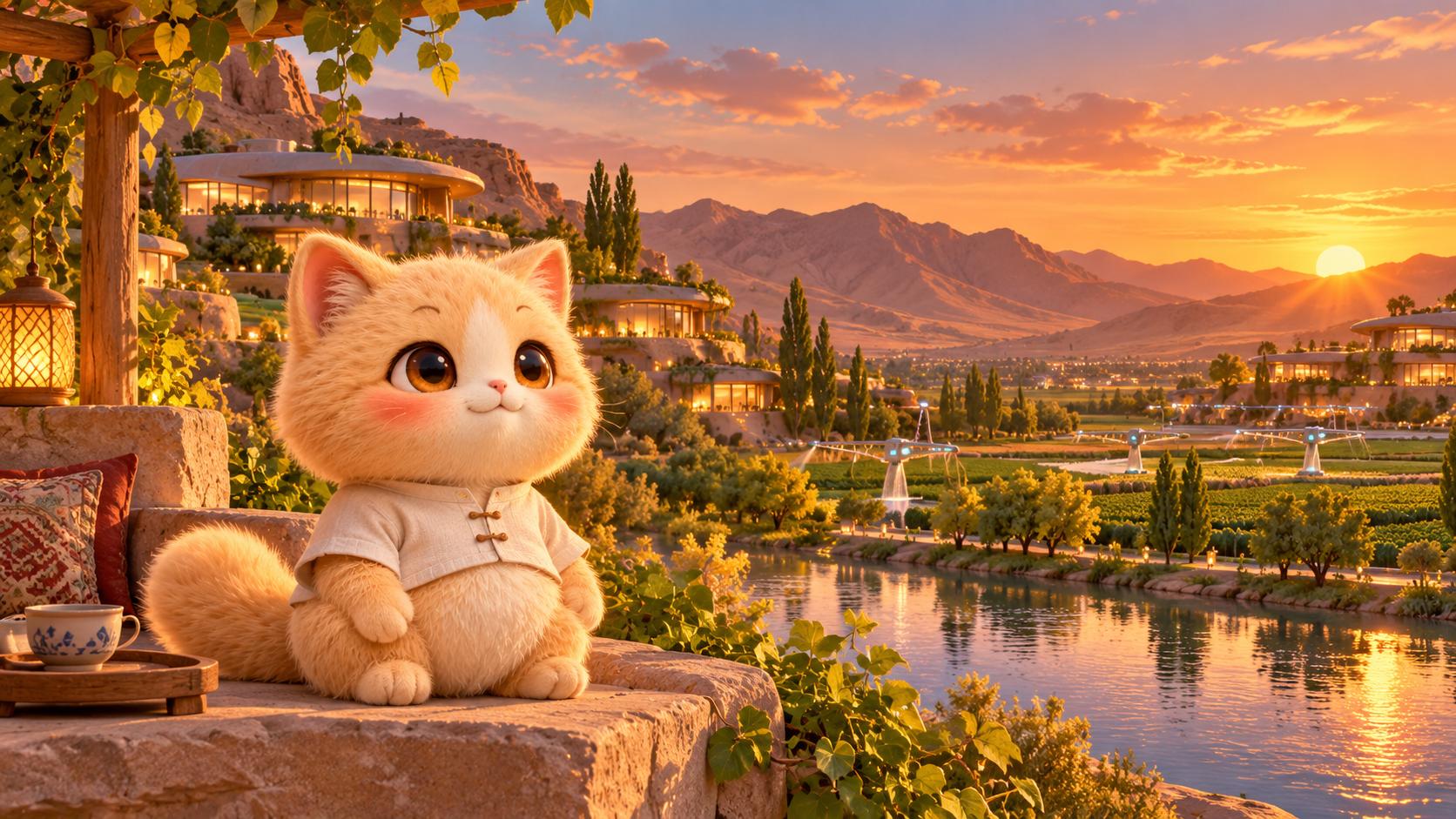
The Last Light on the Water
At dusk, light rests on the irrigation water. The machinery grows quiet, and cats follow the paths back toward their community.
Oasis offers more than crops. It shows how a city can work with a demanding landscape by taking water, soil, and living things seriously, without expecting every place to become the same.