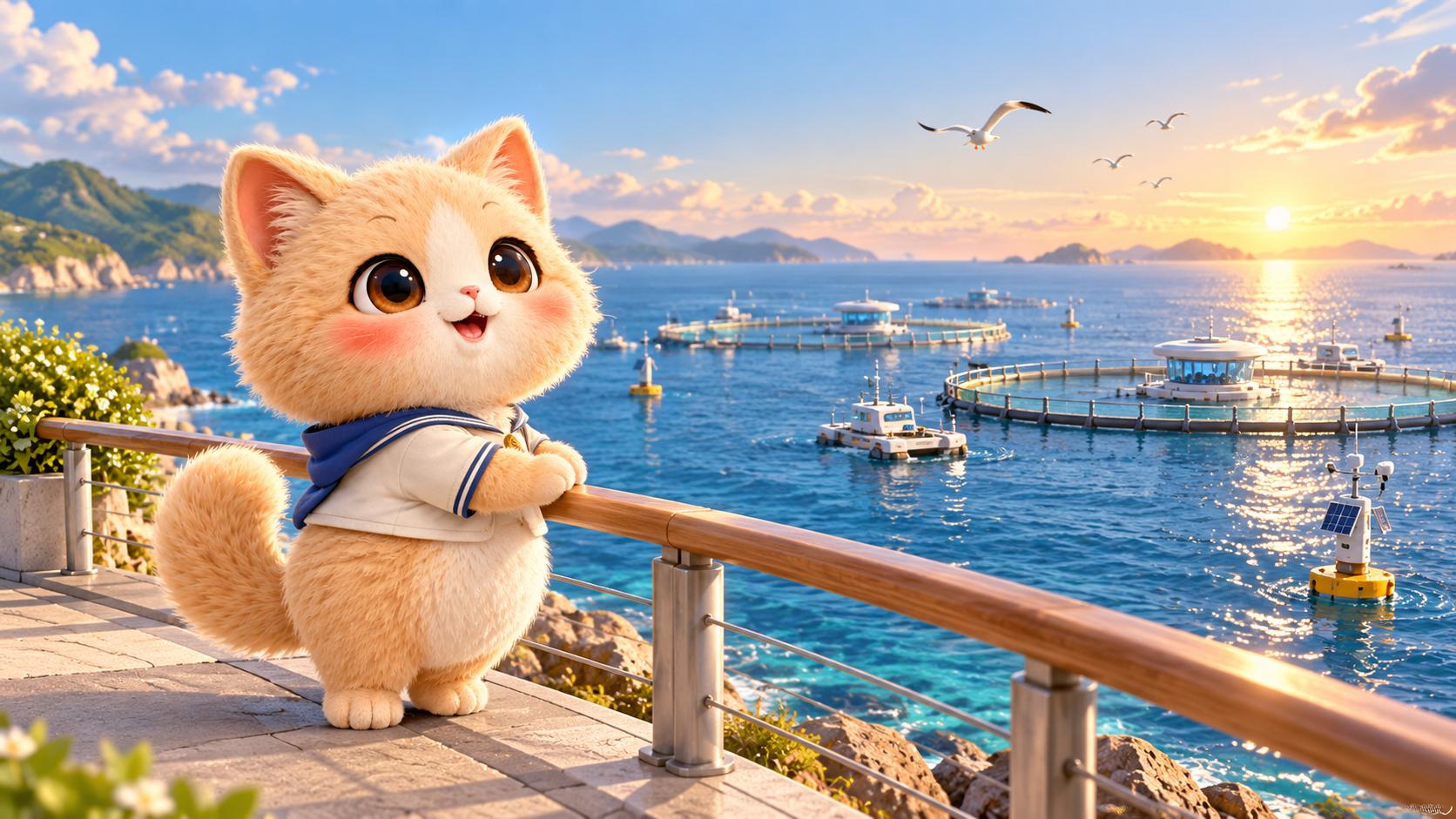
A Working Shore
Early light touches offshore aquaculture structures and automated platforms. Sensors record conditions at sea while handling equipment prepares for another cycle of work.
This is Jialan Fisheries Center, a dedicated marine production and transport node. Unlike the city's inhabited districts, its purpose is not to support a permanent residential community.
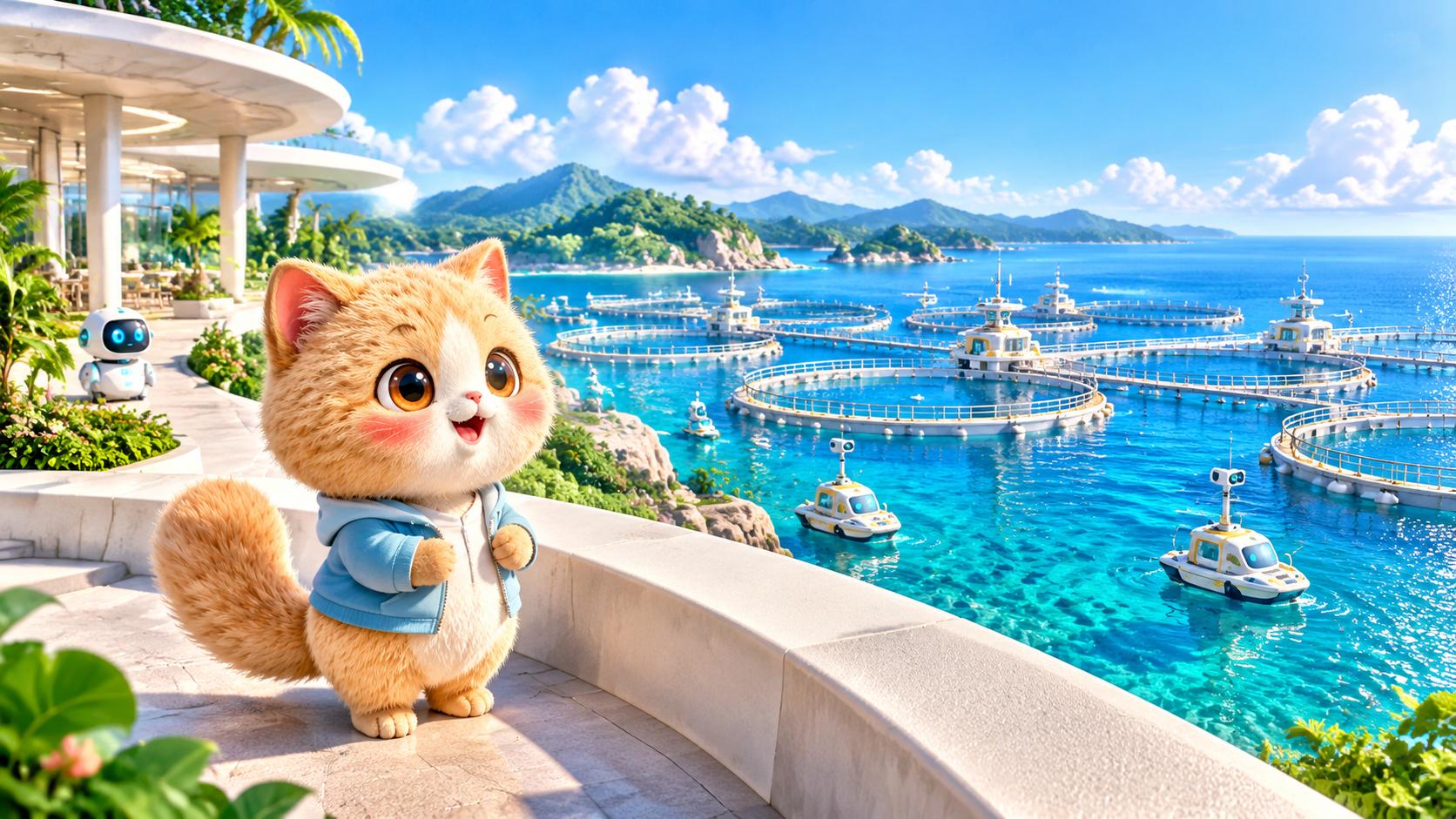
A Site Without Permanent Residents
Jialan has zero permanent resident cats in the original district registry. That is an established characteristic of the site, not a claim that cats never visit.
Inspection, maintenance, and other necessary visits can still bring cats here. Most daily operations are automated. Keeping the center non-residential allows its marine facilities to operate without inventing a town around them.
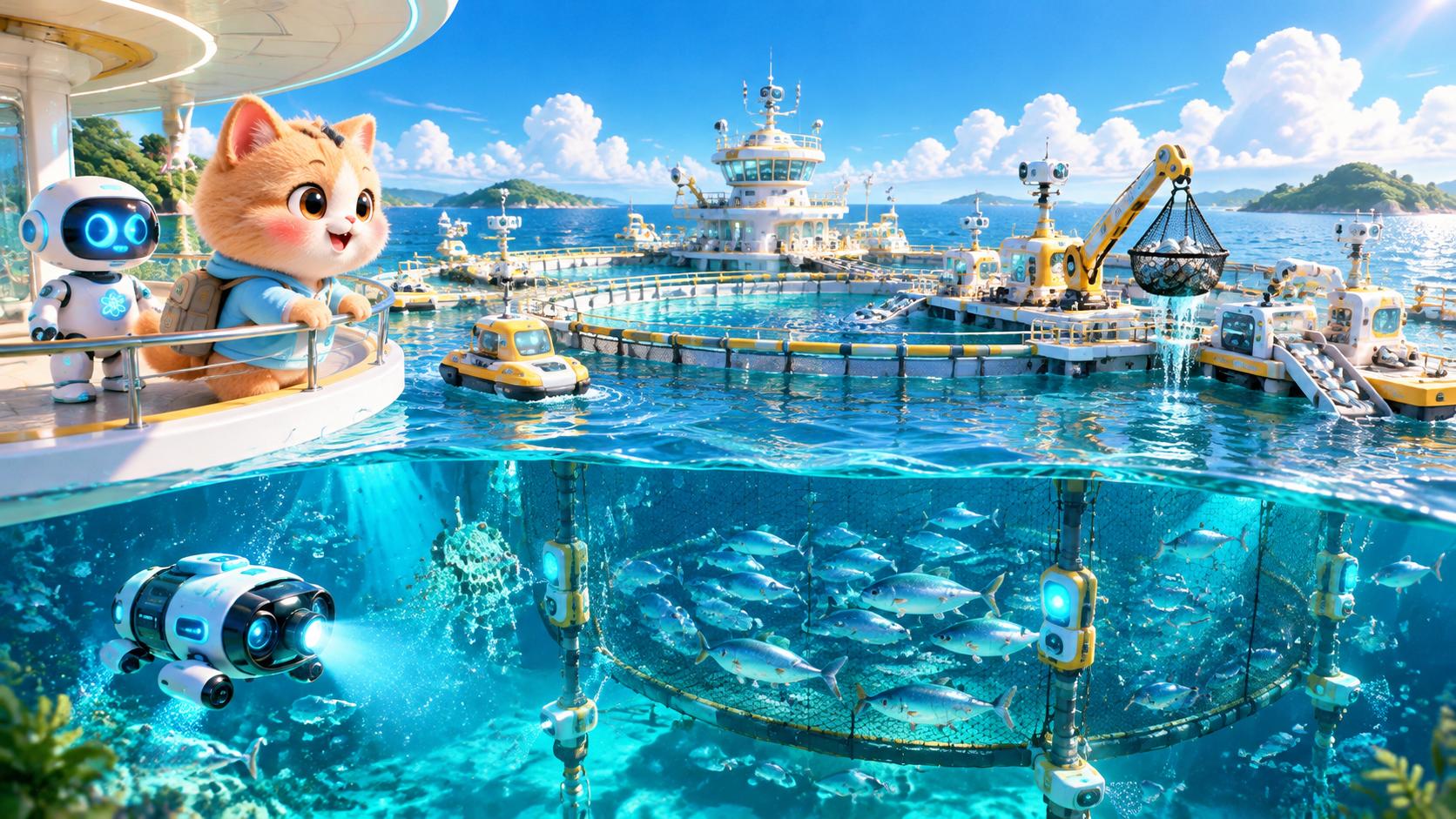
The Journey of a Fish
Fish move from aquaculture and harvesting into initial handling and refrigerated transport. The same operation relies on equipment care, material supplies, and continuing environmental observation.
Sea conditions matter. Temperature, currents, waves, and wind affect what can safely happen on the water. The ocean is an environment to understand, not a warehouse with an unchanging floor.
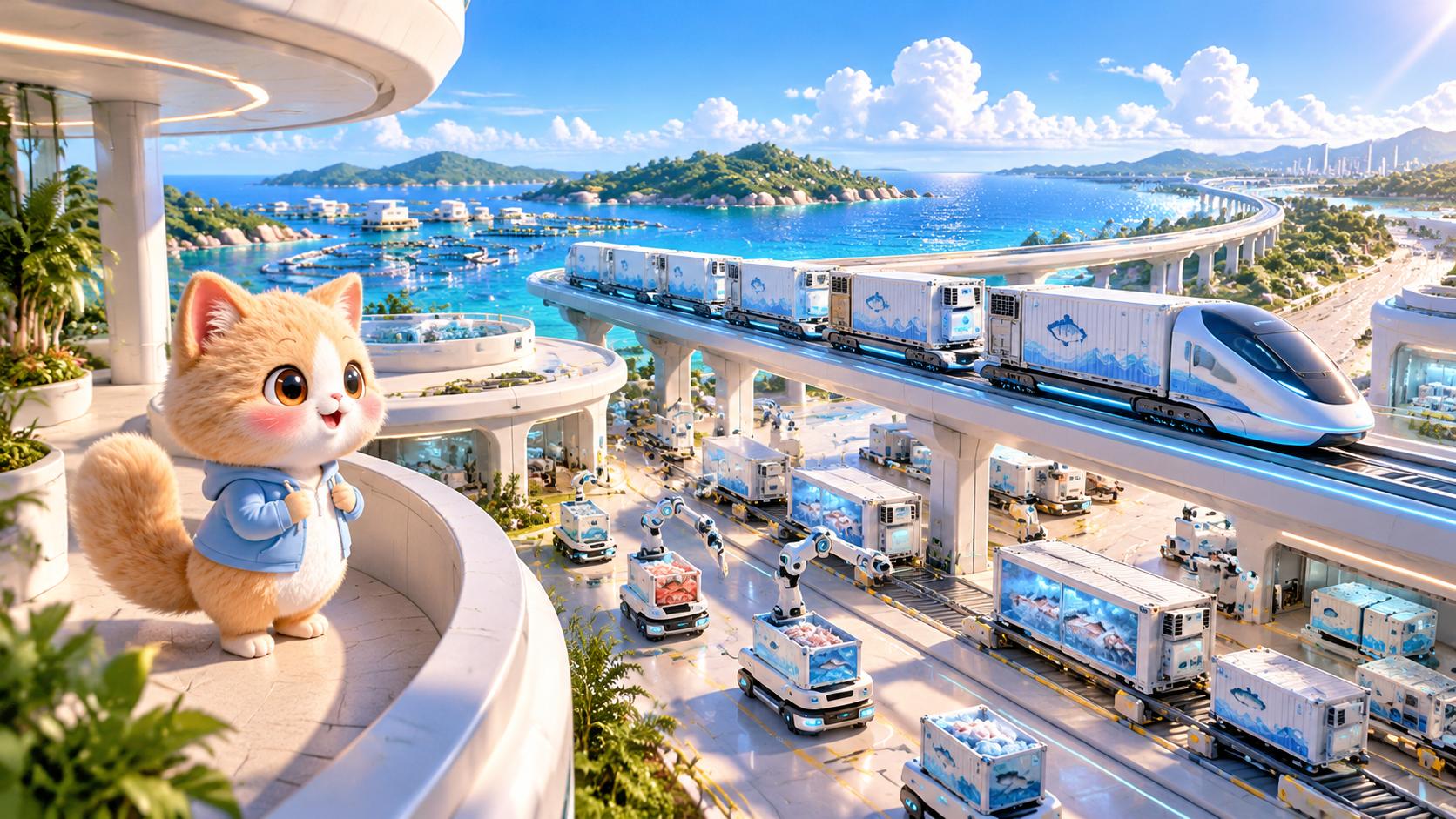
A Connection to Riverlands
Some seafood ingredients travel by rail to Riverlands Manufacturing District for further processing before entering the city's food network. Machinery, replacement parts, and other supplies make the return journey toward Jialan.
The center has no permanent residents, but it is far from isolated. Its links to manufacturing and transport help connect an offshore origin with cats' everyday meals.

The Sea Remains the Sea
Evening arrives, and waves continue beyond the working platforms. Instruments still follow the changing marine conditions; the wider city carries on with its own life.
Jialan is where one part of MiaoMiao City's food story meets the ocean. The city can depend on what comes from the sea without pretending that the sea exists only for the city.