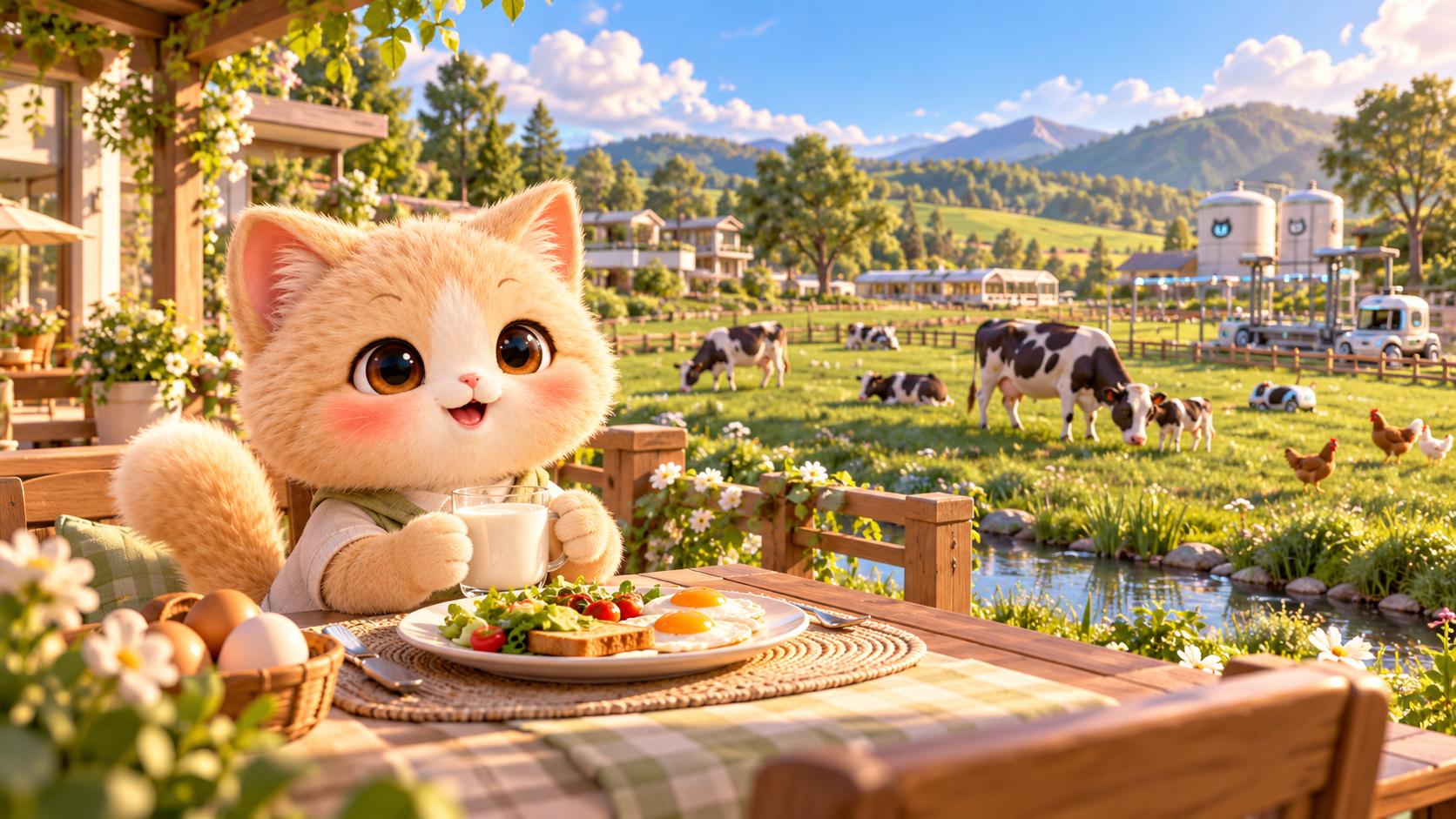
Behind an Ordinary Breakfast
A glass of milk and an egg on a plate may seem like small things. Trace their journey back, however, and the scene opens onto pasture, grazing cattle, and chickens moving freely through the grass.
This is Grassland Agricultural District. It contributes food to Greater MiaoMiao City, but the animals here do not exist merely to produce it.
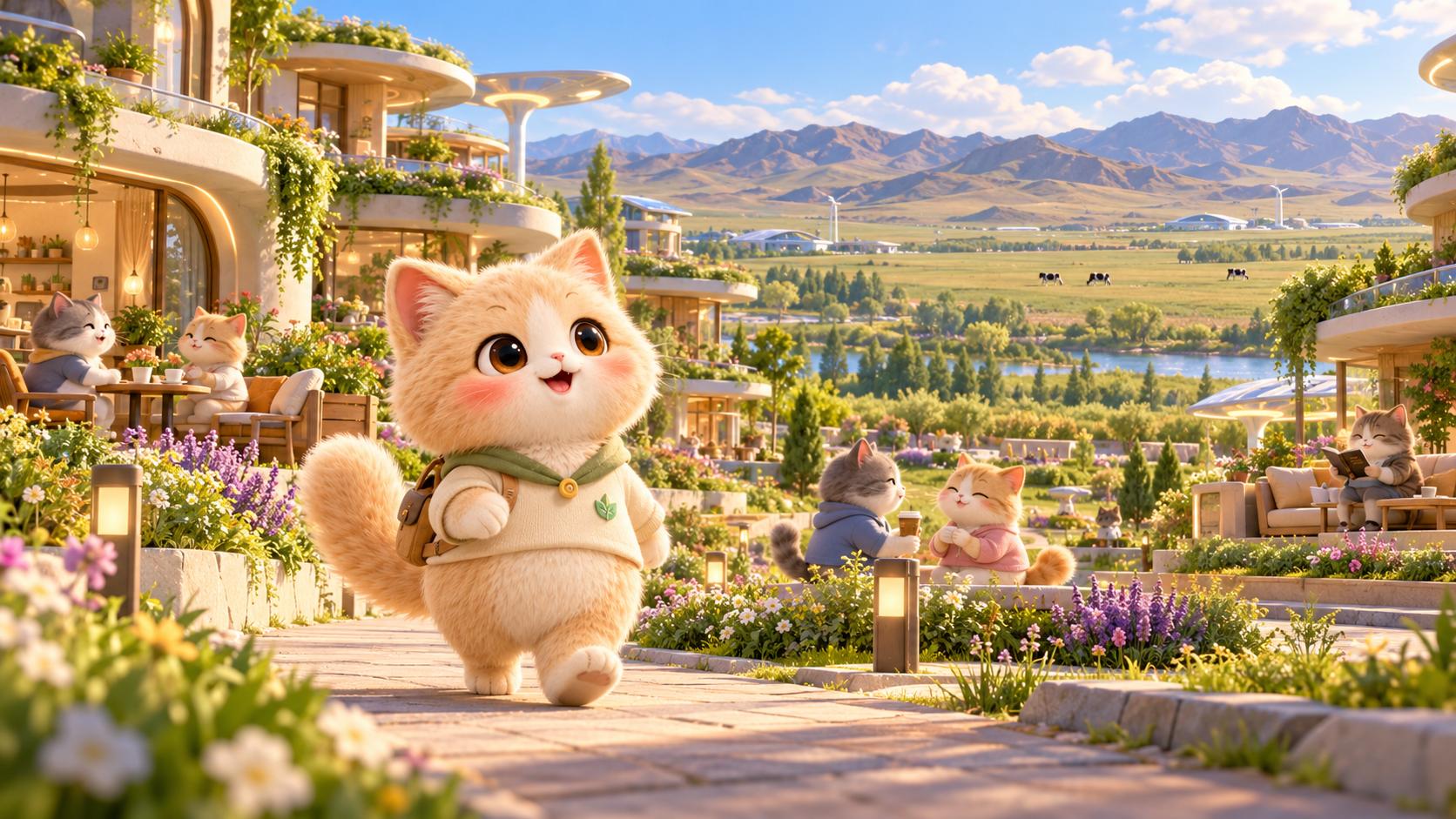
Cats Who Call the Grassland Home
The original district registry records 12,400 resident cats in Grassland, roughly 0.52% of the baseline total. This is an initial allocation, not the Museum of Life's live count.
Cat communities and animal living areas have their own spaces. Routine feeding, cleaning, monitoring, and cooling are largely automated, making room for both the residents' daily lives and the animals' continuing care.
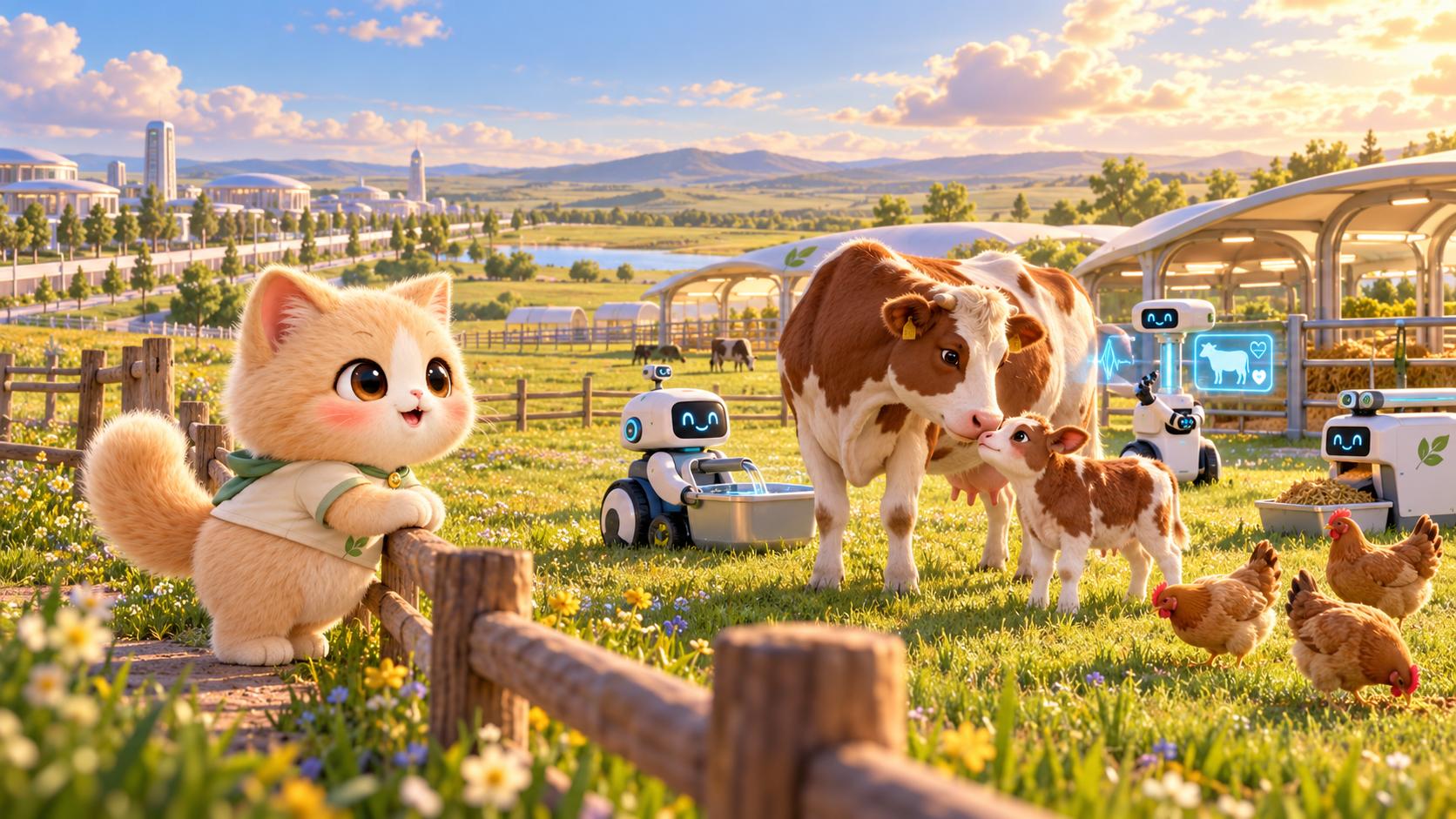
More Than Production
Cattle graze and rest in spacious rotational pastures; chickens forage and live in broad open-range areas. Shelter, water, and veterinary care support them through different stages of life.
Cows are not made to reproduce on a production schedule, and calves' needs come first. Roosters are not removed for being unable to lay eggs. Older animals remain members of their groups even when they no longer produce food.
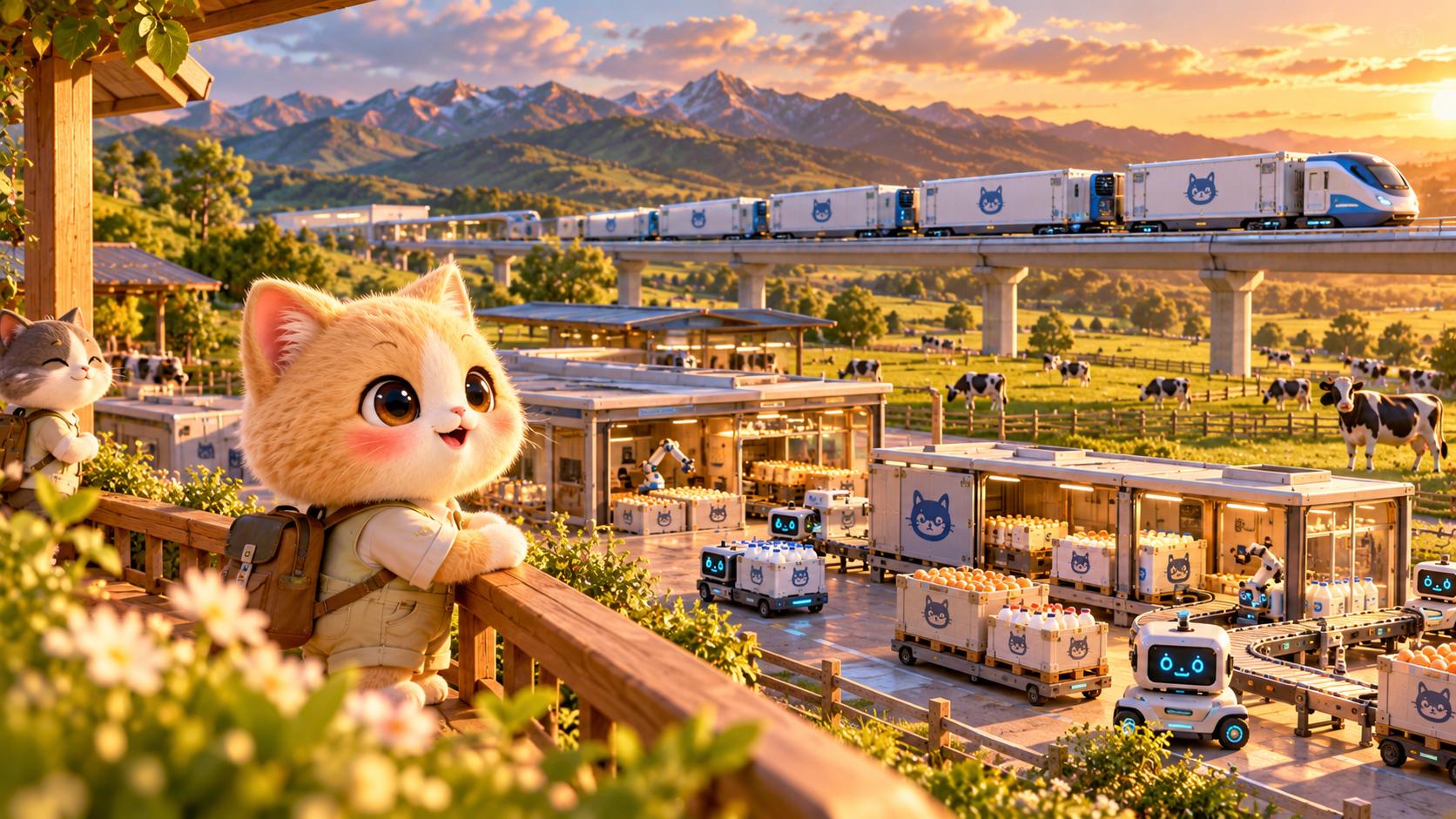
What Travels, What Stays
Milk that remains after calves' needs are met, food eggs, and essential supplies move through the regional cold chain and rail network. Feed ingredients and veterinary materials arrive when needed.
Where possible, forage, water, and nutrients circulate within the district. Freight has a purpose, but the pasture is not turned into a freight yard.
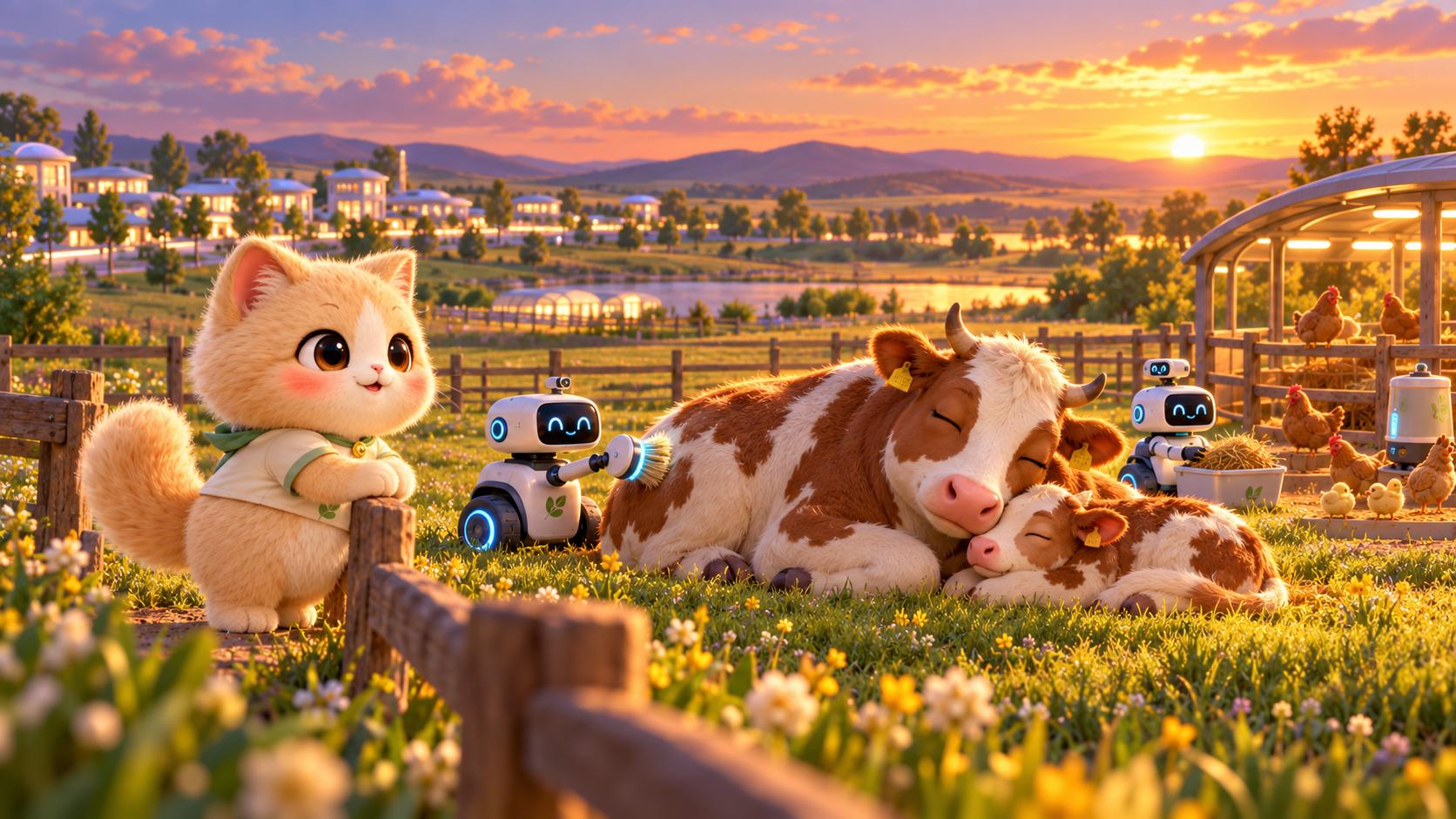
Evening on the Pasture
As evening comes, the herd slows, chickens settle into resting areas, and small monitoring robotic cats continue their quiet work. Lights appear in the nearby cat community.
Grassland helps feed the city while protecting the lives that make it possible. Here, the system is expected to adapt to animals, not ask animals to live according to the needs of a production line.