Beyond the Last Neighborhood
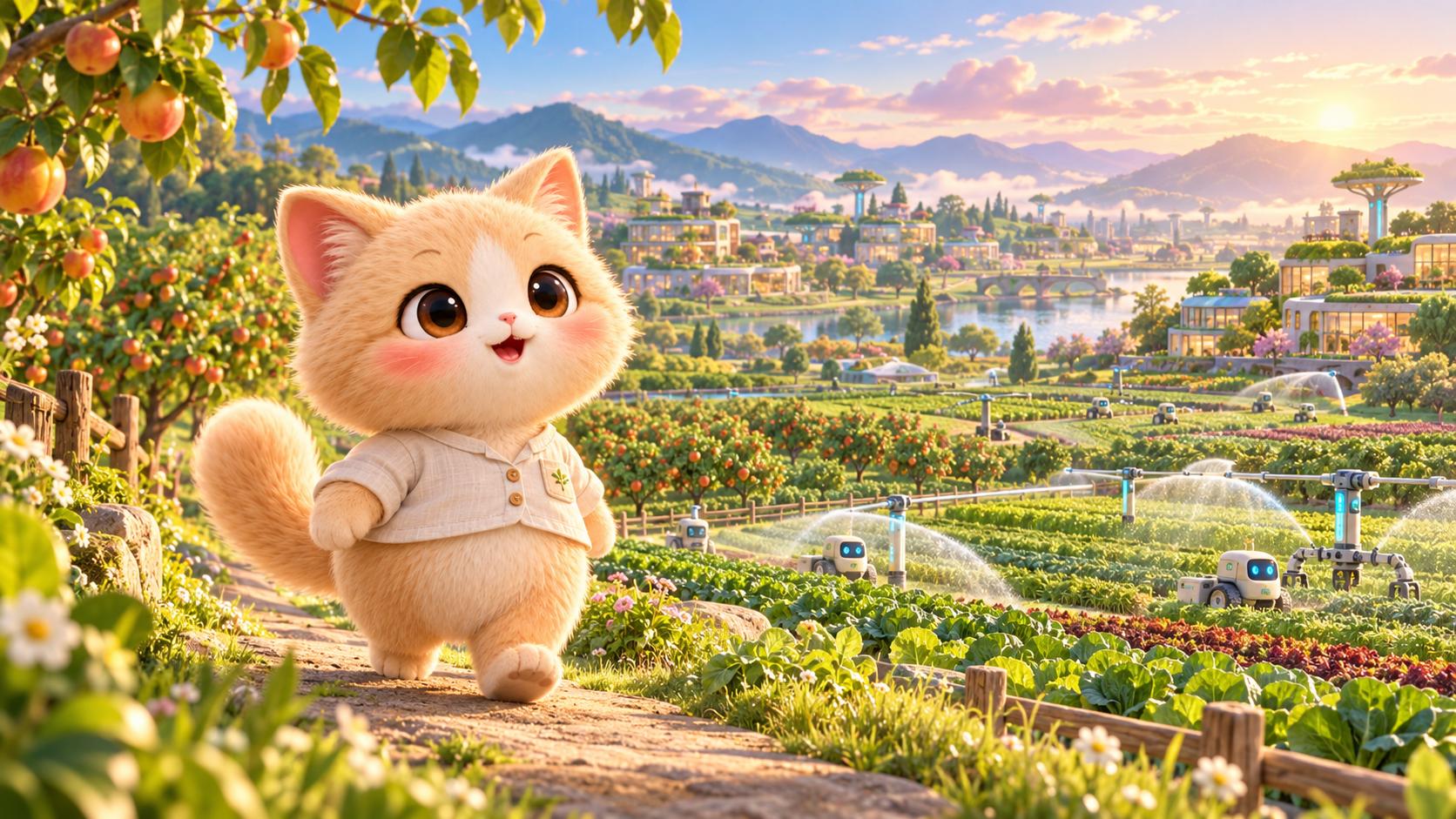
From the train window, the city gradually gives way to fields and orchards. Irrigation channels and growing plots stretch out beyond the tracks, with automated farm equipment working among the crops.
This is the Fertile Plains Agricultural District, one of Greater MiaoMiao City's important sources of vegetables, fruit, and other plant-based ingredients. Here, food starts with soil and the conditions that allow things to grow.

Life Beside the Fields
The original registry records 18,000 resident cats in Fertile Plains, about 0.76% of the city's baseline residents. It is an initial district figure, separate from the Museum of Life's live records.
Cats have neighborhoods here, too. Farming takes place nearby, but living in an agricultural district does not mean every cat must spend the day working in the fields. Automation carries much of that responsibility.
A Crop Has Its Own Pace
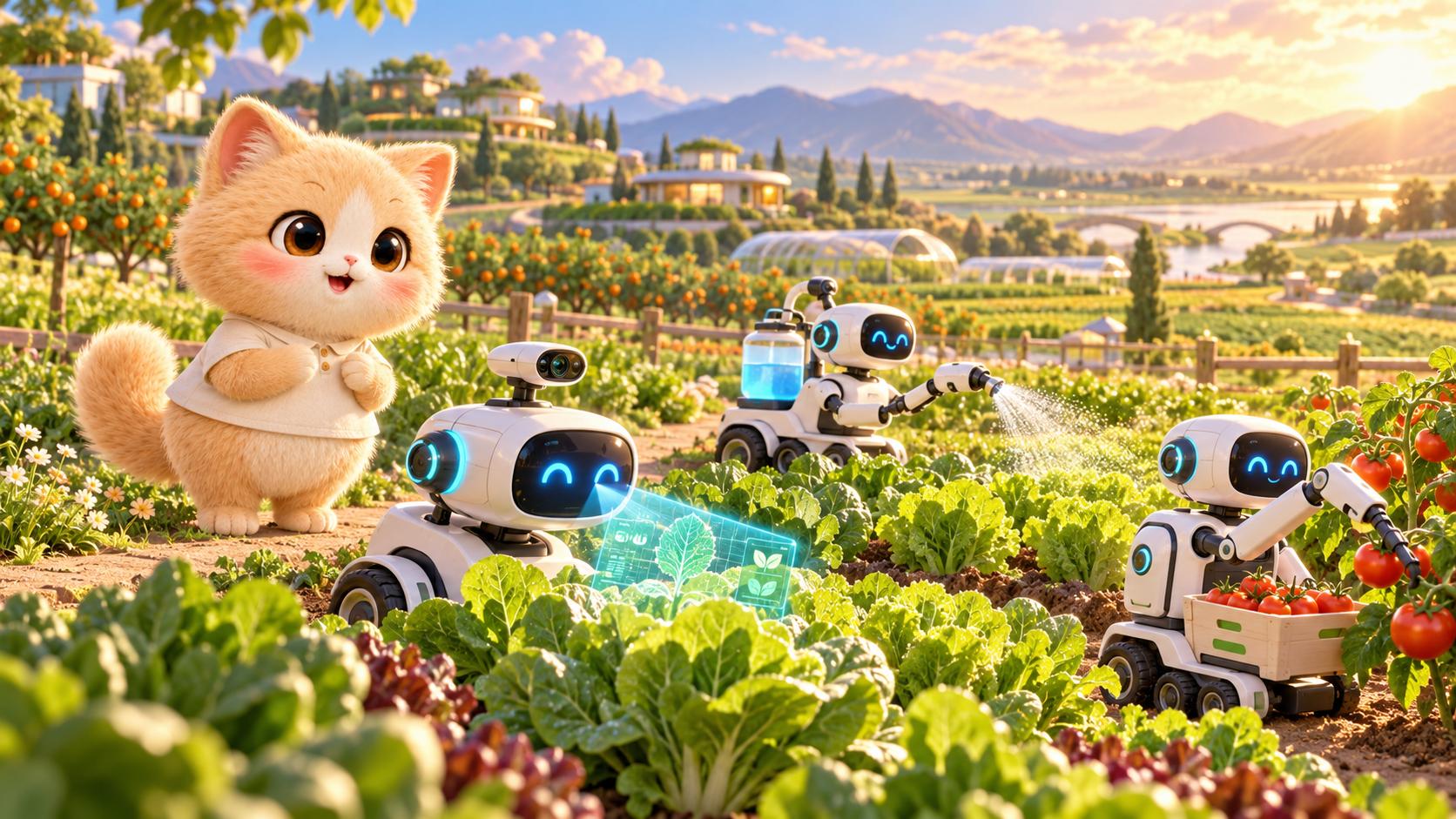
Seeds sprout, plants mature, and harvests follow when the crops are ready. Automated systems can assist with watering, monitoring, sorting, and careful handling, but they cannot replace the natural pace of growth.
The district supplies produce and raw ingredients while looking after soil, water, and growing conditions. These are not separate concerns: tomorrow's harvest depends on how the land is treated today.
From Harvest to Neighborhood
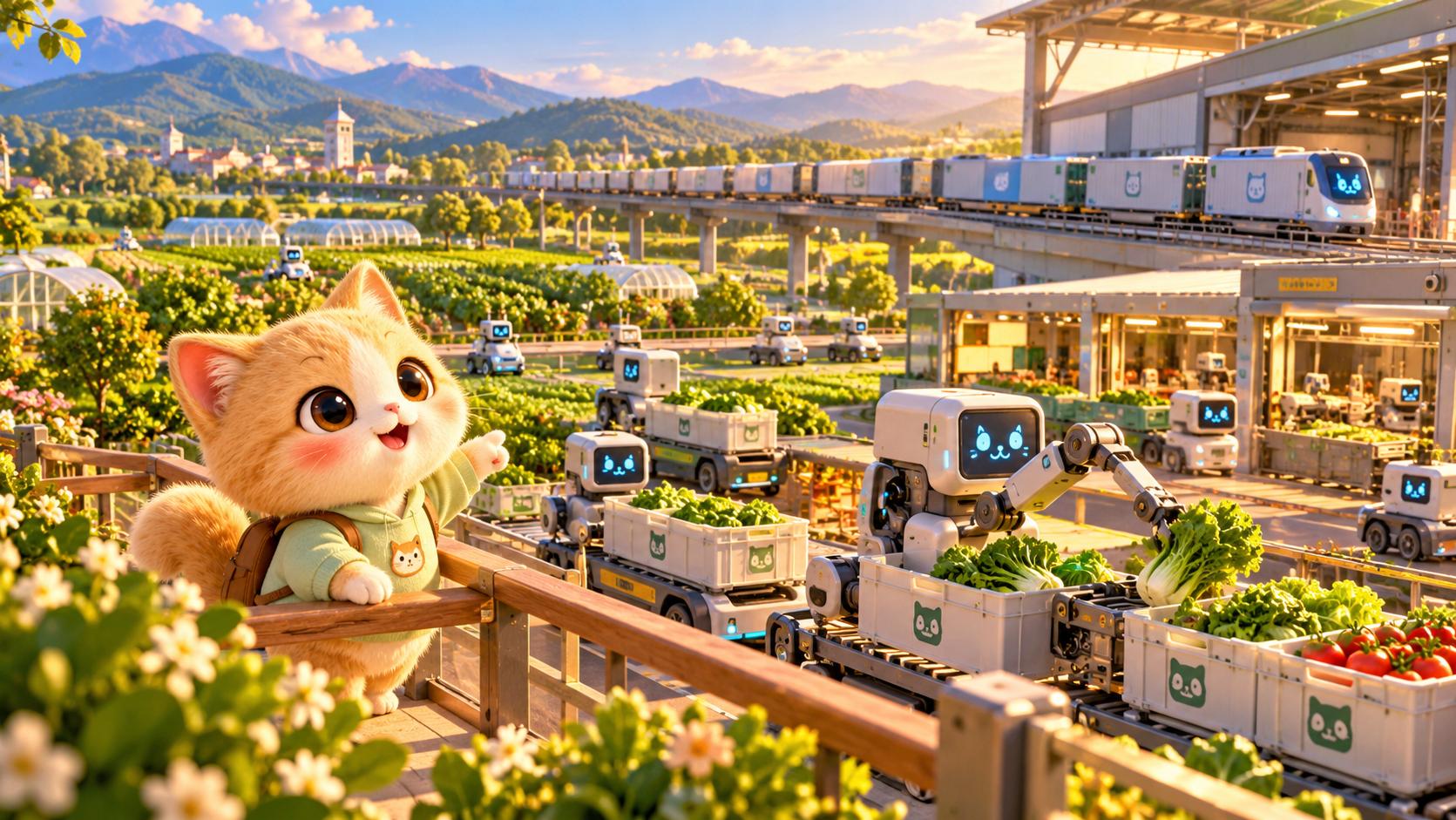
Produce is sorted and preserved before entering the wider rail and logistics network. Some goes to Riverlands for further processing; some continues toward communities where cats will eat it.
Efficient transport keeps freight movement from taking over the fields. The land remains a place for growing and living, not an endless loading yard.
When the Workday Ends
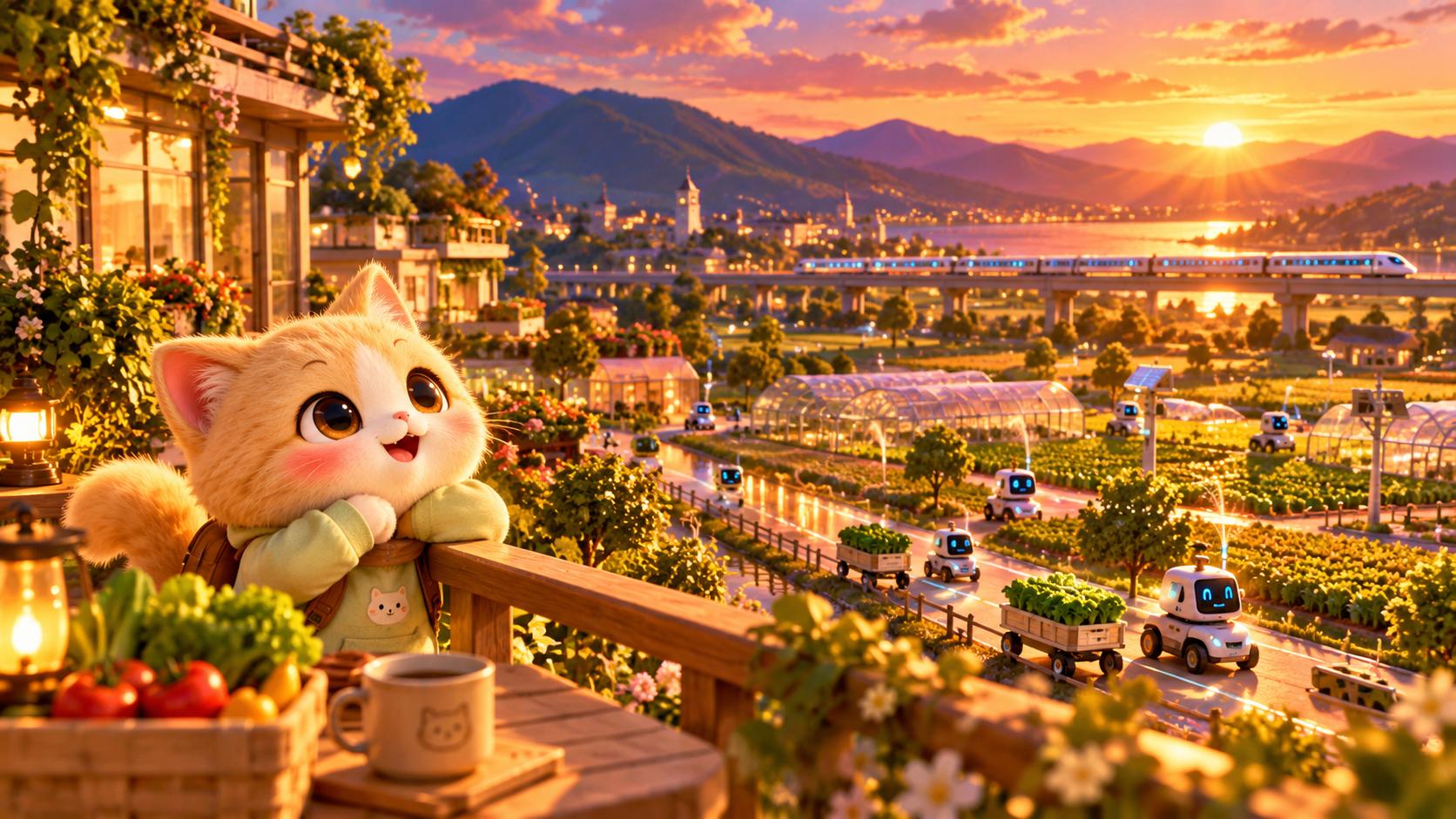
Late sunlight moves across the crops. A machine finishes its route, homes begin to glow, and a train passes in the distance.
Fertile Plains contributes to the city's food supply, but it is not only a source of products. It is also home to cats and a landscape that needs time and care to keep growing.