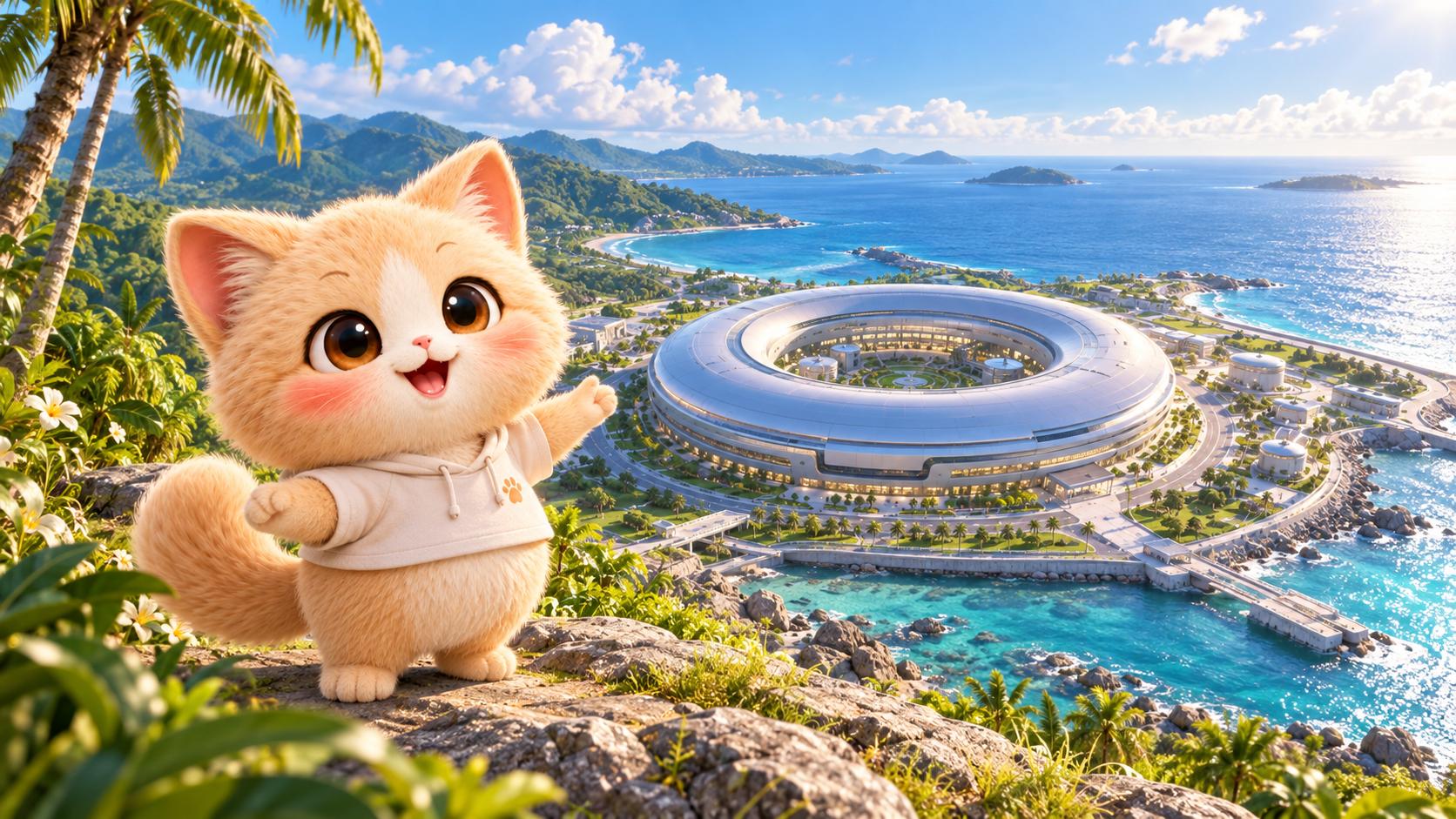
A Coast in Motion
The tides change outside Bluewater Energy Center, while the fusion plant maintains its steady operation. Out at sea, nothing stands still; within the facilities, carefully managed systems deliver electricity to the wider network.
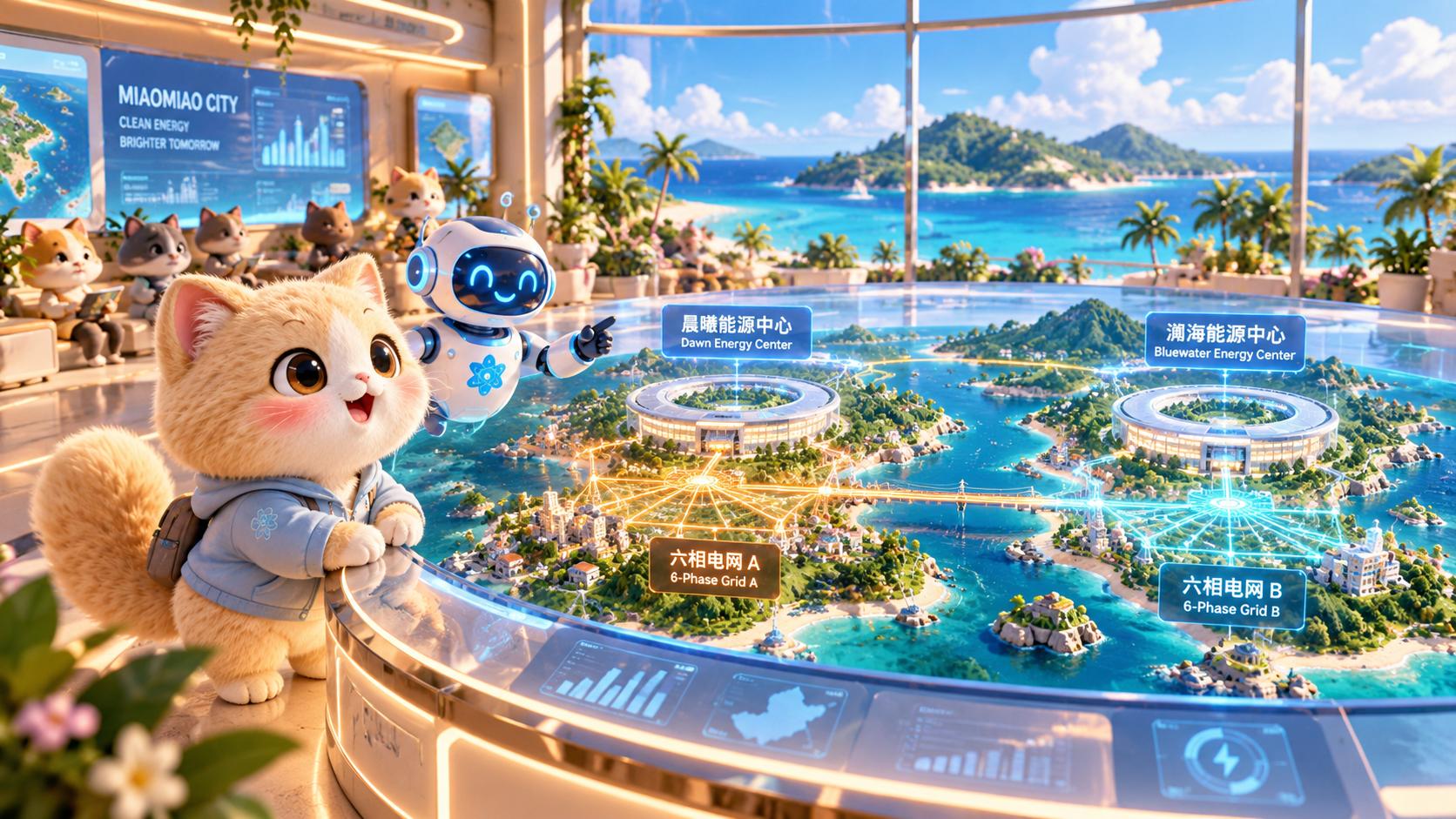
Bluewater has the same standing as Dawn Energy Center. Both generate power as part of normal operations and support one another. Their different names do not describe different ranks or separate primary and standby roles.

The Cats Who Live Here
Bluewater's original registered resident allocation is 300 cats, matching Dawn's 300. The figure belongs to the district baseline, not to a live Museum of Life total.
The center is not a large residential district, but it includes space for cats to live. Automated inspection and operational systems help keep that everyday life distinct from the machinery that makes the city run.
Shared Work, Shared Resilience
Fusion energy is converted into electricity and delivered through the city's two independent six-phase grids. Bluewater and Dawn both supply the wider residential, agricultural, industrial, and transport systems.
If facilities or grid routes need maintenance, alternative available paths are part of the design. That is not a reason to call one station more important; it is the reason the two stations are equal partners.

The Sea Is Part of the Setting
At Bluewater, monitoring includes radiation, air, seawater, and public-dose indicators. Power generation and environmental observation continue alongside each other.
AI and automated facilities help coordinate routine operations, but the coast is more than infrastructure. The sea has its own conditions, and the systems built beside it must continue to pay attention.

One City, Two Shores
At night, Bluewater is still part of the active power network. A glowing window far inland does not need to announce which coastal center helped keep it bright.
For cats living across Greater MiaoMiao City, the value lies in continuity. Dawn and Bluewater share the task, and neither needs to be treated as the other's lesser counterpart.